
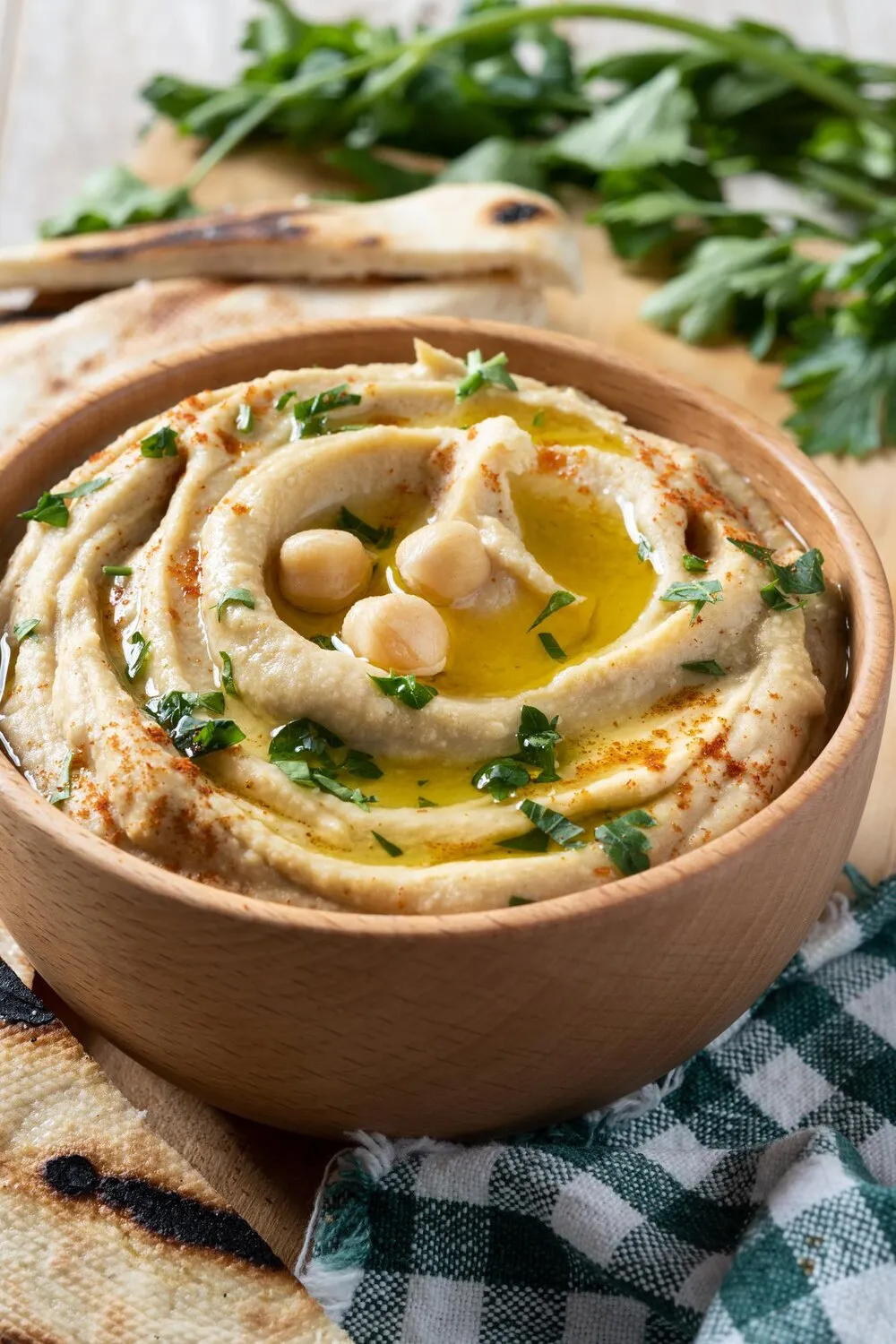

Hummus
A smooth blend of chickpeas, tahini, and lemon juice, a Mediterranean staple.
Información Nutricional
* El % de Valor Diario (VD) indica cuánto aporta un nutriente en una porción de alimento a una dieta diaria. Se utilizan 2,000 calorías al día para consejos generales de nutrición.
Función Premium
Función Premium
The exact origins of hummus are debated, but it's generally believed to have originated in the Levant region centuries ago. Chickpeas have been cultivated in the Middle East for over 10,000 years, and tahini (sesame paste) has been used for thousands of years as well. The earliest written records of a dish resembling hummus date back to 13th-century cookbooks found in Cairo.
Función Premium
Hummus is deeply ingrained in Middle Eastern cuisine and culture, serving as a staple food and a symbol of hospitality and shared meals.
Communal Eating
Hummus is traditionally served in a large bowl and shared communally, often with pita bread for dipping. It's a common part of meze platters, fostering a sense of togetherness and connection.
Regional Variations
While the basic ingredients remain consistent, regional variations exist. Lebanese hummus tends to be smoother and lighter, while Palestinian hummus often includes more tahini. Israeli hummus is typically garnished with ful medames (stewed fava beans) or hard-boiled eggs.
Political Significance
Hummus has become a symbol of cultural identity in the Middle East, and its popularity has sometimes led to debates and disputes over its origin and authenticity.
Everyday Food
Hummus is an everyday food, eaten as a snack, appetizer, or main course. It is widely available in restaurants, supermarkets, and homes throughout the Middle East and beyond.
Función Premium
Hummus offers a creamy, savory, and slightly tangy flavor profile, primarily derived from chickpeas, tahini, lemon juice, and garlic.
The dominant flavor is earthy and nutty from the chickpeas, balanced by the rich, sesame-forward taste of tahini. Lemon juice provides brightness and acidity, cutting through the richness and adding a refreshing element. Garlic contributes a pungent, aromatic note that complements the other ingredients. Olive oil drizzled on top adds further richness and a subtle fruity undertone. Salt balances the flavors, and cumin is often added for warmth and complexity. Variations may include other spices such as paprika or chili powder for a touch of heat.
Función Premium
Use Dried Chickpeas
While canned chickpeas are convenient, dried chickpeas, soaked overnight and cooked until very tender, result in a creamier and more flavorful hummus. Remove the skins of the chickpeas after cooking for an even smoother texture.
High-Quality Tahini
The quality of tahini significantly impacts the final flavor. Look for tahini made from 100% sesame seeds that has a smooth, pourable consistency and a slightly nutty aroma. Avoid tahini that is bitter or grainy.
Ice Water
Adding a few tablespoons of ice water while blending helps to create a lighter and fluffier texture. The cold water emulsifies the ingredients and prevents the hummus from becoming too dense.
Don't Skimp on Lemon Juice
Lemon juice is crucial for balancing the richness of the tahini and adding brightness to the hummus. Start with a generous amount and adjust to taste.
Blend, Blend, Blend
Blend the hummus for a longer time than you might think necessary. This will ensure a smooth, creamy texture. A high-powered blender or food processor is recommended.
Función Premium
Explora platos y restaurantes adicionales de Mezze
Explorar MezzeDescubre los mejores lugares para comer y experiencias culinarias en Washington.
Explorar WashingtonAprende más sobre la cultura gastronómica, la escena de restaurantes y el patrimonio culinario de United States.
Explorar United States