
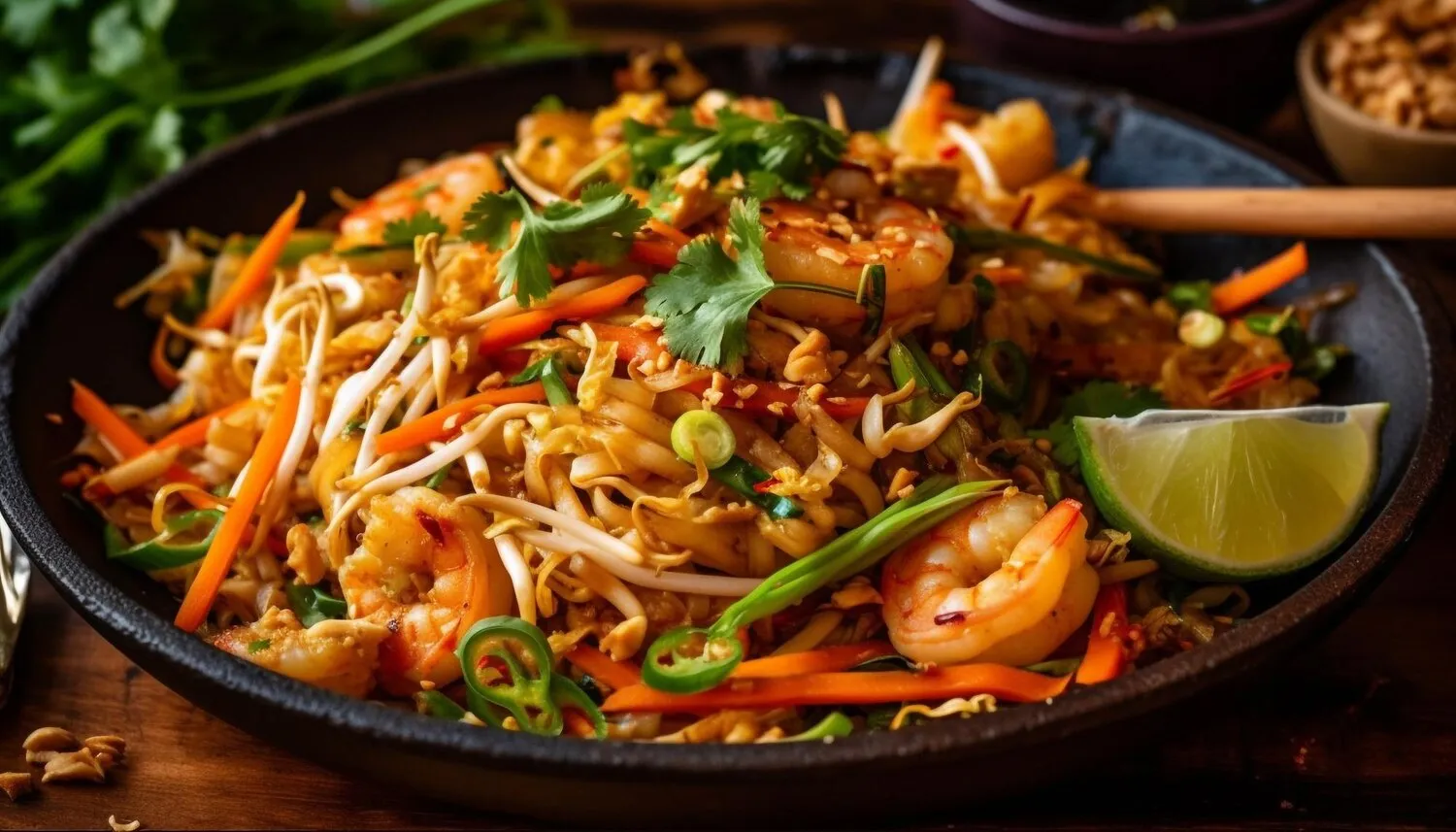

Pad Thai
Stir-fried rice noodles with egg, bean sprouts, and your choice of protein (chicken, pork, beef, tofu, or shrimp) in a tangy tamarind sauce. Often includes crushed peanuts.
Información Nutricional
* El % de Valor Diario (VD) indica cuánto aporta un nutriente en una porción de alimento a una dieta diaria. Se utilizan 2,000 calorías al día para consejos generales de nutrición.
Función Premium
Thai Lanna Restaurant
Función Premium
Pad Thai's creation is attributed to Plaek Phibunsongkhram, Thailand's prime minister in the 1930s. As part of his nation-building efforts, he promoted Pad Thai to foster a sense of national identity and reduce rice consumption. The dish was designed to be a nutritious and inexpensive meal that could be easily prepared by street vendors, quickly becoming a popular national dish.
Función Premium
Pad Thai is more than just a dish; it's a symbol of Thai identity and culinary ingenuity, often enjoyed as a street food staple and restaurant favorite.
Street Food Icon
Pad Thai is ubiquitous on Thai streets, sold by countless vendors using carts and small stalls. The affordability and quick preparation make it a popular choice for locals and tourists alike.
National Dish
While not officially designated as such, Pad Thai is widely considered Thailand's national dish, reflecting the country's culinary heritage and appealing to a global audience.
Culinary Adaptability
Pad Thai's recipe is quite flexible, with variations including different protein sources (chicken, shrimp, tofu), and vegetable additions, catering to diverse dietary preferences and regional ingredients.
Función Premium
Pad Thai is a symphony of sweet, sour, salty, and umami flavors, achieved through a balance of key ingredients.
The sweetness comes from palm sugar, the sourness from tamarind paste, the saltiness from fish sauce, and the umami depth from these same ingredients. These core flavors are then complemented by the textures of stir-fried rice noodles, crunchy bean sprouts, firm tofu, and roasted peanuts. Additional ingredients such as shrimp, chicken, or pork contribute their own distinctive flavors and textures to the dish. Lime wedges, cilantro, and chili flakes offer a refreshing and spicy counterpoint.
Función Premium
Tamarind Paste is Key
Use high-quality tamarind paste for the distinctive sour flavor. Fresh tamarind pulp offers the best flavor, but prepared paste is a convenient alternative. Avoid tamarind concentrate which is too strong.
Noodle Perfection
Soak the rice noodles in warm water until pliable but not mushy. Over-soaked noodles will fall apart during cooking. Quickly rinse the noodles with cold water before cooking, it helps prevent sticking.
Wok Hei (Breath of the Wok)
Use high heat and a wok to achieve the characteristic smoky flavor known as 'wok hei.' Stir-fry the ingredients quickly and efficiently to prevent burning.
Balance the Flavors
Taste and adjust the sauce to achieve the perfect balance of sweet, sour, salty, and umami. Each person may prefer the sauce more sweet, sour or salty so taste and adjust to personal preference!
Función Premium
Explora platos y restaurantes adicionales de Noodles
Explorar NoodlesDescubre los mejores lugares para comer y experiencias culinarias en Fayetteville.
Explorar FayettevilleAprende más sobre la cultura gastronómica, la escena de restaurantes y el patrimonio culinario de United States.
Explorar United States