
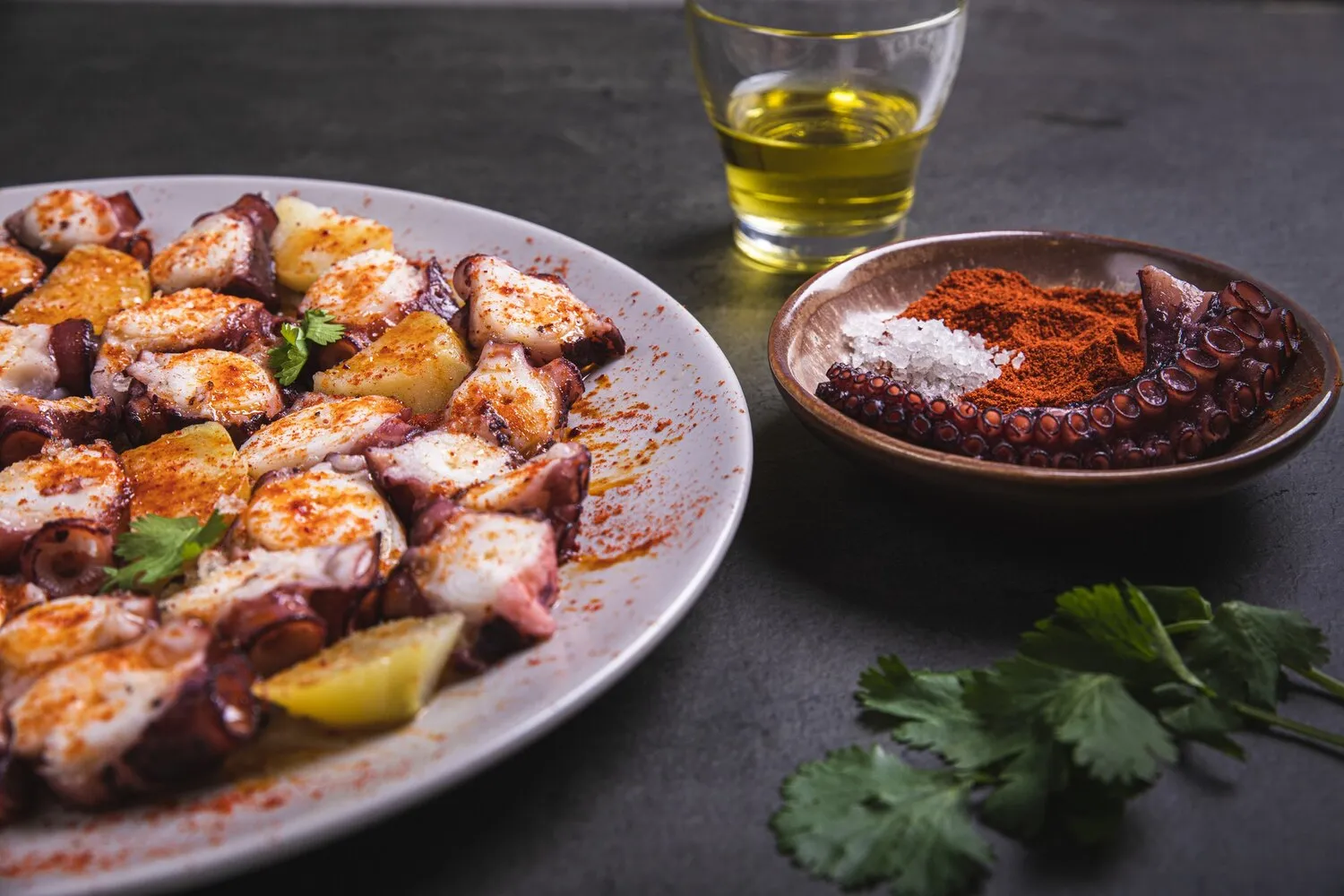

Pulpo a la Gallega
Galician-style octopus
Información Nutricional
* El % de Valor Diario (VD) indica cuánto aporta un nutriente en una porción de alimento a una dieta diaria. Se utilizan 2,000 calorías al día para consejos generales de nutrición.
Función Premium
La Garriga
Función Premium
Pulpo a la Gallega, deeply rooted in the inland province of Ourense (Galicia), showcases the region's resourcefulness. While Galicia is known for its coastline, the dish became prominent inland, potentially due to octopus being preserved for transportation. Its simplicity speaks to the culinary traditions of the Celts and Romans that have passed through the region. The use of paprika signifies the historic connection between Spain and the Americas, as paprika is made from dried peppers brought back from the new world.
Función Premium
Pulpo a la Gallega is more than just food; it's a social experience, deeply ingrained in Galician culture and celebrations. Often served on wooden platters and eaten communally, it represents sharing and togetherness.
Feiras
Pulpo a la Gallega is a staple at Galician 'feiras' (fairs and markets), where 'pulpeiras' (octopus cooks) traditionally prepare the dish in large copper pots. The aroma of cooking octopus is synonymous with these festive occasions.
Social Gathering
It's a popular dish for sharing among friends and family. Often served as tapas, it encourages conversation and camaraderie.
Regional Identity
Pulpo a la Gallega is a symbol of Galician identity, reflecting the region's culinary heritage and connection to the sea. It's a dish that Galicians are immensely proud of.
Función Premium
The dish highlights the natural sweetness of octopus, enhanced by the smokiness and subtle heat of paprika, the fruity aroma of olive oil, and a touch of salt.
The primary flavor is the inherent sweetness and slightly briny taste of the octopus itself. The paprika, usually 'pimentón de la Vera' (smoked paprika), provides a smoky, earthy depth with varying degrees of spiciness – from dulce (sweet) to picante (spicy). High-quality extra virgin olive oil adds a rich, fruity note, while coarse sea salt sharpens and balances the flavors.
Función Premium
Tenderizing the Octopus
Traditionally, octopus is tenderized by beating it against a hard surface. Modern methods often involve freezing the octopus for at least 48 hours. Freezing breaks down the muscle fibers, resulting in a more tender texture.
Cooking Technique
The octopus is typically boiled in a copper pot, if available, which is believed to enhance the flavor and tenderness. Bring the water to a boil before submerging the octopus several times to curl its tentacles before leaving it to cook. This technique is known as 'scaring the octopus'.
Serving Temperature
Pulpo a la Gallega is traditionally served warm, not hot. Allowing it to cool slightly enhances the texture and allows the flavors to meld. The wooden plate also helps to absorb any excess moisture.
Función Premium
Explora platos y restaurantes adicionales de Spanish
Explorar SpanishDescubre los mejores lugares para comer y experiencias culinarias en Santa Cruz de Tenerife.
Explorar Santa Cruz de TenerifeAprende más sobre la cultura gastronómica, la escena de restaurantes y el patrimonio culinario de Spain.
Explorar Spain