
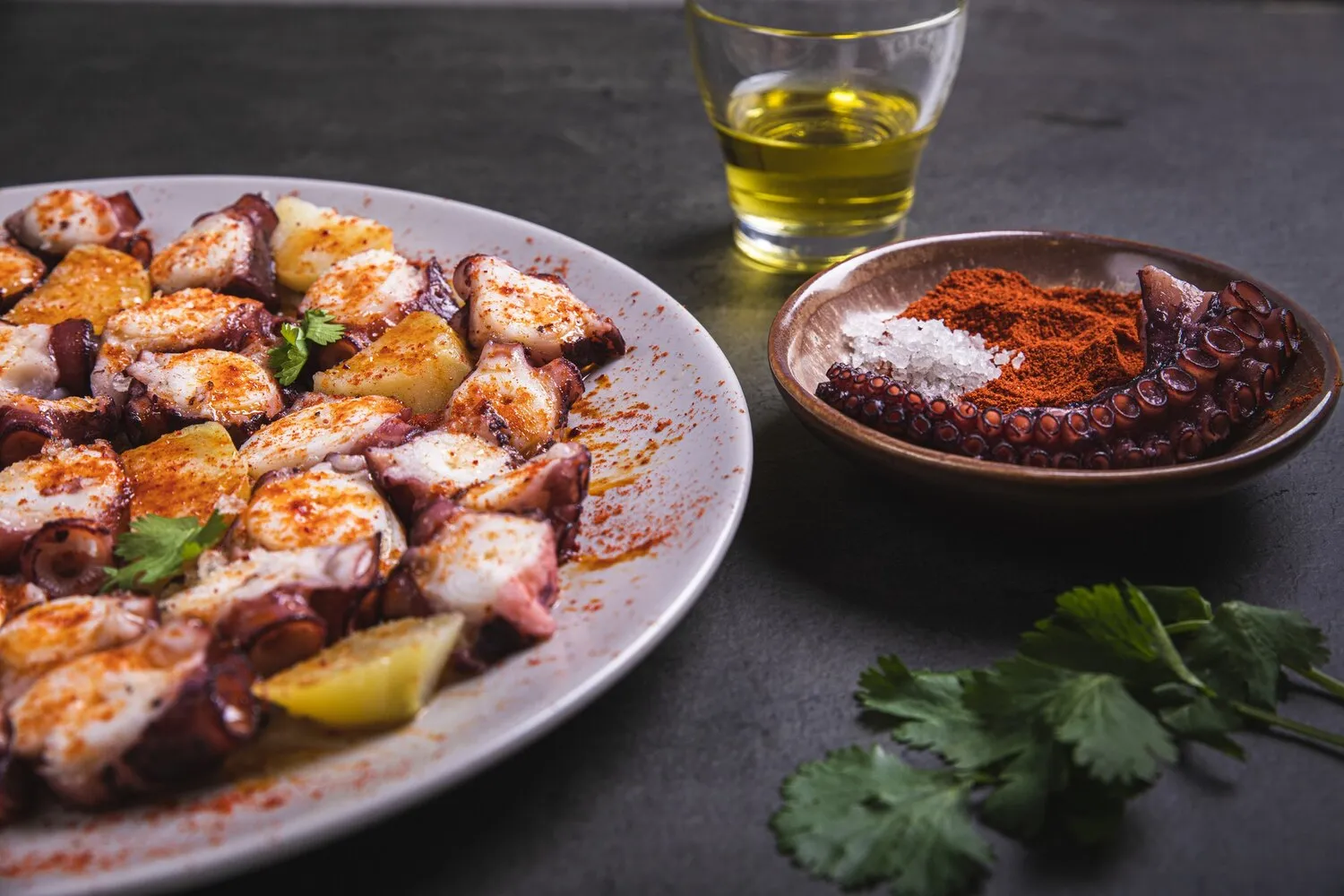

Pulpo a la Gallega
Galician-style octopus, served with paprika and olive oil.
Información Nutricional
* El % de Valor Diario (VD) indica cuánto aporta un nutriente en una porción de alimento a una dieta diaria. Se utilizan 2,000 calorías al día para consejos generales de nutrición.
Función Premium
Kalaka Vinos Y Tapas
Función Premium
Pulpo a la Gallega, or Galician-style octopus, has humble origins tied to the inland regions of Galicia, where fresh seafood wasn't readily available. It is believed to have originated in the province of Ourense, specifically in fairs and festivals, as a hearty and affordable dish that could be prepared and served communally. The simplicity of the ingredients and preparation reflects its practical, working-class roots.
Función Premium
Pulpo a la Gallega is more than just a dish; it's a cultural icon deeply embedded in Galician identity, often associated with celebrations, gatherings, and traditional fairs.
Pulpeiras
The traditional cooks, known as 'pulpeiras', are integral to the Pulpo a la Gallega tradition. They are skilled in the art of cooking the octopus to the perfect tenderness and are often seen at fairs and festivals, preparing and serving the dish from large copper pots.
Festivals and Fairs
Pulpo a la Gallega is a staple at Galician festivals and fairs ('ferias' and 'romerías'). It's a social food, meant to be shared and enjoyed with friends and family, often accompanied by local Albariño wine.
Simplicity and Authenticity
The dish's simplicity reflects the values of Galician culture, emphasizing the importance of quality ingredients and traditional methods over elaborate preparations. It is considered a true representation of Galician culinary heritage.
Función Premium
Pulpo a la Gallega features a harmonious blend of tender octopus, earthy paprika, and rich olive oil, creating a simple yet satisfying flavor profile.
The primary flavor is the subtly sweet and slightly chewy octopus, meticulously tenderized through a specific cooking process. The smoked paprika adds a warm, earthy, and slightly spicy note that complements the octopus perfectly. High-quality olive oil provides richness and a smooth mouthfeel, enhancing the other flavors without overpowering them. Sometimes, coarse sea salt is used to bring out the natural sweetness of the octopus.
Función Premium
Tenderizing the Octopus
Traditionally, the octopus is dipped in and out of boiling water three times before being left to cook. This process helps to curl the tentacles and tenderize the flesh. Freezing the octopus overnight before cooking also helps break down the tough fibers.
Choosing the Right Paprika
Use high-quality Spanish smoked paprika ('pimentón de la Vera'). There are three types: dulce (sweet), agridulce (bittersweet), and picante (spicy). The choice depends on your preference, but dulce or agridulce are most commonly used.
Serving Suggestions
Pulpo a la Gallega is traditionally served on a wooden platter ('plato de madera') with a generous drizzle of extra virgin olive oil and a sprinkle of coarse sea salt. It is best enjoyed warm, not hot, so the flavors can fully develop.
Función Premium
Explora platos y restaurantes adicionales de Tapas
Explorar TapasDescubre los mejores lugares para comer y experiencias culinarias en Huelva.
Explorar HuelvaAprende más sobre la cultura gastronómica, la escena de restaurantes y el patrimonio culinario de Spain.
Explorar Spain