
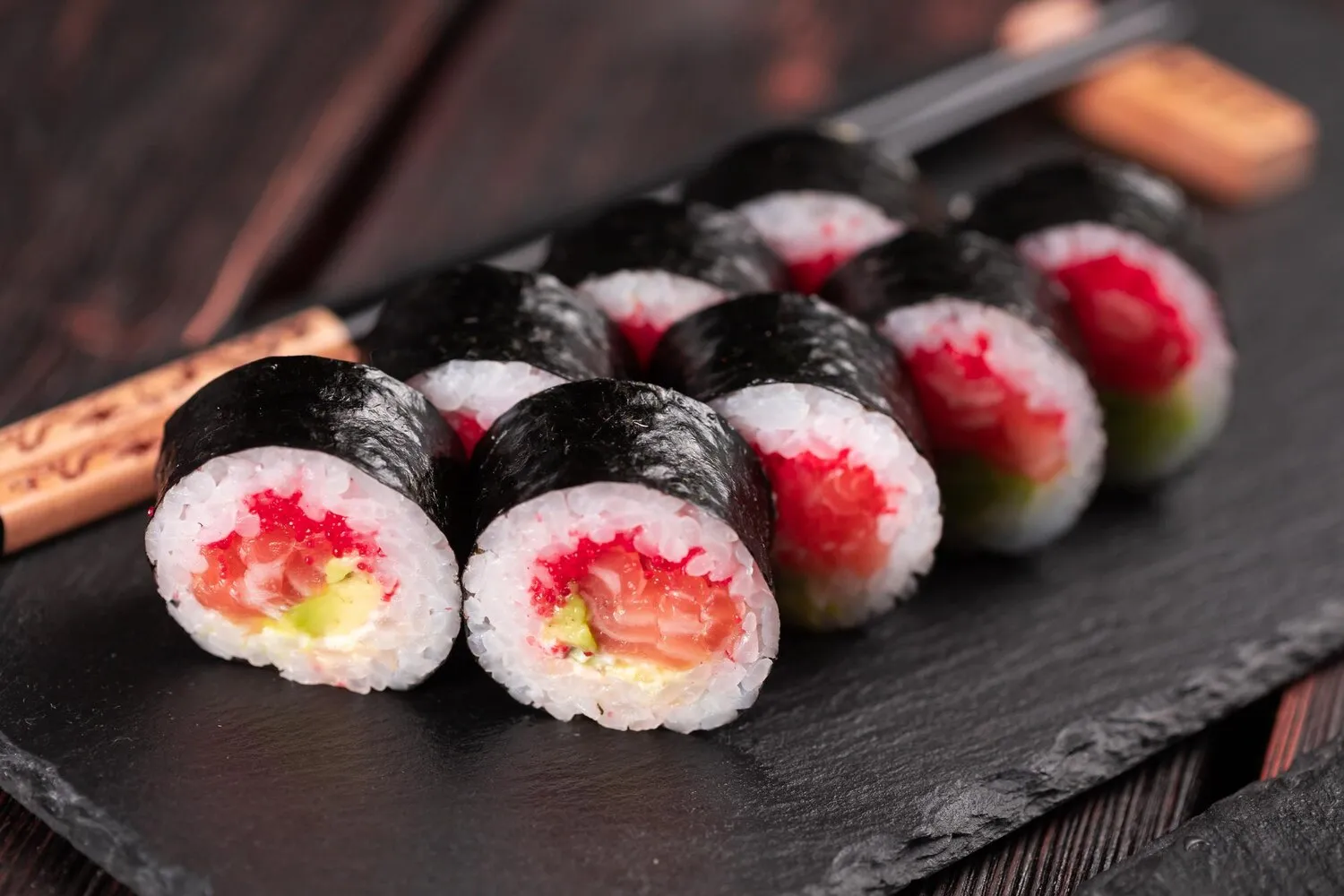

Maki
Sushi rolls with various fillings, such as fish, vegetables, and avocado, wrapped in seaweed and rice.
Información Nutricional
* El % de Valor Diario (VD) indica cuánto aporta un nutriente en una porción de alimento a una dieta diaria. Se utilizan 2,000 calorías al día para consejos generales de nutrición.
Función Premium
Nomiya Sushi Bar
Función Premium
Maki sushi's origins can be traced back to ancient methods of preserving fish in fermented rice. This evolved over centuries from a preservation technique to a dish where the rice was consumed with the fish. The modern form of maki, with its seaweed wrapping, gained popularity in the Edo period (1603-1868) in Japan.
Función Premium
Maki sushi is deeply embedded in Japanese culinary culture and etiquette, representing a balance of flavors, textures, and visual appeal. It's often enjoyed during celebrations, special occasions, and as part of everyday meals.
Presentation
The art of presenting maki is highly valued. Careful attention is paid to the arrangement of the rolls, the colors of the ingredients, and the overall aesthetic appeal of the dish.
Eating Etiquette
When eating maki, it's customary to use chopsticks to pick up the rolls and dip them lightly in soy sauce. Avoid excessive dipping, as it can overpower the flavors of the fish and rice. Eating a small piece of pickled ginger between bites helps cleanse the palate.
Festivals and Celebrations
Maki sushi is frequently served during festivals and celebrations in Japan, such as Hinamatsuri (Girl's Day) and New Year's. It symbolizes good fortune and happiness.
Función Premium
Maki sushi offers a balanced and diverse flavor profile, combining the savory umami of seaweed and fish with the subtle sweetness and tanginess of seasoned sushi rice, complemented by a variety of fillings.
The primary flavor comes from the nori seaweed, which contributes a slightly salty and umami taste. Sushi rice, seasoned with rice vinegar, sugar, and salt, provides a sweet and tangy base. Fillings such as raw fish (tuna, salmon, yellowtail) offer rich, buttery, and delicate flavors, while vegetables like cucumber and avocado add freshness and contrasting textures. Soy sauce, wasabi, and pickled ginger (gari) are common accompaniments, adding salty, spicy, and palate-cleansing elements, respectively.
Función Premium
Rice Preparation
Use high-quality short-grain Japanese rice specifically designed for sushi. Rinse the rice thoroughly before cooking to remove excess starch. After cooking, gently fold in the rice vinegar mixture and allow the rice to cool slightly before using it.
Nori Handling
Use high-quality nori seaweed sheets that are crisp and have a slightly roasted aroma. Keep the nori sheets dry until ready to use, as they can become soggy if exposed to moisture.
Rolling Technique
Use a bamboo sushi rolling mat (makisu) to help shape the rolls evenly and tightly. Moisten the mat with water to prevent the rice from sticking. Apply gentle but firm pressure while rolling to create a compact and well-formed roll.
Función Premium
Explora platos y restaurantes adicionales de Maki
Explorar MakiDescubre los mejores lugares para comer y experiencias culinarias en Viseu.
Explorar ViseuAprende más sobre la cultura gastronómica, la escena de restaurantes y el patrimonio culinario de Portugal.
Explorar Portugal