
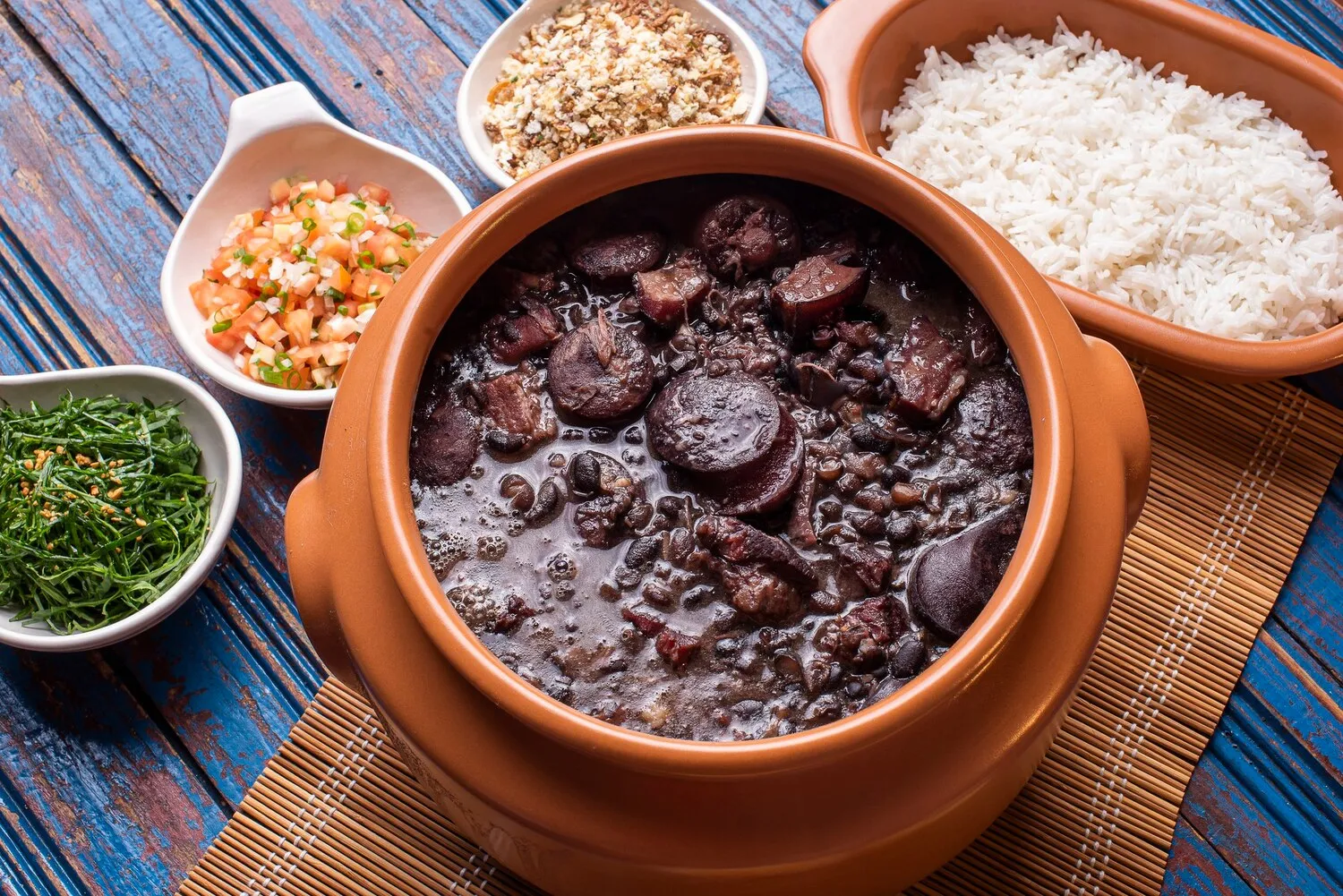

Feijoada
Classic Brazilian black bean stew with various cuts of pork, beef, and sausage. Served with rice, collard greens, farofa (toasted cassava flour), and orange slices.
Información Nutricional
* El % de Valor Diario (VD) indica cuánto aporta un nutriente en una porción de alimento a una dieta diaria. Se utilizan 2,000 calorías al día para consejos generales de nutrición.
Función Premium
Función Premium
Feijoada's origins are debated, with some claiming it evolved from European stews, particularly those involving beans and various meats. A popular, but largely unsubstantiated, myth suggests it originated with slaves using discarded meat scraps. More likely, it's a Brazilian adaptation of Iberian stews, incorporating local ingredients and culinary traditions.
Función Premium
Feijoada is considered Brazil's national dish and is deeply ingrained in Brazilian culture. It is more than just a meal; it's a social event, often enjoyed on weekends with family and friends.
Social Gathering
Feijoada is often prepared in large quantities, making it ideal for sharing and celebrating with loved ones. It's a communal experience that fosters bonding and strengthens relationships.
Weekend Tradition
Traditionally, feijoada is served on Saturdays and Sundays, allowing ample time for preparation and enjoyment. It's a leisurely meal meant to be savored and enjoyed throughout the afternoon.
Regional Variations
While the basic recipe remains consistent, regional variations exist throughout Brazil. Different cuts of meat, types of sausages, and additions of local spices reflect the diverse culinary traditions of each region.
Symbol of Brazilian Identity
Feijoada is a symbol of Brazilian identity, representing the country's diverse culinary heritage and its spirit of sharing and community.
Función Premium
Feijoada is a rich and savory stew characterized by its deep, smoky, and salty flavors. The combination of black beans, different cuts of pork and beef, and smoked sausages creates a complex and satisfying taste profile.
The black beans provide an earthy base, while the pork (often including salted pork, bacon, ribs, and sausage) contributes saltiness, smokiness, and a variety of textures. Beef adds richness and depth. The sausages, like linguiça and paio, contribute spice and further enhance the smoky flavor. Common seasonings include garlic, onions, bay leaves, and sometimes chili peppers for a touch of heat. The accompanying side dishes offer contrast: rice provides a neutral starch, collard greens offer bitterness and freshness, farofa adds a toasted, nutty crunch, and orange slices contribute acidity to cut through the richness of the stew.
Función Premium
Soaking the Beans
Soaking the black beans overnight is crucial for reducing cooking time and improving their digestibility. Discard the soaking water before cooking.
Desalting the Meat
Salted pork needs to be desalted before cooking. Soak it in cold water for 24-48 hours, changing the water several times.
Cooking Time
Feijoada requires a long and slow cooking process to allow the flavors to meld together. Simmer the stew gently over low heat for several hours.
Serving Order
Traditionally, feijoada is served in stages. The beans are often served first, followed by the meats, allowing diners to select their preferred combinations.
Consider a pressure cooker
Using a pressure cooker significantly reduces cooking time while still achieving a rich flavor.
Función Premium
Explora platos y restaurantes adicionales de Stew
Explorar StewDescubre los mejores lugares para comer y experiencias culinarias en São Gonçalo.
Explorar São GonçaloAprende más sobre la cultura gastronómica, la escena de restaurantes y el patrimonio culinario de Portugal.
Explorar Portugal