
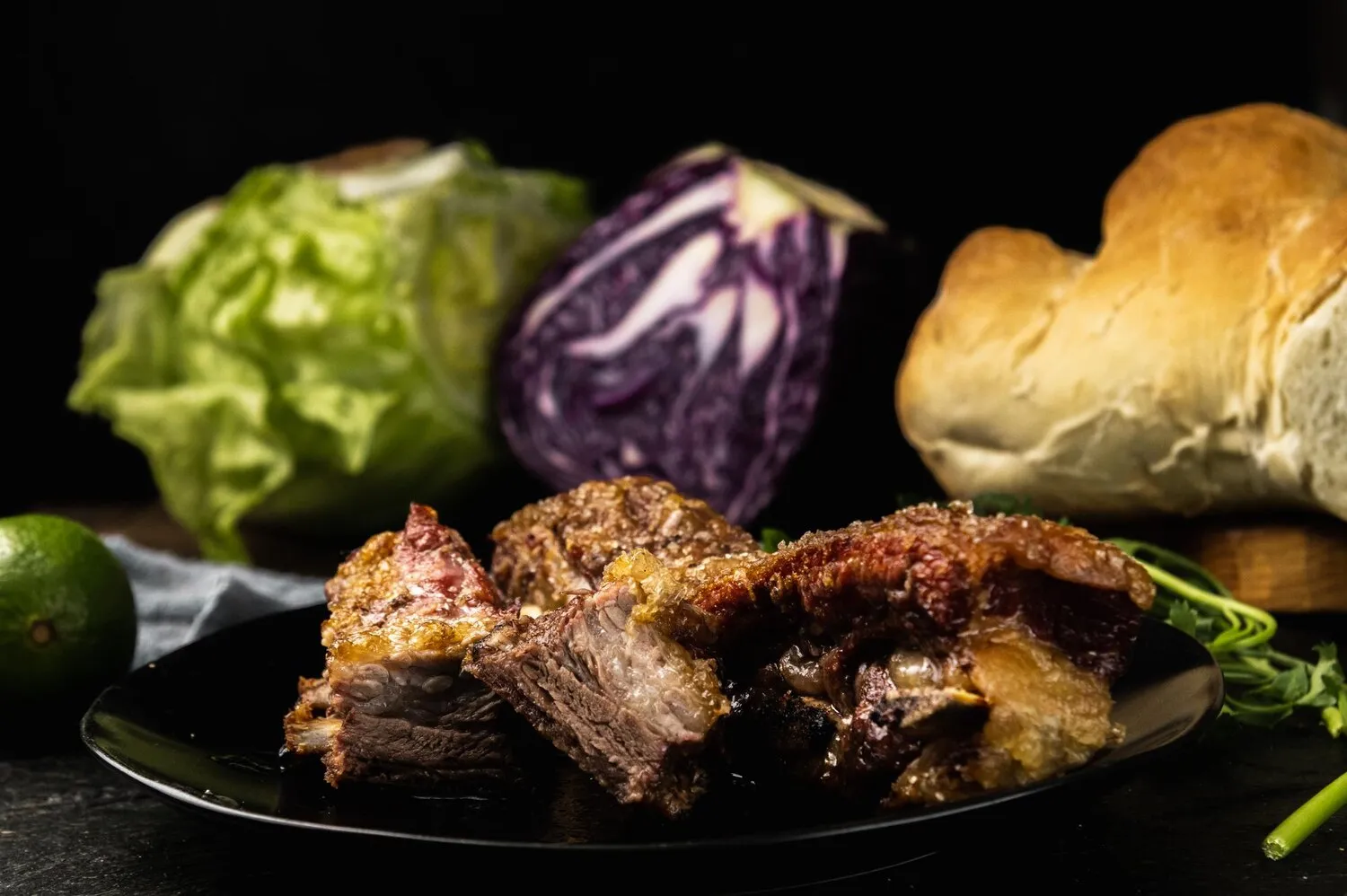

Porco Preto
Grilled Black Pork. Another highly recommended item, know for its flavor.
Información Nutricional
* El % de Valor Diario (VD) indica cuánto aporta un nutriente en una porción de alimento a una dieta diaria. Se utilizan 2,000 calorías al día para consejos generales de nutrición.
Función Premium
Función Premium
Porco Preto, or Black Iberian Pig, has roots tracing back to the Iberian Peninsula's ancient history. The pigs are descendants of wild boars and have been raised in the region for centuries. The unique flavor profile is largely due to their diet of acorns (montanheira) during the finishing stage, a tradition passed down through generations.
Función Premium
Porco Preto is more than just a dish; it's an integral part of Portuguese culture, particularly in the Alentejo region. It represents a connection to the land, traditional farming practices, and the slow food movement.
Montanheira Season
The 'montanheira' season, when the pigs feast on acorns, is a crucial time. It's celebrated and deeply respected, as it directly impacts the quality and flavor of the meat. Farmers carefully manage the pigs' access to the acorn-rich dehesa (pastureland).
Festival Celebrations
Many festivals in Alentejo celebrate the Porco Preto, showcasing different preparations and cuts. These events highlight the importance of the pig to the local economy and cultural identity.
Family Tradition
Preparing Porco Preto dishes is often a family affair, with recipes and techniques passed down through generations. Certain cuts and preparations are reserved for special occasions.
Función Premium
Porco Preto boasts a rich, nutty, and savory flavor profile, significantly different from standard pork. The intramuscular fat contributes to a melt-in-your-mouth texture.
The distinctive taste comes from the breed of pig, the acorn-based diet, and the curing process, if applicable. The meat is known for its marbling, similar to Wagyu beef, which creates a succulent and flavorful experience. The nutty undertones are prominent due to the acorns, while the savory notes are enhanced by traditional seasonings like garlic, paprika, and sometimes wine.
Función Premium
Sourcing Matters
Look for certified Porco Preto from Alentejo to ensure authenticity. Check for designations like 'Bellota' or 'Pata Negra,' which indicate the pigs were acorn-fed.
Cooking Methods
Due to the high fat content, Porco Preto benefits from slow cooking or grilling. This allows the fat to render and create a tender, flavorful result. Avoid overcooking.
Wine Pairing
Pair Porco Preto with robust red wines from Alentejo, such as Trincadeira or Aragonez, which complement the rich flavors of the meat. Vinho Verde, a lighter, slightly sparkling white wine, can also be paired if the dish is lighter in style.
Función Premium
Explora platos y restaurantes adicionales de Grilled
Explorar GrilledDescubre los mejores lugares para comer y experiencias culinarias en Loures.
Explorar LouresAprende más sobre la cultura gastronómica, la escena de restaurantes y el patrimonio culinario de Portugal.
Explorar Portugal