
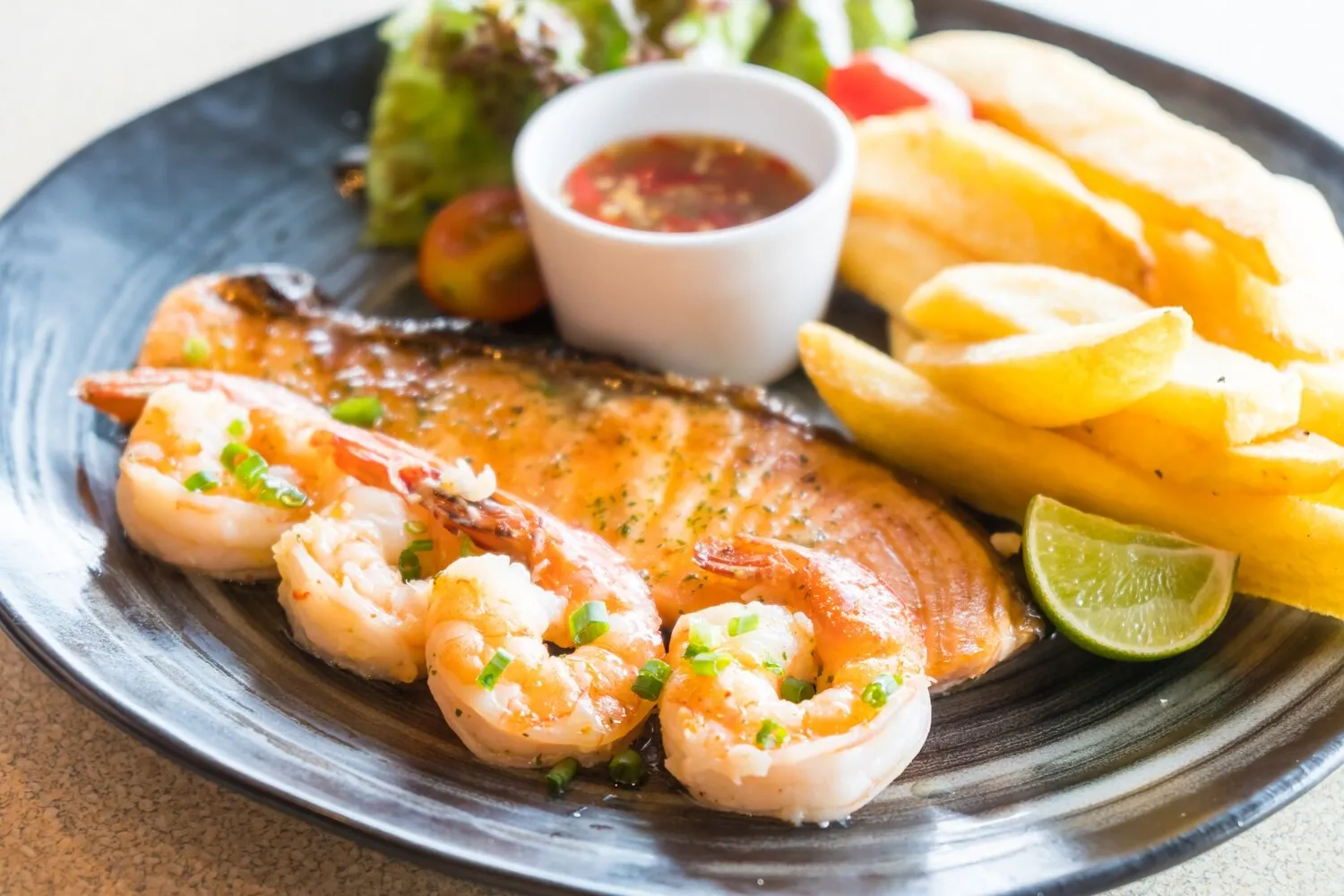

Seafood Dishes
Given the restaurant's focus on local ingredients, seafood dishes, particularly those featuring fresh catches from the region, are often popular. Reviewers often highlight the quality and freshness of the seafood.
Información Nutricional
* El % de Valor Diario (VD) indica cuánto aporta un nutriente en una porción de alimento a una dieta diaria. Se utilizan 2,000 calorías al día para consejos generales de nutrición.
Función Premium
Función Premium
Seafood dishes have a history as old as humanity itself. Coastal communities worldwide have relied on the sea for sustenance, developing diverse culinary traditions centered around fish, shellfish, and other marine life. Different cultures have embraced unique cooking methods and flavor profiles, shaping the vast world of seafood cuisine.
Función Premium
Seafood dishes hold significant cultural importance in many coastal communities, often representing a connection to the sea, local traditions, and celebrations. They frequently feature prominently in festive meals and regional specialties.
Mediterranean Seafood Feasts
In Mediterranean cultures, seafood is often the centerpiece of large family gatherings and celebrations. Dishes like paella, bouillabaisse, and grilled whole fish represent the bounty of the sea and communal dining.
Japanese Sushi and Sashimi
Japanese cuisine elevates seafood to an art form with dishes like sushi and sashimi, emphasizing the freshness, quality, and presentation of the ingredients. The preparation and consumption are often steeped in ritual and tradition.
New England Clam Bakes
New England clam bakes are a traditional social event centered around steaming seafood, potatoes, and corn in seaweed-lined pits, representing a connection to the region's maritime heritage.
Función Premium
Seafood dishes offer a vast spectrum of flavors, from delicate and subtly sweet to rich, briny, and intensely savory. The flavors are heavily influenced by the type of seafood used, the cooking method employed, and the accompanying ingredients.
The specific flavors depend greatly on the seafood itself. Flounder and sole have mild, delicate flavors. Salmon offers a richer, oilier taste. Shrimp and lobster provide sweetness, while oysters and clams deliver a characteristic brininess. Common flavor enhancements include lemon, garlic, herbs (like parsley, dill, and thyme), butter, olive oil, chili peppers, and various spices. Sauces play a significant role, ranging from creamy béchamel and tangy marinara to vibrant Asian-inspired glazes.
Función Premium
Freshness is Key
Always choose the freshest seafood available. Look for firm flesh, bright color, and a clean, fresh smell. Avoid seafood with a fishy odor or slimy texture.
Don't Overcook
Seafood cooks quickly and easily becomes overcooked, resulting in a dry and rubbery texture. Cook just until the fish is opaque and flakes easily with a fork, or until shellfish turn pink or red.
Pair Flavors Wisely
Consider complementary flavors when seasoning and saucing seafood. Lemon, herbs, garlic, and white wine are classic pairings, but don't be afraid to experiment with other spices and sauces.
Proper Storage
Store seafood properly to maintain freshness. Keep it refrigerated at a temperature of 40°F (4°C) or below. Consume within one to two days of purchase.
Función Premium
Explora platos y restaurantes adicionales de Modern Nordic
Explorar Modern NordicDescubre los mejores lugares para comer y experiencias culinarias en Trondheim.
Explorar TrondheimAprende más sobre la cultura gastronómica, la escena de restaurantes y el patrimonio culinario de Norway.
Explorar Norway