
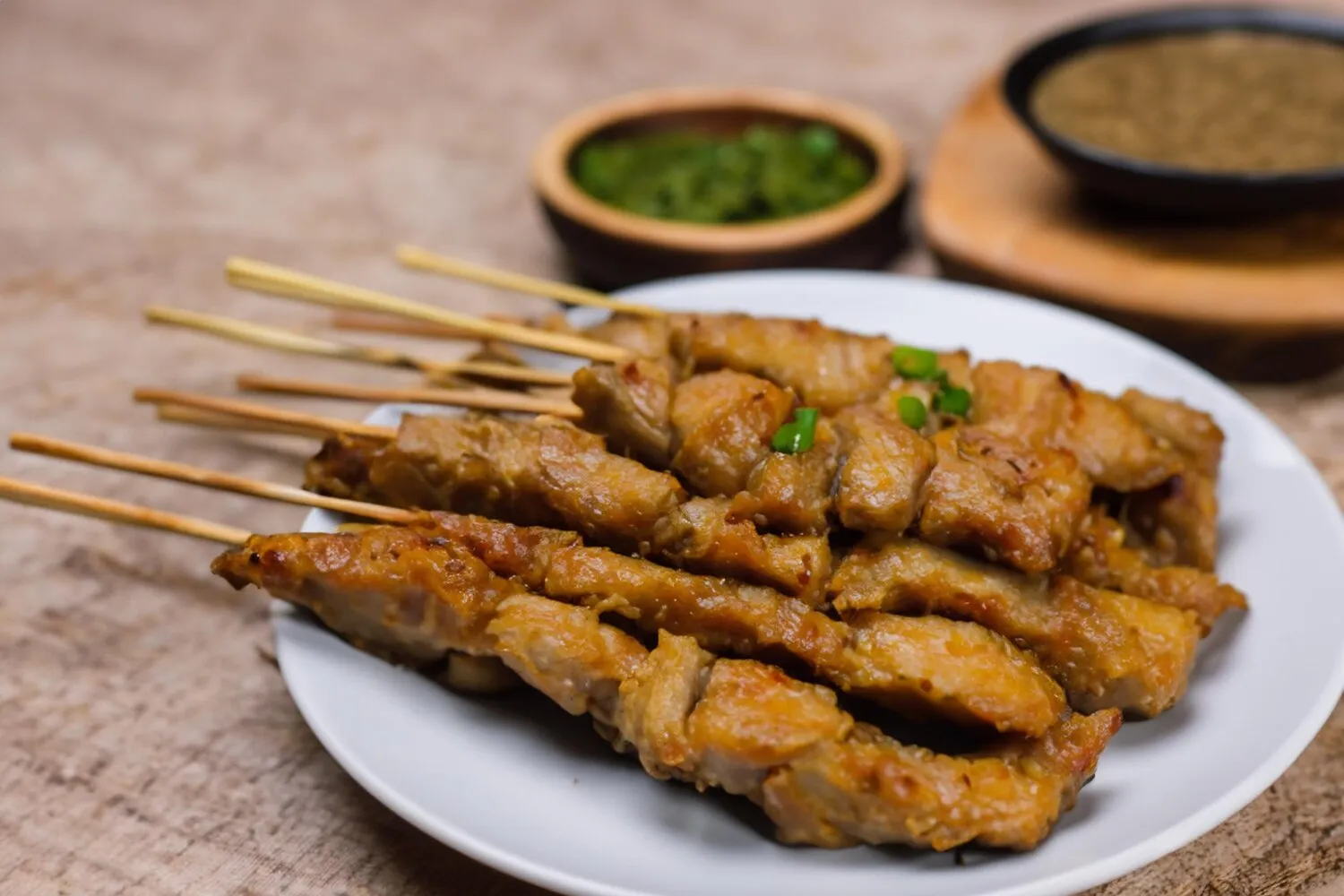

Satay
Skewered and grilled meat, often chicken, served with peanut sauce, kroepoek (crispy crackers), and atjar (pickled vegetables).
Información Nutricional
* El % de Valor Diario (VD) indica cuánto aporta un nutriente en una porción de alimento a una dieta diaria. Se utilizan 2,000 calorías al día para consejos generales de nutrición.
Función Premium
Función Premium
Satay originated in Java, Indonesia, and is believed to have been developed based on the influence of Indian kebab brought by Muslim traders. It quickly spread throughout the Indonesian archipelago and neighboring countries, becoming a beloved street food and celebratory dish.
Función Premium
Satay is deeply embedded in Indonesian culture, representing a communal and social eating experience. It's a popular dish found everywhere from street food stalls to high-end restaurants, and is often served during celebrations and gatherings.
Street Food Staple
Satay is a ubiquitous street food, readily available from mobile vendors and small stalls throughout Indonesia, particularly in Java.
Celebratory Dish
Satay is often served during special occasions, such as weddings, religious festivals (like Eid al-Fitr), and family gatherings, reflecting its festive nature.
Regional Variations
Different regions in Indonesia have their own unique variations of satay, with distinct marinades, sauces, and types of meat. For example, Sate Madura features a sweet and savory peanut sauce, while Sate Lilit from Bali uses minced meat wrapped around lemongrass stalks.
Symbol of Indonesian Cuisine
Satay has become a globally recognized symbol of Indonesian cuisine, representing the country's rich culinary heritage and diverse flavors.
Función Premium
Satay boasts a delightful combination of savory, sweet, smoky, and nutty flavors. The marinade imparts rich spices, while the peanut sauce provides a creamy, sweet, and umami depth.
The meat, typically chicken, beef, lamb, or goat, is marinated in a blend of spices such as turmeric, coriander, cumin, galangal, ginger, garlic, and lemongrass. Palm sugar or kecap manis (sweet soy sauce) adds sweetness and caramelization during grilling. The signature peanut sauce is made from ground peanuts, chilies, garlic, ginger, galangal, candlenuts (optional), kecap manis, lime juice, and water, creating a rich and complex sauce that complements the grilled meat perfectly.
Función Premium
Marinating Time
Marinate the meat for at least 4 hours, or preferably overnight, to allow the flavors to fully penetrate.
Grilling Technique
Grill the satay over medium heat, turning frequently, to ensure even cooking and prevent burning. Basting with the marinade during grilling adds flavor and moisture.
Peanut Sauce Consistency
Adjust the water or kecap manis in the peanut sauce to achieve your desired consistency. It should be thick enough to coat the satay but not too thick to pour.
Skewering Technique
Cut the meat into even-sized pieces for consistent cooking. Don't overcrowd the skewers, leaving some space between the pieces of meat.
Choosing the Right Meat
For chicken satay, use boneless, skinless chicken thighs for the most tender and flavorful results. For beef, sirloin or tenderloin are good choices.
Función Premium
Explora platos y restaurantes adicionales de Main Course
Explorar Main CourseDescubre los mejores lugares para comer y experiencias culinarias en Arnhem.
Explorar ArnhemAprende más sobre la cultura gastronómica, la escena de restaurantes y el patrimonio culinario de Netherlands.
Explorar Netherlands