
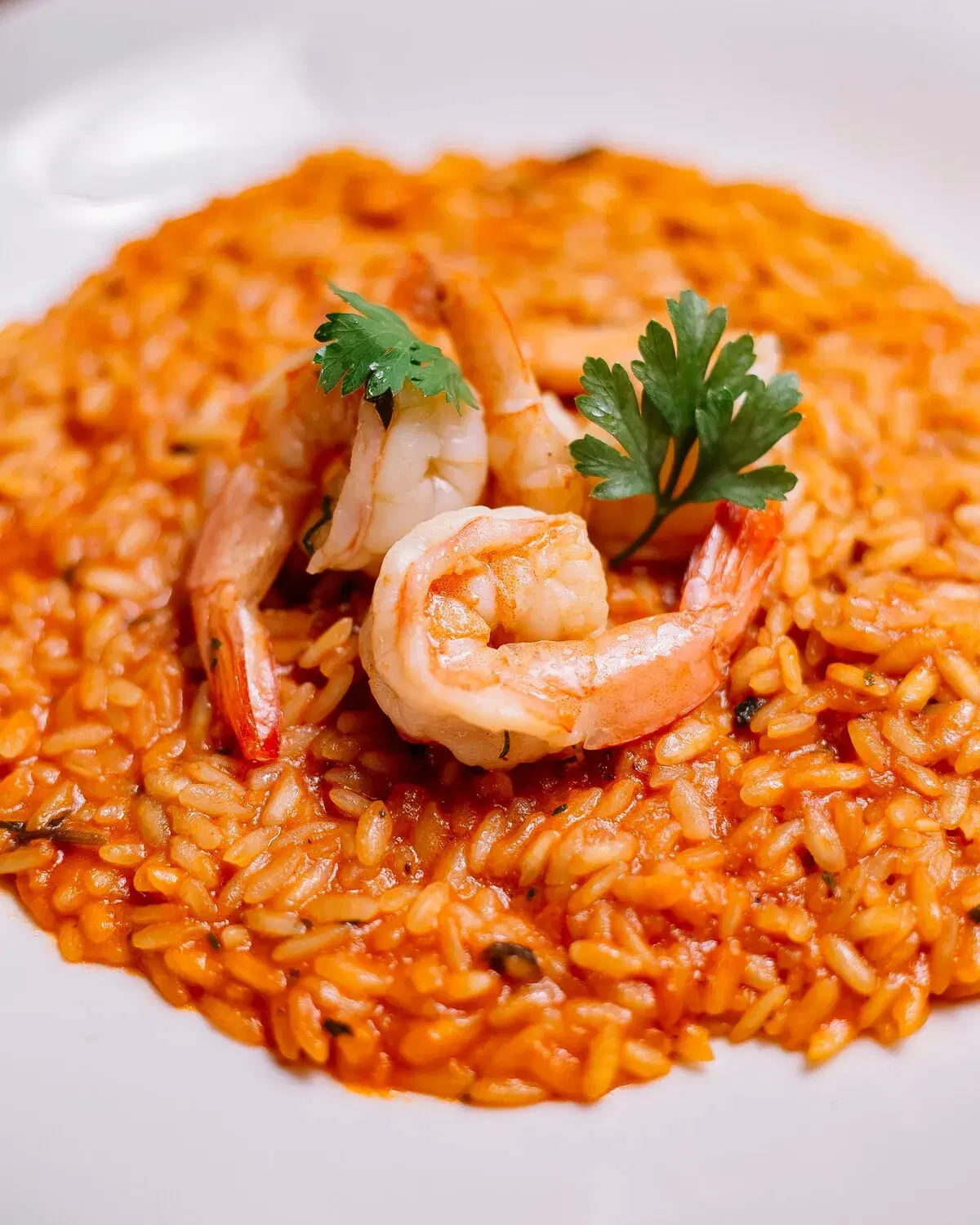

Seafood Risotto
Risotto with a variety of seafood.
Información Nutricional
* El % de Valor Diario (VD) indica cuánto aporta un nutriente en una porción de alimento a una dieta diaria. Se utilizan 2,000 calorías al día para consejos generales de nutrición.
Función Premium
Función Premium
Risotto, originating in northern Italy, particularly the Po Valley region, has its roots in the cultivation of rice introduced to Italy by the Arabs in the Middle Ages. The dish evolved over centuries, becoming a staple in Italian cuisine. Seafood variations likely developed as coastal communities incorporated fresh catches into this creamy rice dish.
Función Premium
Seafood Risotto represents Italian coastal culinary tradition and the importance of fresh, local ingredients. It's often seen as a celebratory dish, served during special occasions or enjoyed in seaside restaurants.
Regional Variations
Different regions of Italy showcase local seafood. Venetian versions might include cuttlefish ink, creating a striking black risotto, while coastal regions in Southern Italy incorporate locally caught fish and shellfish.
Family Gatherings
Seafood risotto is frequently prepared during family gatherings and festive meals, showcasing the bounty of the sea and the chef's skill in creating a harmonious and flavorful dish.
Slow Food Movement
The emphasis on fresh, seasonal seafood aligns with the Slow Food movement, which promotes local, sustainable food traditions.
Función Premium
Seafood Risotto is a delightful symphony of oceanic flavors combined with the creamy richness of Arborio rice. The dominant flavors are those of fresh seafood, balanced by the savory notes of the broth and the subtle tang of white wine.
The primary flavor profiles come from the seafood itself: shrimp offers a sweet and slightly briny taste, mussels and clams provide a deeper, more mineral flavor of the sea, squid brings a subtle sweetness and chewy texture, and often scallops are included for their delicate, buttery notes. These flavors are enhanced by the umami-rich seafood broth, which infuses the rice as it cooks. White wine adds acidity and complexity, while garlic, onions, and sometimes saffron contribute aromatic layers. A touch of parsley and lemon zest often brightens the dish, adding a fresh and vibrant element.
Función Premium
Use High-Quality Seafood
Fresh, sustainably sourced seafood is crucial for the best flavor. Avoid using pre-cooked or frozen seafood, as it can lack the desired texture and taste.
Warm the Broth
Keep the seafood broth warm throughout the cooking process. Adding cold broth will lower the temperature of the rice and disrupt the cooking process.
Stir Frequently
Stir the risotto almost constantly during the cooking process. This helps release the starches in the rice, creating the desired creamy texture.
Cook to Al Dente
The rice should be cooked al dente, meaning it should have a slight bite to it. Avoid overcooking the rice, as it will become mushy.
Add Seafood Last
The seafood should be added towards the end of the cooking process to prevent it from becoming overcooked and rubbery.
Función Premium
Explora platos y restaurantes adicionales de Risotto
Explorar RisottoDescubre los mejores lugares para comer y experiencias culinarias en Venezia.
Explorar VeneziaAprende más sobre la cultura gastronómica, la escena de restaurantes y el patrimonio culinario de Italy.
Explorar Italy