
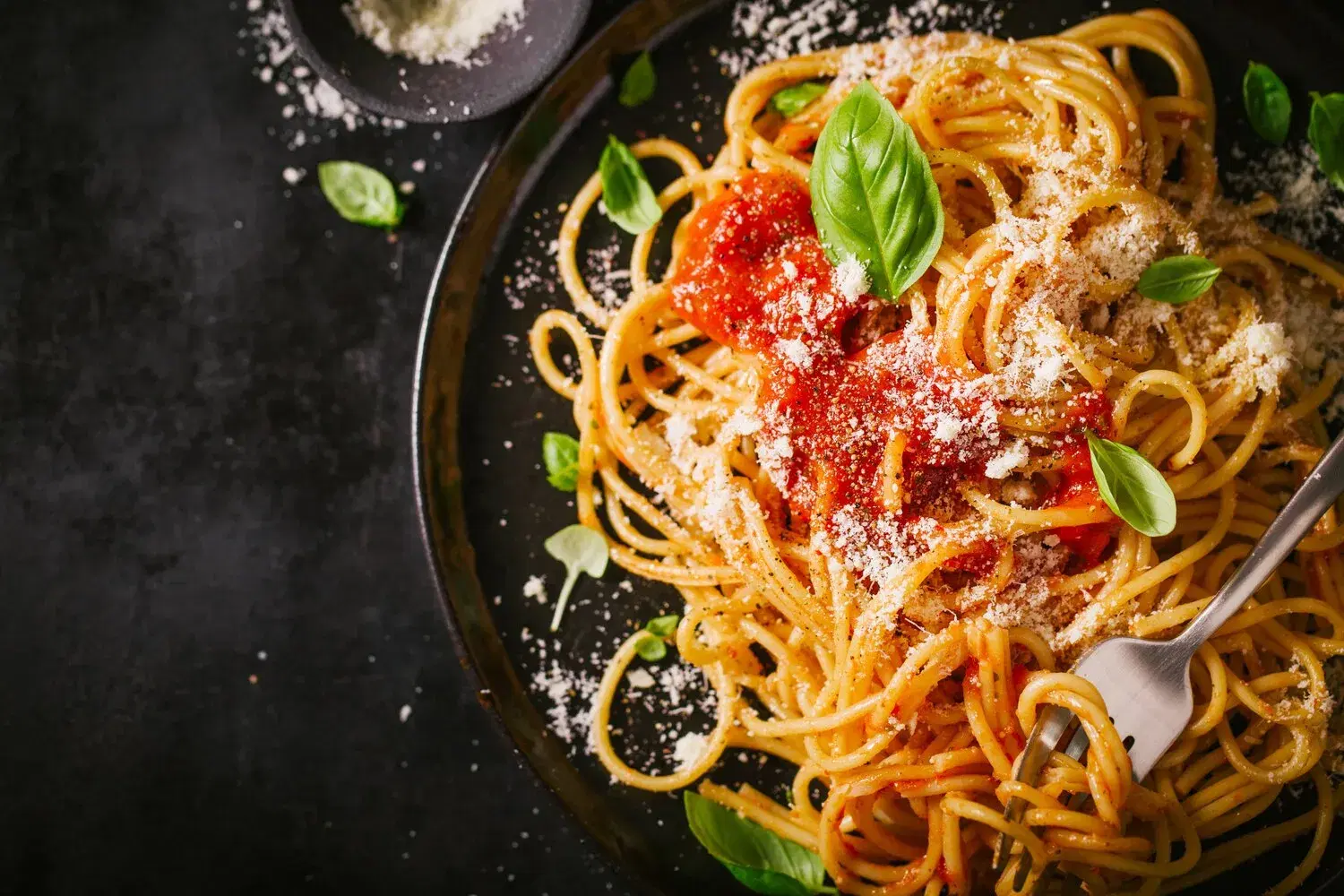

Pasta
chat qui rit serves pasta. While specifics vary based on availability and day, it's a staple.
Información Nutricional
* El % de Valor Diario (VD) indica cuánto aporta un nutriente en una porción de alimento a una dieta diaria. Se utilizan 2,000 calorías al día para consejos generales de nutrición.
Función Premium
Función Premium
Pasta has ancient roots, with evidence suggesting noodle-like foods existed in various cultures long before its formal development in Italy. The modern pasta we know evolved over centuries, influenced by Arab trade routes introducing durum wheat to Sicily, and the gradual refinement of pasta-making techniques throughout the Italian peninsula during the Middle Ages and Renaissance.
Función Premium
Pasta is a cornerstone of Italian cuisine and culture, representing family, tradition, and regional diversity. It's not just a meal; it's an experience shared and celebrated.
Family Gatherings
Pasta is often the centerpiece of family meals, especially on Sundays or special occasions. Making pasta from scratch is a tradition passed down through generations.
Regional Diversity
Each region of Italy boasts unique pasta shapes and sauce combinations, reflecting local ingredients and culinary traditions. From the orecchiette of Puglia to the pappardelle of Tuscany, pasta reflects the rich regional identities of Italy.
A Symbol of Italian Identity
Pasta is recognized globally as a symbol of Italian cuisine and culture, representing the country's culinary heritage and its emphasis on fresh, simple ingredients.
Función Premium
Pasta itself is relatively neutral in flavor, acting as a vehicle for a wide variety of sauces and ingredients. The flavor profile of a pasta dish depends entirely on the accompanying sauce and additions.
The diverse flavors of pasta dishes range from simple and fresh, like aglio e olio (garlic and oil) which features garlic, olive oil, chili flakes and parsley, to rich and complex, like Bolognese (meat sauce) made with ground meat, vegetables, tomatoes, and often wine and cream. Other examples include creamy carbonara (eggs, pancetta, cheese, black pepper), tangy marinara (tomato sauce, herbs), and pesto (basil, pine nuts, garlic, parmesan cheese, olive oil). The specific flavors are thus determined by the sauce's ingredients.
Función Premium
Cooking Pasta 'Al Dente'
Cook pasta until it is 'al dente,' meaning 'to the tooth.' It should be firm and slightly resistant when bitten, not mushy. This provides the best texture and allows the pasta to absorb the sauce effectively.
Salting the Pasta Water
Add a generous amount of salt to the boiling pasta water. This seasons the pasta itself and helps to develop its flavor.
Reserving Pasta Water
Before draining the pasta, reserve about a cup of the starchy cooking water. This water can be added to the sauce to help it emulsify and cling to the pasta better, creating a smoother and more cohesive dish.
Finishing the Pasta in the Sauce
For optimal flavor and texture, toss the cooked pasta into the sauce in a pan over low heat and finish cooking for a minute or two. This allows the pasta to absorb the sauce's flavors and create a harmonious blend.
Función Premium
Explora platos y restaurantes adicionales de Italian
Explorar ItalianDescubre los mejores lugares para comer y experiencias culinarias en Venezia.
Explorar VeneziaAprende más sobre la cultura gastronómica, la escena de restaurantes y el patrimonio culinario de Italy.
Explorar Italy