
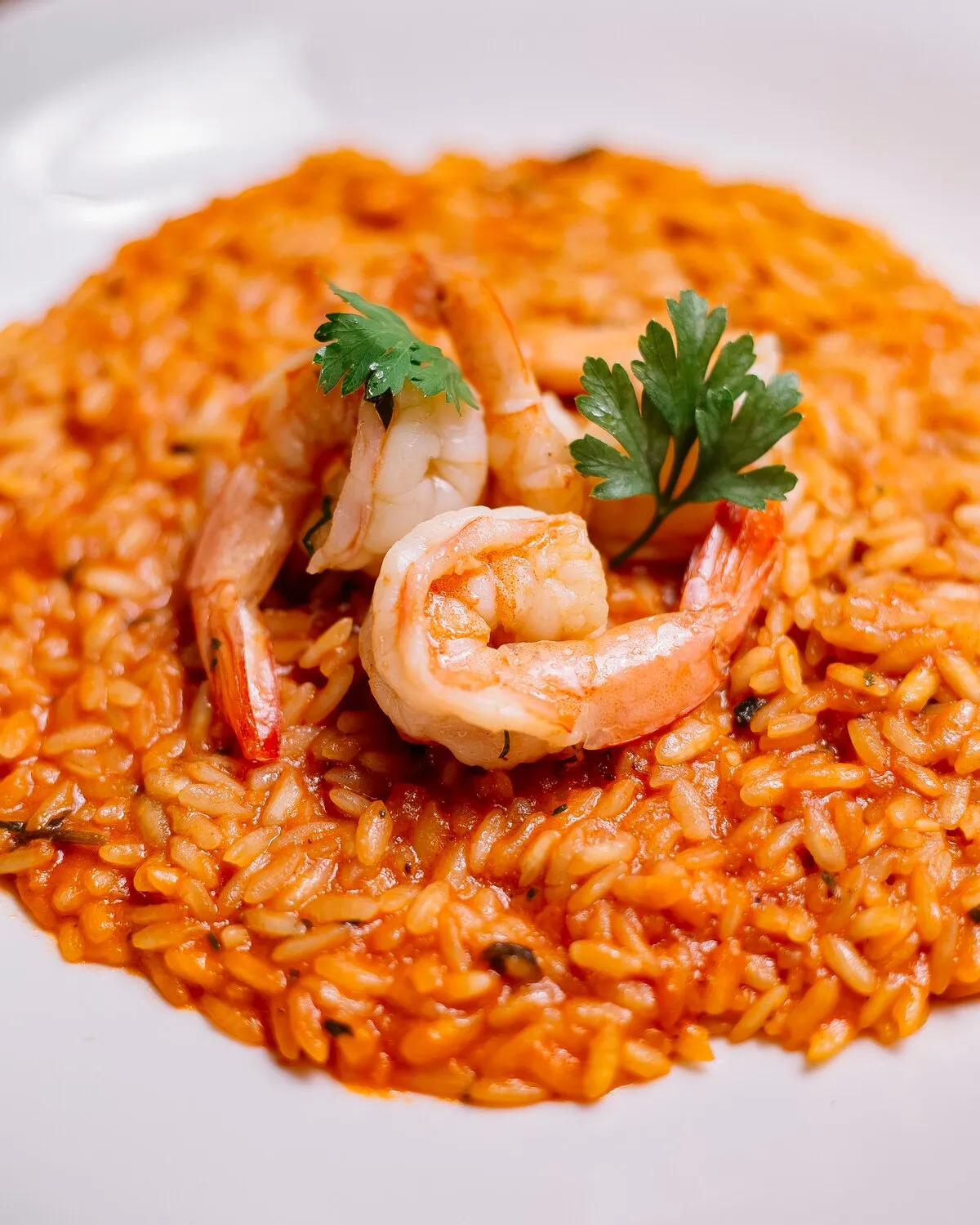

Seafood Risotto
Creamy risotto prepared with a variety of fresh seafood, such as shrimp, mussels, and clams. Likely seasoned with herbs and possibly a touch of tomato.
Información Nutricional
* El % de Valor Diario (VD) indica cuánto aporta un nutriente en una porción de alimento a una dieta diaria. Se utilizan 2,000 calorías al día para consejos generales de nutrición.
Función Premium
Función Premium
Risotto, originating in northern Italy, evolved from earlier rice dishes after rice cultivation was introduced via Arab influence in the Middle Ages. Seafood risotto built upon this base, incorporating the bounty of the Italian coastline as seafood became more accessible and integrated into regional cuisines.
Función Premium
Seafood risotto, especially in coastal regions of Italy, is often associated with special occasions and celebrations. It represents a connection to the sea and the abundance of fresh ingredients available.
Coastal Celebrations
In coastal towns, seafood risotto is frequently prepared for festivals, family gatherings, and religious holidays, showcasing the fresh catch of the day.
Regional Variations
Different regions of Italy boast unique variations of seafood risotto, reflecting the specific seafood available in their local waters and their culinary traditions. For example, Venetian risotto may feature cuttlefish, while Sicilian risotto might include swordfish and tomatoes.
Symbol of Abundance
The rich flavors and variety of seafood in the risotto symbolize prosperity and abundance, making it a popular choice for celebratory meals.
Función Premium
Seafood risotto offers a complex blend of savory seafood notes, rich creaminess, and bright acidity. The overall flavor profile is defined by the freshness of the seafood, the umami depth of the broth, and the subtle sweetness of the rice.
The primary flavor components are: the sweet and salty brininess of the seafood (typically shrimp, scallops, mussels, and clams); the savory, umami-rich flavor of the seafood or vegetable broth used for cooking the rice; the creamy, buttery richness derived from the gradual addition of broth and the starch released from the rice; the subtle sweetness of Arborio or Carnaroli rice; the aromatic flavors of garlic, onion, and white wine; and the bright acidity often added through a squeeze of lemon juice or a sprinkle of fresh parsley.
Función Premium
Use High-Quality Seafood
The fresher the seafood, the better the flavor of the risotto. Purchase seafood from a reputable source and use it as soon as possible.
Warm the Broth
Keep the broth warm throughout the cooking process. Adding cold broth can lower the temperature of the rice and disrupt the cooking process.
Stir Frequently But Not Constantly
Stirring releases starch from the rice, creating the creamy texture. Stir frequently, but avoid over-stirring, which can make the risotto gummy.
Cook the Seafood Separately
Avoid overcooking the seafood by adding it to the risotto only during the last few minutes of cooking time.
Don't overcook the rice!
You should cook the rice until it's al dente, meaning that it still has a bit of a bite in the center.
Función Premium
Explora platos y restaurantes adicionales de Risotto
Explorar RisottoDescubre los mejores lugares para comer y experiencias culinarias en Salerno.
Explorar SalernoAprende más sobre la cultura gastronómica, la escena de restaurantes y el patrimonio culinario de Italy.
Explorar Italy