
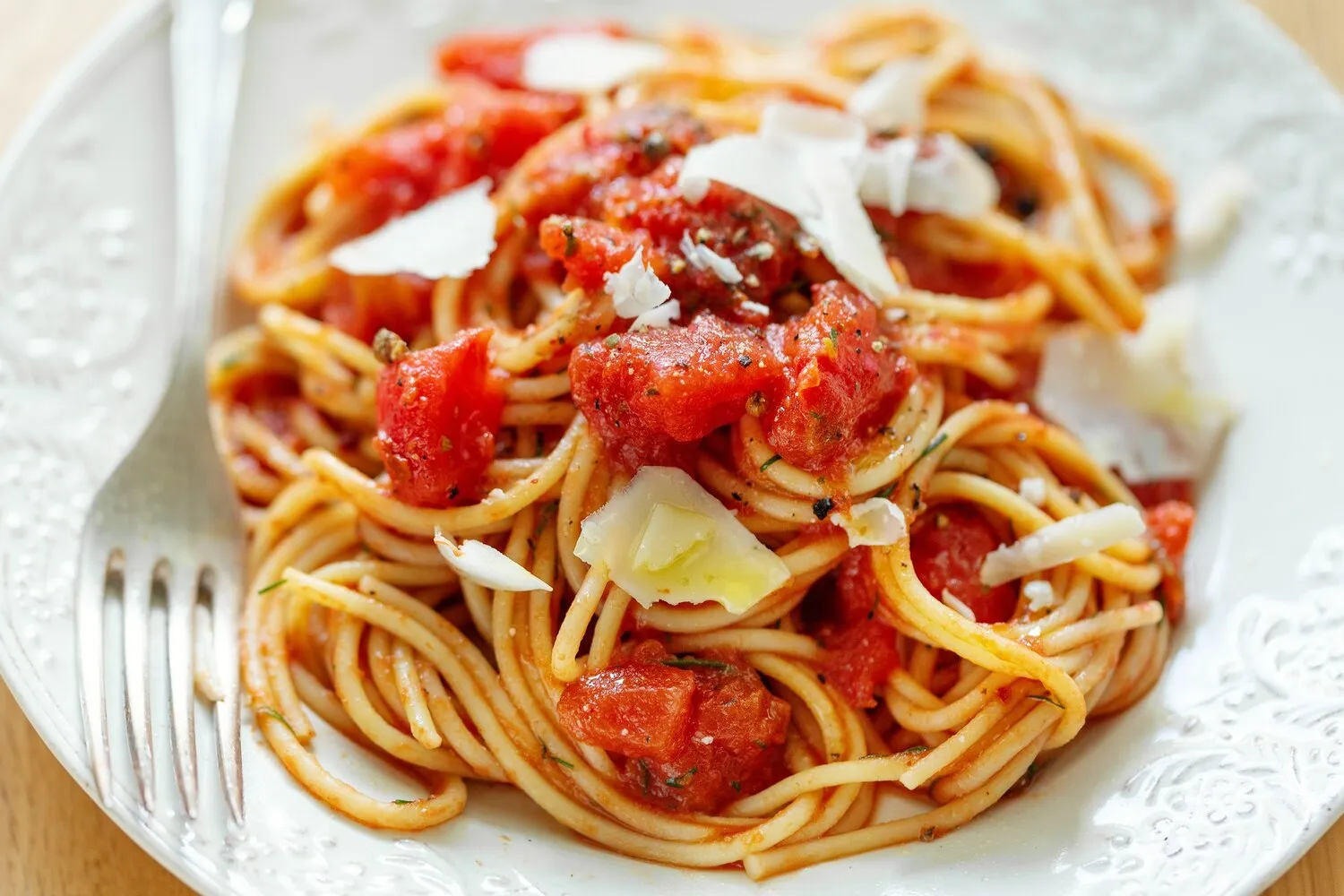

Amatriciana
A Roman pasta dish made with guanciale, tomato, Pecorino Romano cheese, and chili pepper.
Información Nutricional
* El % de Valor Diario (VD) indica cuánto aporta un nutriente en una porción de alimento a una dieta diaria. Se utilizan 2,000 calorías al día para consejos generales de nutrición.
Función Premium
Función Premium
Amatriciana originates from Amatrice, a town in the mountainous province of Rieti, Lazio. It evolved from the earlier 'gricia' (or 'griscia'), a pasta dish lacking tomatoes. The addition of tomatoes likely occurred in the late 18th or early 19th century, as tomatoes became more widely available in Italian cuisine.
Función Premium
Amatriciana is a symbol of Roman and Amatrice culinary identity. It represents simple, hearty, and flavorful cuisine rooted in local ingredients and traditions. It's a dish often associated with family meals and celebrations.
Local Pride
Amatriciana is a source of pride for the town of Amatrice, which fiercely protects its culinary heritage. Following the devastating earthquake in 2016, Amatriciana became a symbol of resilience and a rallying point for fundraising and support.
Variations and Debates
While the core ingredients remain relatively consistent, variations exist, and debates rage on regarding the 'authentic' recipe. Some cooks add onion or garlic, while purists insist on their exclusion.
Roman Staple
Amatriciana is a staple on trattoria menus throughout Rome and the Lazio region, demonstrating its popularity and enduring appeal.
Función Premium
Amatriciana boasts a rich, savory, and slightly spicy flavor profile. The key components contribute distinct characteristics that meld beautifully.
The robust porky flavor comes from guanciale (cured pork cheek), providing a salty and unctuous base. The tomato provides acidity and sweetness, balancing the richness of the pork. Pecorino Romano cheese adds a sharp, salty, and nutty flavor. Chili pepper introduces a subtle heat that complements the other ingredients without overpowering them.
Función Premium
Guanciale is Key
Do not substitute guanciale with pancetta or bacon. Guanciale's higher fat content and distinct flavor are essential to the authentic taste of Amatriciana.
Render the Fat
Cook the guanciale over medium heat until the fat is rendered and crispy. This creates a flavorful base for the sauce.
Use San Marzano Tomatoes
If using canned tomatoes, opt for San Marzano tomatoes for their sweetness and low acidity.
Pasta Choice
Traditionally, bucatini or spaghetti are used. The hollow center of bucatini allows it to hold more sauce.
Don't Overcook the Pasta
Cook the pasta al dente (firm to the bite) and finish cooking it in the sauce to absorb the flavors.
Grate the Cheese Fresh
Always use freshly grated Pecorino Romano cheese for the best flavor and texture. Pre-grated cheese often lacks the same intensity and can have a coating that prevents it from melting properly.
Función Premium
Explora platos y restaurantes adicionales de Italian
Explorar ItalianDescubre los mejores lugares para comer y experiencias culinarias en Roma.
Explorar RomaAprende más sobre la cultura gastronómica, la escena de restaurantes y el patrimonio culinario de Italy.
Explorar Italy