
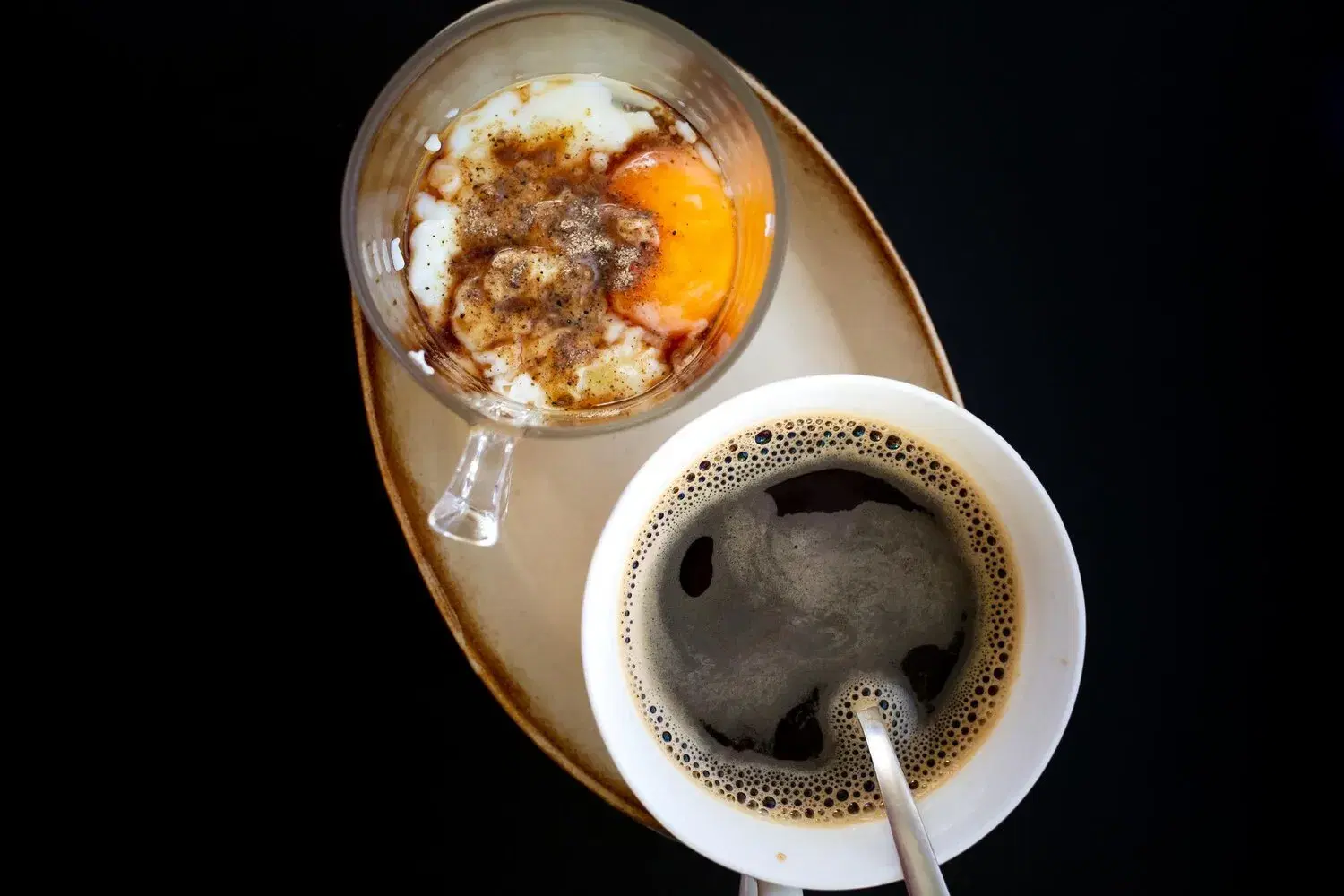

Espresso
A concentrated coffee beverage brewed by forcing hot water through finely-ground coffee beans.
Información Nutricional
* El % de Valor Diario (VD) indica cuánto aporta un nutriente en una porción de alimento a una dieta diaria. Se utilizan 2,000 calorías al día para consejos generales de nutrición.
Función Premium
Función Premium
Espresso's history is rooted in late 19th-century Italy, driven by the desire for faster coffee preparation to serve busy customers. Angelo Moriondo is credited with patenting an early 'instant' coffee machine in 1884. Luigi Bezzera further developed the machine in 1901, and Desiderio Pavoni later refined it for commercial use. These innovations laid the groundwork for modern espresso.
Función Premium
Espresso is deeply ingrained in Italian culture and has spread globally, influencing café culture and coffee consumption habits worldwide. It's not just a drink; it's a social ritual and an integral part of daily life.
Coffee Bars (Caffès)
In Italy, espresso is typically enjoyed standing at the bar of a caffè, often quickly consumed before starting the day. This is a social activity, a place to meet friends, and read the newspaper.
Ritualistic Consumption
The act of preparing and drinking espresso is often seen as a small moment of pleasure and a break in the day. The sound of the machine, the aroma, and the taste are all part of the experience.
Base for other drinks
Espresso is the base for many popular coffee drinks, such as cappuccino, latte, macchiato, and americano, each adapted to local tastes and preferences.
Global Influence
Espresso has revolutionized coffee culture worldwide, leading to the development of specialty coffee shops, barista competitions, and a greater appreciation for high-quality coffee beans and brewing methods.
Función Premium
Espresso offers a concentrated and intense flavor profile characterized by a balance of bitterness, sweetness, and acidity, often with complex undertones.
The primary flavor components are bitterness from the coffee oils and roast, sweetness from caramelized sugars developed during roasting, and acidity that provides brightness and complexity. Depending on the bean origin, roast level, and extraction, espresso can exhibit notes of chocolate, nuts, caramel, fruits, flowers, or spices. The crema, a reddish-brown foam on top, contributes to the overall texture and aroma.
Función Premium
Bean Selection and Grind
Use fresh, high-quality coffee beans and grind them immediately before brewing. The grind should be fine and consistent to ensure proper extraction.
Tamping Technique
Tamp the coffee grounds evenly and firmly with consistent pressure (around 30 pounds) to create a compact puck that resists channeling during extraction.
Water Temperature and Pressure
Maintain a consistent water temperature (ideally between 195-205°F or 90-96°C) and pressure (around 9 bars) for optimal extraction.
Extraction Time
Aim for an extraction time of around 25-30 seconds. Adjust the grind size or tamping pressure if the extraction is too fast or too slow.
Machine Maintenance
Regularly clean and maintain your espresso machine to prevent buildup of oils and minerals, which can affect the flavor of the coffee.
Función Premium
Explora platos y restaurantes adicionales de Coffee
Explorar CoffeeDescubre los mejores lugares para comer y experiencias culinarias en Bergamo.
Explorar BergamoAprende más sobre la cultura gastronómica, la escena de restaurantes y el patrimonio culinario de Italy.
Explorar Italy