
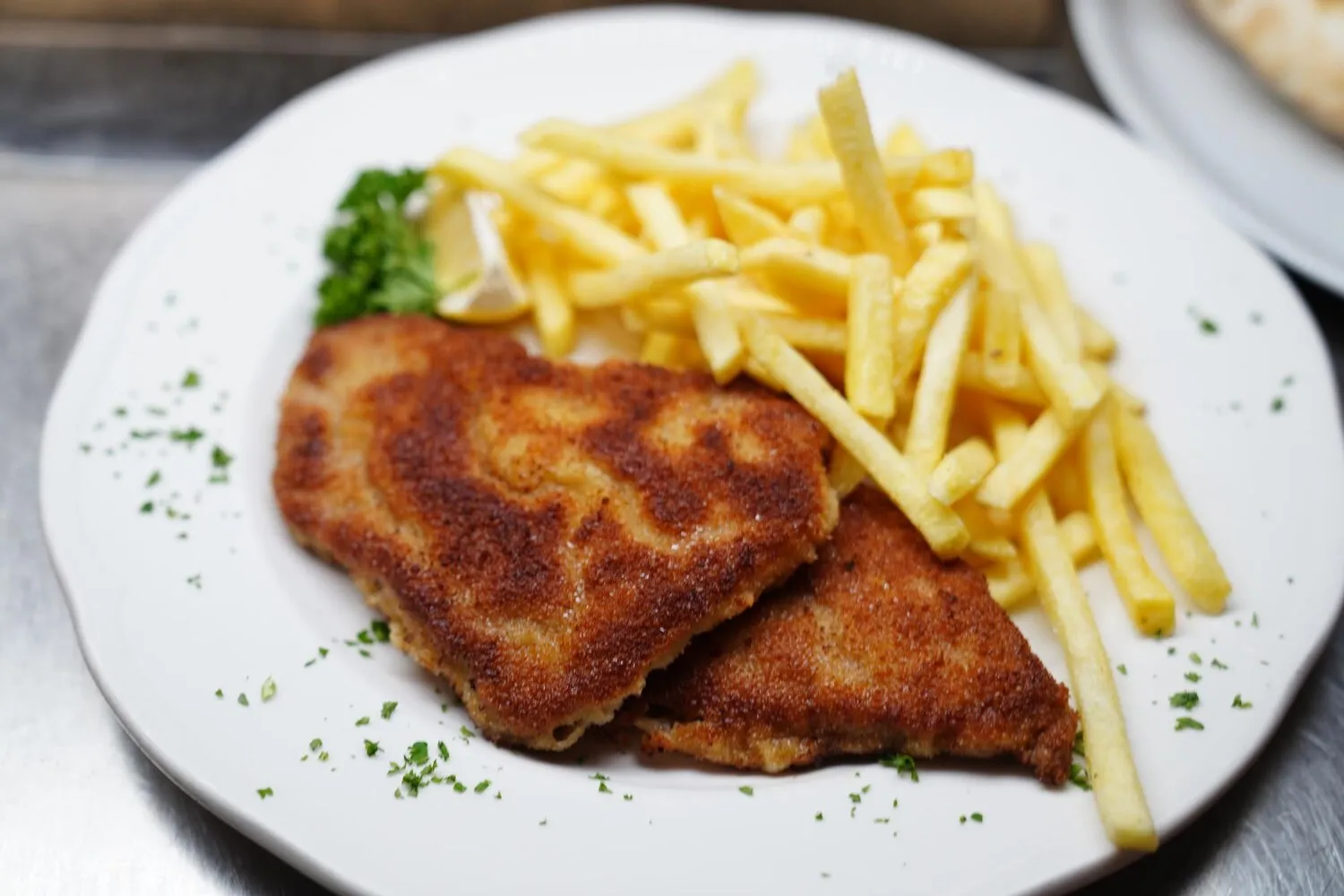

Schnitzel
Classic breaded cutlet, often served with fries or potato salad.
Información Nutricional
* El % de Valor Diario (VD) indica cuánto aporta un nutriente en una porción de alimento a una dieta diaria. Se utilizan 2,000 calorías al día para consejos generales de nutrición.
Función Premium
Función Premium
While the exact origins are debated, Schnitzel is often linked to the Italian 'cotoletta alla milanese,' suggesting possible historical influence from Italy. However, the Viennese Schnitzel, as we know it today, is generally accepted to have originated in Austria during the 19th century.
Función Premium
Schnitzel is a quintessential Austrian dish, deeply ingrained in the country's culinary identity. It's a staple in restaurants and households alike, representing comfort food and tradition.
National Dish
Wiener Schnitzel is considered one of Austria's national dishes, a symbol of its culinary heritage and a source of national pride.
Restaurant Staple
It is a common offering in Austrian restaurants, ranging from traditional beisls (taverns) to high-end establishments.
Home Cooking
Schnitzel is frequently prepared at home, enjoyed as a family meal, and often features in festive gatherings.
Función Premium
The flavor profile is primarily savory, with a focus on the crispy, golden-brown breading complementing the tender meat. Butter is traditionally used for frying, lending a rich, nutty flavor.
The main flavors come from the combination of the veal (or pork), the crispy breadcrumb coating, and the butter used for frying. The meat itself provides a subtle, savory foundation. The breadcrumbs, seasoned with salt and pepper, create a textural contrast and add a mild, toasted flavor. The butter imparts a rich, nutty flavor that enhances the overall experience. Lemon wedges are often served alongside, adding a bright acidity that cuts through the richness of the dish.
Función Premium
Meat Preparation
Pound the meat to an even thickness (about 1/4 inch) to ensure even cooking and tenderness. Use a meat mallet for this purpose.
Breading Technique
Follow the standard breading procedure: flour, egg, and breadcrumbs. Ensure the breadcrumbs are fine and even for optimal crispiness. Season the breadcrumbs with salt and pepper.
Frying Temperature
Maintain a consistent temperature (around 325-350°F or 160-175°C) when frying. Using clarified butter (or a neutral oil) prevents burning and adds flavor.
Serving Suggestions
Serve immediately after frying for maximum crispness. Traditionally, it is served with a lemon wedge. Popular side dishes include potatoes (boiled, fried, or mashed), parsley potatoes, or a simple salad.
Función Premium
Explora platos y restaurantes adicionales de Traditional German
Explorar Traditional GermanDescubre los mejores lugares para comer y experiencias culinarias en Frankfurt am Main.
Explorar Frankfurt am MainAprende más sobre la cultura gastronómica, la escena de restaurantes y el patrimonio culinario de Germany.
Explorar Germany