
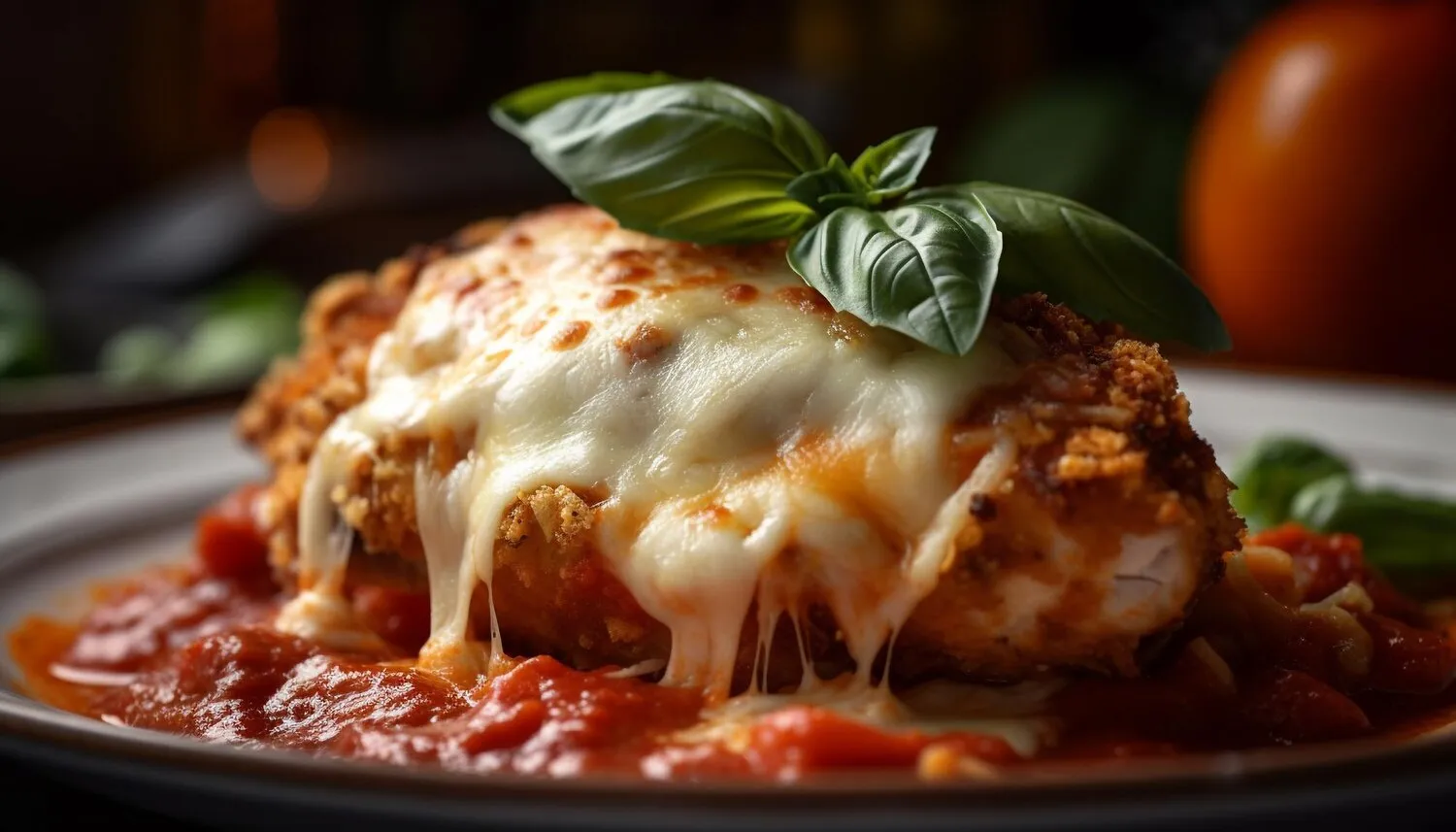

Parmegiana
Breaded meat fillet covered in tomato sauce and melted cheese, served with side dishes.
Información Nutricional
* El % de Valor Diario (VD) indica cuánto aporta un nutriente en una porción de alimento a una dieta diaria. Se utilizan 2,000 calorías al día para consejos generales de nutrición.
Función Premium
Detroit Steak House
Función Premium
The exact origins of Parmigiana are debated, with Campania and Sicily both claiming it as their own. Some believe it evolved from earlier eggplant dishes introduced to Italy by the Arabs. The name "Parmigiana" may be derived from the Sicilian word "parmiciana," referring to the wooden slats of a window blind, perhaps alluding to the layered construction of the dish. Others suggest a connection to Parma, though this is less likely.
Función Premium
Parmigiana is a beloved comfort food in Italy and around the world. It is often served as a main course for family meals and is a popular choice in Italian restaurants. It represents the resourcefulness of Italian cuisine, transforming simple ingredients into a satisfying and flavorful dish.
Regional Variations
While the core elements remain consistent, Parmigiana has regional variations. Some regions may use different types of cheese or add other vegetables, such as zucchini or bell peppers, to the tomato sauce. The type of meat used can also vary.
Family Tradition
Parmigiana is often prepared with love and care, and recipes are frequently passed down through generations within families. Each family may have its own unique twist on the dish, making it a personal and cherished culinary tradition.
Sunday Lunch Staple
In many Italian-American families, Parmigiana is a common feature on the Sunday lunch table, alongside other classic dishes like pasta and meatballs. It's a dish meant to be shared and enjoyed with loved ones.
Función Premium
Parmigiana is a rich and savory dish with a delightful balance of textures. The breaded meat fillet provides a satisfying crunch, while the tomato sauce offers a tangy and sweet counterpoint. The melted cheese adds a creamy, decadent element.
The primary flavors come from the breaded and fried meat (often beef or chicken), the acidity and sweetness of the tomato sauce (typically made with onions, garlic, herbs, and canned tomatoes), and the sharpness and saltiness of the melted cheese, which is traditionally mozzarella or provolone, and often finished with grated Parmesan. The breading, usually made with breadcrumbs, eggs, and Parmesan cheese, contributes a textural contrast and subtle savory notes.
Función Premium
Quality Ingredients
Use good quality canned tomatoes or, even better, fresh ripe tomatoes for the sauce. Opt for high-quality mozzarella cheese that melts well. Fresh herbs also make a big difference in the flavor of the sauce.
Bread the Meat Correctly
A proper breading technique is essential for a crispy crust. Use a three-step breading process: flour, egg wash, and breadcrumbs. Ensure the meat is fully coated in each layer.
Fry the Meat Carefully
Fry the breaded meat in olive oil or a neutral oil until golden brown and crispy. Avoid overcrowding the pan, as this will lower the oil temperature and result in soggy meat. Let the fried meat drain on paper towels to remove excess oil.
Don't Overbake
Bake the Parmigiana until the cheese is melted and bubbly, and the sauce is heated through. Overbaking can result in dry meat and rubbery cheese.
Función Premium
Explora platos y restaurantes adicionales de Classic dish
Explorar Classic dishDescubre los mejores lugares para comer y experiencias culinarias en Várzea Grande.
Explorar Várzea GrandeAprende más sobre la cultura gastronómica, la escena de restaurantes y el patrimonio culinario de Brazil.
Explorar Brazil