
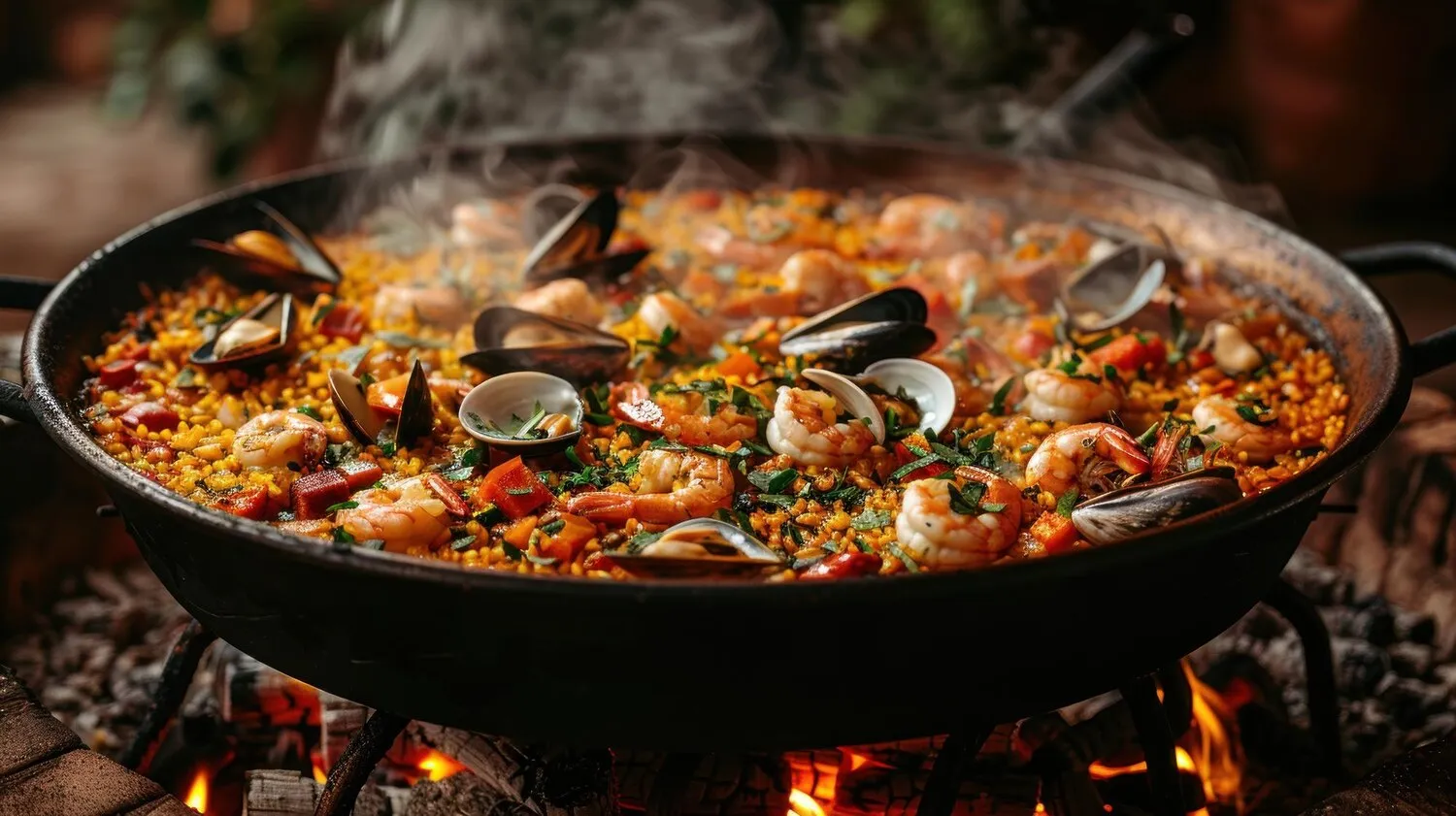

Paella
Traditional Spanish rice dish cooked with seafood, chicken, and vegetables.
Información Nutricional
* El % de Valor Diario (VD) indica cuánto aporta un nutriente en una porción de alimento a una dieta diaria. Se utilizan 2,000 calorías al día para consejos generales de nutrición.
Función Premium
Función Premium
Paella's origins can be traced back to the Moorish influence in Spain, specifically in the Valencia region. The Moors introduced rice cultivation to the Iberian Peninsula, and the Albufera lagoon near Valencia became a prime location for rice farming. The dish evolved from farmers cooking rice with whatever ingredients were available to them in the fields and countryside.
Función Premium
Paella is more than just a meal; it's a social event, a symbol of Spanish hospitality, and a centerpiece of celebrations, especially in the Valencia region. It is often cooked and enjoyed outdoors with family and friends.
Family and Community
Paella is typically cooked in a large paella pan and shared amongst a group, emphasizing communal eating and togetherness. The act of preparing and serving paella is a social event.
Regional Identity
Different regions of Spain have their own variations of paella, reflecting local ingredients and culinary traditions. Valencian paella, considered the original, traditionally includes rabbit, chicken, and snails.
Celebratory Dish
Paella is frequently served at festivals, weddings, and other special occasions, making it an integral part of Spanish celebrations. Its vibrant colors and flavors contribute to the festive atmosphere.
Función Premium
Paella boasts a complex and savory flavor profile, characterized by a blend of saffron-infused rice, seafood (often including shrimp, mussels, and clams), chicken or rabbit, and vegetables. The socarrat, a crispy, caramelized layer of rice at the bottom of the pan, adds a unique textural and flavor dimension.
The dominant flavor is savory and umami, stemming from the seafood and meat broths used in cooking the rice. Saffron imparts a distinct floral aroma and golden hue. The vegetables, like tomatoes, peppers, and peas, provide sweetness and freshness. The socarrat contributes a nutty, toasted flavor. The type of meat used influences the overall taste; chicken offers a milder flavor, while rabbit provides a gamier profile. Smokiness is achieved from cooking over an open fire or with smoked paprika.
Función Premium
Using the Right Rice
Authentic paella requires a short-grain rice, such as Bomba or Calasparra. These varieties absorb liquid well without becoming mushy and produce the desired socarrat.
Controlling the Heat
Maintaining a consistent heat source is crucial for even cooking and socarrat formation. If using a gas stove, rotate the paella pan periodically to ensure uniform heat distribution.
The Importance of Broth
The quality of the broth significantly impacts the flavor of the paella. Use a homemade seafood, chicken, or vegetable broth, or a high-quality store-bought option. Adjust seasoning carefully as the broth reduces.
Achieving the Socarrat
The socarrat is a highly prized crispy layer of rice at the bottom of the pan. To achieve it, slightly increase the heat towards the end of cooking and listen for a crackling sound. Be careful not to burn the rice.
Función Premium
Explora platos y restaurantes adicionales de Rice Dish
Explorar Rice DishDescubre los mejores lugares para comer y experiencias culinarias en Taubaté.
Explorar TaubatéAprende más sobre la cultura gastronómica, la escena de restaurantes y el patrimonio culinario de Brazil.
Explorar Brazil