
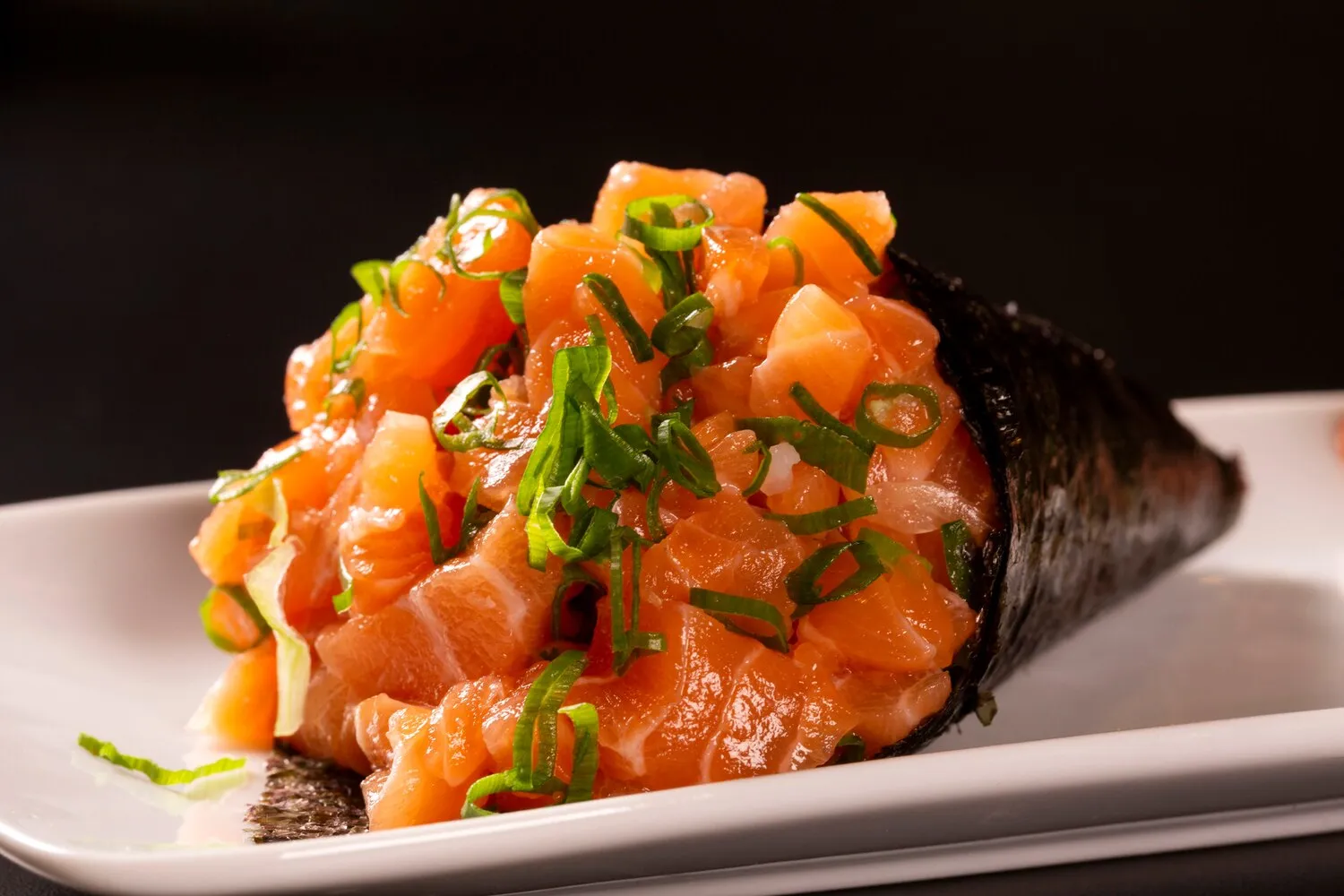

Temaki
Cone-shaped sushi roll filled with rice, seaweed, and various fillings (salmon, tuna, etc.).
Información Nutricional
* El % de Valor Diario (VD) indica cuánto aporta un nutriente en una porción de alimento a una dieta diaria. Se utilizan 2,000 calorías al día para consejos generales de nutrición.
Función Premium
Función Premium
Sushi's origins trace back to Southeast Asia as a method of preserving fish in fermented rice. This practice spread to Japan, where it evolved into various forms. Temaki, a relatively modern iteration, emerged as a casual and customizable way to enjoy sushi, allowing for individual creativity and social interaction.
Función Premium
Temaki embodies a communal and informal approach to sushi dining, encouraging interaction and customization.
DIY Sushi
Temaki is often enjoyed in a DIY fashion, where diners assemble their own cones with provided ingredients. This interactive element makes it a fun and engaging experience, especially for groups.
Casual Dining
Unlike more formal sushi presentations like nigiri or sashimi, temaki is typically eaten with hands and doesn't require special utensils or etiquette. This contributes to its casual and approachable nature.
Social Gathering
Temaki is well-suited for parties and gatherings, as it allows guests to personalize their own cones and promotes conversation and shared enjoyment.
Función Premium
Temaki offers a balanced flavor profile, combining the briny taste of seaweed, the subtly sweet and vinegared rice, and the freshness of various fillings.
The nori seaweed provides a distinct umami and slightly salty taste. Sushi rice, seasoned with vinegar, sugar, and salt, offers a mildly sweet and tangy base. Fillings can range from fresh seafood like salmon, tuna, and yellowtail, offering rich and oily flavors, to vegetables like cucumber, avocado, and sprouts, providing crispness and freshness. Spicy additions like wasabi or sriracha mayo can add a kick. Sweet sauces like eel sauce (unagi sauce) are sometimes used, enhancing the savory-sweet balance.
Función Premium
Nori Crispness
Assemble temaki immediately before eating to prevent the nori seaweed from becoming soggy. Exposure to moisture can affect its texture and flavor.
Rice Temperature
Use slightly warm, freshly made sushi rice for optimal flavor and texture. Cold rice can be less appealing and difficult to work with.
Filling Balance
Avoid overfilling the cone, as this can make it difficult to hold and eat. Aim for a balanced proportion of rice and fillings.
Sealing the Cone
Gently press the edge of the seaweed onto the rice to seal the cone and prevent it from unraveling.
Función Premium
Explora platos y restaurantes adicionales de Sushi
Explorar SushiDescubre los mejores lugares para comer y experiencias culinarias en Sorocaba.
Explorar SorocabaAprende más sobre la cultura gastronómica, la escena de restaurantes y el patrimonio culinario de Brazil.
Explorar Brazil