
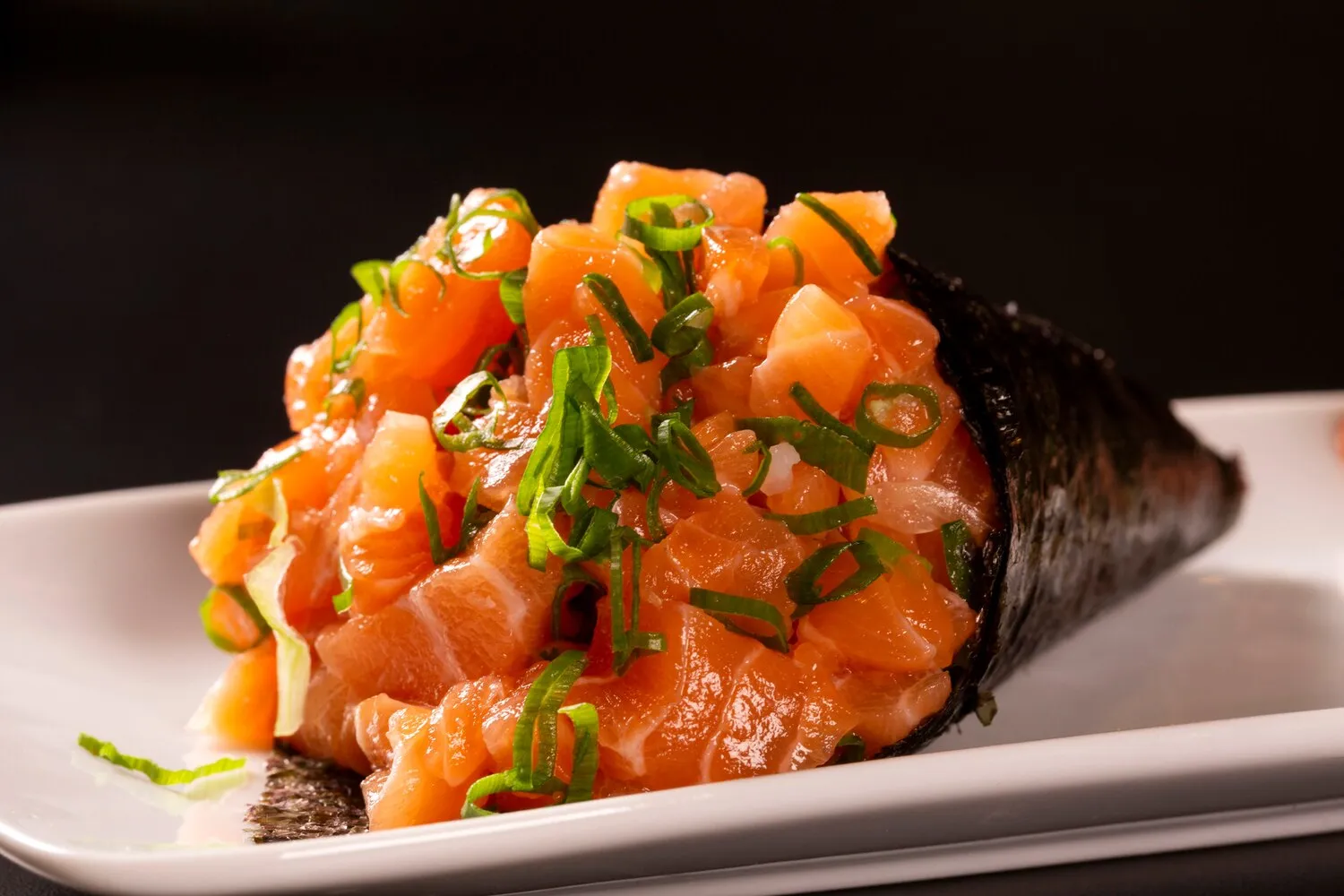

Temaki
A cone-shaped hand roll with nori seaweed filled with rice, fish, and other ingredients like avocado and cucumber.
Información Nutricional
* El % de Valor Diario (VD) indica cuánto aporta un nutriente en una porción de alimento a una dieta diaria. Se utilizan 2,000 calorías al día para consejos generales de nutrición.
Función Premium
Sushi-Dô
Función Premium
Temaki sushi emerged as a casual and quick way to enjoy sushi, diverging from the more formal and precise Edomae-style sushi. It likely evolved from street food or home-style sushi, emphasizing simplicity and accessibility. Its rise is tied to the increasing popularity of sushi in general and the desire for a more interactive and customizable dining experience.
Función Premium
Temaki is strongly associated with a communal and interactive dining experience. It is often prepared at home or in casual restaurants, where diners can assemble their own hand rolls according to their preferences. It is a fun and social way to enjoy sushi.
Social Dining
Temaki parties are common in Japan, where friends and family gather to prepare and eat temaki together. It encourages interaction and allows everyone to customize their own rolls.
Casual and Informal
Unlike more formal sushi settings, temaki is typically enjoyed in a relaxed and informal atmosphere. It's a convenient and enjoyable meal for any occasion.
Home Cooking
Temaki is a popular choice for home cooking as it's relatively easy to prepare and requires minimal specialized equipment. It's a great way to involve everyone in the meal preparation process.
Función Premium
Temaki offers a delightful combination of savory, briny, and fresh flavors, depending on the fillings. The nori provides a distinct seaweed taste, while the rice contributes a subtle sweetness and textural foundation. The fish, vegetables, and sauces add layers of complexity and richness.
The core flavor comes from the combination of vinegared sushi rice, crisp nori seaweed, and fresh ingredients. Common fillings include raw fish like tuna (maguro), salmon (sake), yellowtail (hamachi), or cooked options like eel (unagi) and shrimp (ebi). Vegetables such as cucumber, avocado, sprouts, and Japanese pickles add refreshing crunch and subtle sweetness. Wasabi provides a spicy kick, while soy sauce enhances the umami of the fish. Other popular additions include tobiko (flying fish roe) for bursts of flavor and texture, mayonnaise-based sauces for creaminess, and sesame seeds for a nutty aroma.
Función Premium
Nori Crispness
Prepare the temaki just before eating to prevent the nori from becoming soggy. The moisture from the rice and fillings will soften the seaweed over time, diminishing its flavor and texture. Keep nori sheets sealed until ready to use.
Ingredient Placement
Arrange the ingredients strategically on the rice to ensure that each bite contains a balance of flavors and textures. Avoid overcrowding the cone, as this can make it difficult to eat.
Eating Promptly
Eat the temaki immediately after assembling to enjoy the best flavor and texture. This prevents the nori from becoming soggy and the ingredients from losing their freshness. Serve with soy sauce for dipping.
Rice Temperature
Make sure the sushi rice is at room temperature, not hot. Hot rice will wilt the nori and negatively affect the texture.
Función Premium
Explora platos y restaurantes adicionales de Hand Roll
Explorar Hand RollDescubre los mejores lugares para comer y experiencias culinarias en São João Batista.
Explorar São João BatistaAprende más sobre la cultura gastronómica, la escena de restaurantes y el patrimonio culinario de Brazil.
Explorar Brazil