
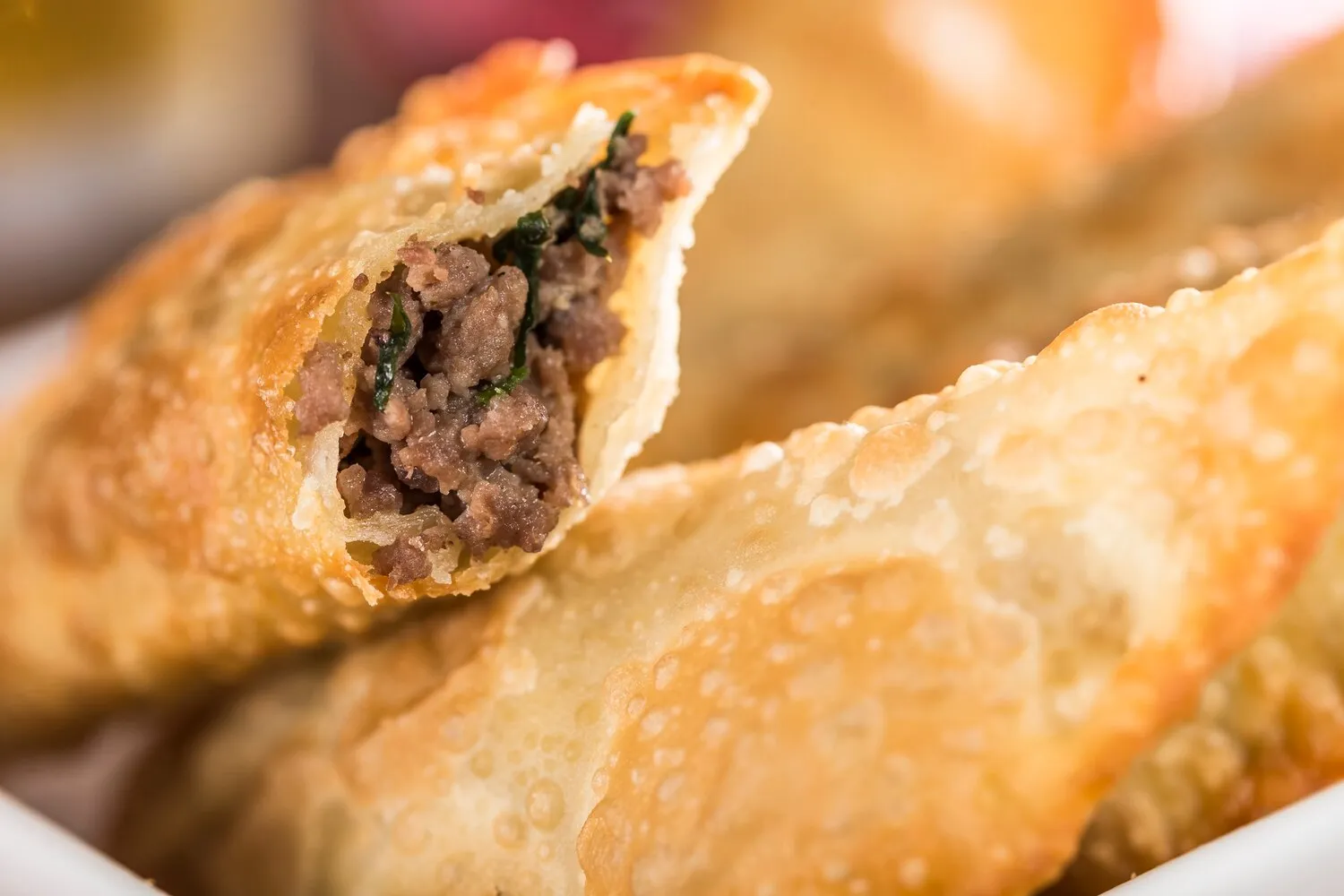

Pastel
Thin fried pastry filled with various ingredients (cheese, meat, etc.).
Información Nutricional
* El % de Valor Diario (VD) indica cuánto aporta un nutriente en una porción de alimento a una dieta diaria. Se utilizan 2,000 calorías al día para consejos generales de nutrición.
Función Premium
Padaria Bom Pão
Función Premium
The pastel's origins can be traced back to Chinese immigrants who arrived in Brazil during the early 20th century. They adapted their spring roll recipes to suit local tastes and ingredients, resulting in the Brazilian pastel. Japanese immigrants further popularized it in the mid-20th century as a street food.
Función Premium
Pastel is a ubiquitous street food and a staple at open-air markets (feiras) across Brazil. It represents a fusion of cultures and is deeply ingrained in Brazilian culinary traditions.
Feiras (Open-Air Markets)
Pastels are almost always found at feiras, often alongside caldo de cana (sugar cane juice). Eating a pastel at a feira is a quintessential Brazilian experience.
Family Gatherings
While primarily a street food, pastels are also frequently made at home for parties and family gatherings. They are a versatile and crowd-pleasing snack.
Regional Variations
Different regions of Brazil have their own unique pastel fillings and variations, reflecting local ingredients and culinary preferences. In coastal areas, seafood fillings are common.
Función Premium
Pastels offer a delightful combination of crispy, savory, and sometimes slightly sweet flavors. The fried pastry provides a satisfying crunch, while the fillings contribute a rich and diverse array of tastes.
The defining flavor comes from the crispy, deep-fried dough. Common fillings include ground beef (carne), cheese (queijo), heart of palm (palmito), chicken (frango), shrimp (camarão), and even pizza-style fillings (presunto e queijo, or ham and cheese, with tomato sauce and oregano). The balance of saltiness from the filling with the slightly oily dough creates a savory experience. Regional variations may incorporate spices like cumin or chili powder into the meat fillings.
Función Premium
Oil Temperature
Maintain a consistent oil temperature (around 350°F or 175°C) for optimal crispness. If the oil is too cool, the pastel will absorb too much oil and become soggy. If it's too hot, the outside will burn before the inside is cooked.
Dough Thickness
Roll the dough thinly for a light and crispy crust. Thicker dough can result in a heavy and greasy pastel.
Preventing Soggy Fillings
Ensure the filling isn't too wet. Drain excess liquids from meat fillings and pre-cook ingredients like vegetables to minimize moisture.
Serving Immediately
Pastels are best enjoyed immediately after frying while they are still hot and crispy. Letting them sit for too long will cause them to lose their texture.
Función Premium
Explora platos y restaurantes adicionales de Savory snack
Explorar Savory snackDescubre los mejores lugares para comer y experiencias culinarias en Santarém.
Explorar SantarémAprende más sobre la cultura gastronómica, la escena de restaurantes y el patrimonio culinario de Brazil.
Explorar Brazil