
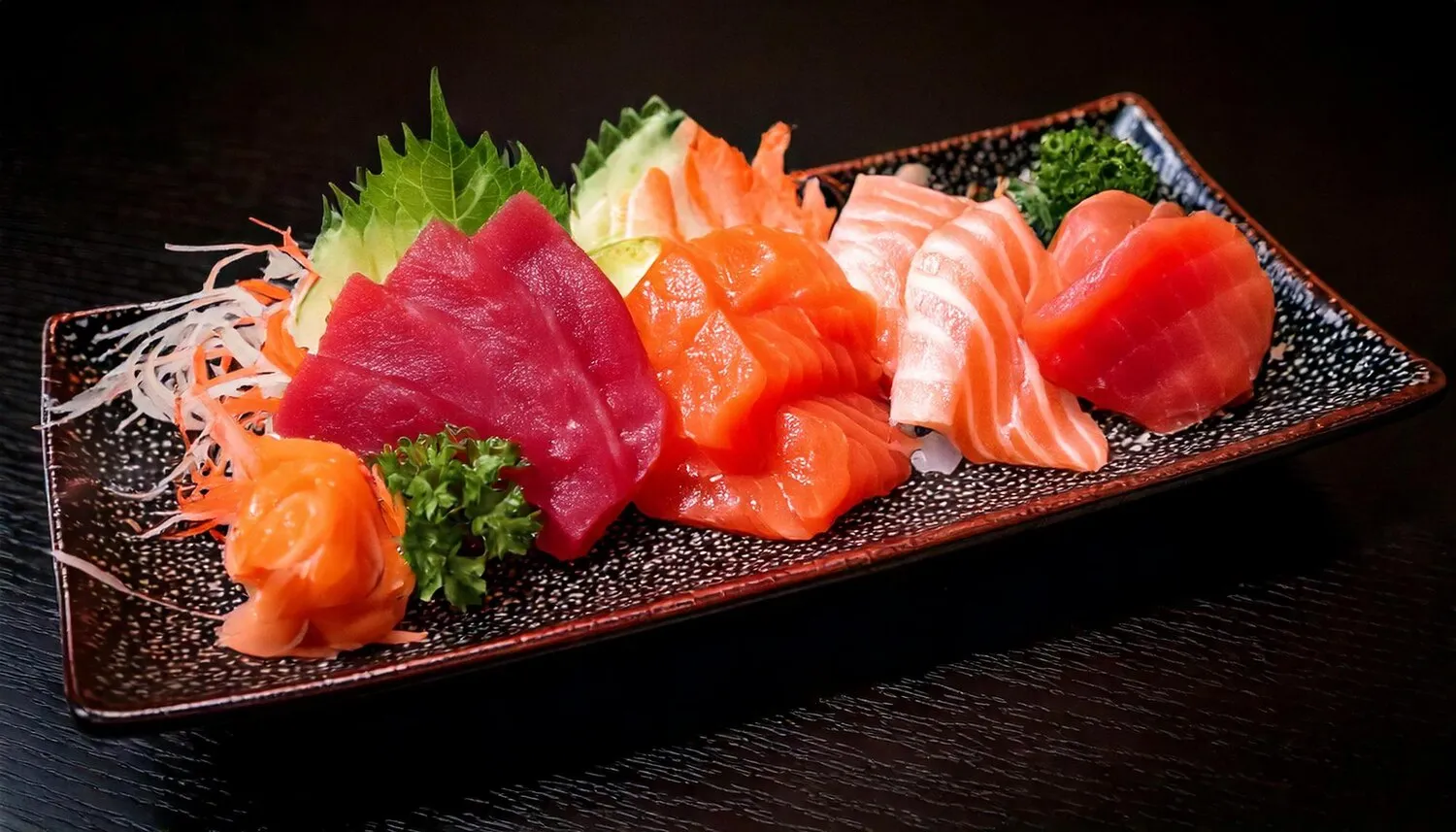

Sashimi
Thinly sliced raw fish served without rice, typically salmon or tuna.
Información Nutricional
* El % de Valor Diario (VD) indica cuánto aporta un nutriente en una porción de alimento a una dieta diaria. Se utilizan 2,000 calorías al día para consejos generales de nutrición.
Función Premium
Función Premium
The history of sashimi is deeply intertwined with the development of Japanese culinary techniques and preservation methods. While the exact origins are debated, consuming raw fish dates back centuries. Early forms of sashimi likely emerged out of necessity, as ways to keep fish fresh were limited. Over time, it evolved from a simple preservation method to an art form emphasizing the quality, freshness, and presentation of the fish.
Función Premium
Sashimi is more than just a dish; it's a reflection of Japanese culture's respect for nature, emphasis on simplicity, and appreciation for aesthetics. It represents the height of Japanese culinary artistry, focusing on the purity and quality of ingredients.
Freshness is Paramount
The utmost importance is placed on the freshness of the fish. Fish is often sourced locally and prepared as quickly as possible to maintain its flavor and texture. The skill of the chef in selecting and preparing the fish is highly valued.
Presentation Matters
The presentation of sashimi is as important as its taste. The slices are arranged artfully on a plate, often with edible garnishes like seaweed, radish sprouts, or shiso leaves, creating a visually stunning and harmonious display.
A Sign of Respect
Sashimi is often served on special occasions and formal dinners, reflecting the value and respect placed on the guests and the occasion. Sharing this dish is a sign of appreciation and hospitality.
Función Premium
Sashimi showcases the pure, unadulterated taste of high-quality raw fish. The flavor profile is clean, delicate, and often subtly sweet, depending on the type of fish used. Umami, the savory 'fifth taste', is also prominent.
The flavor of sashimi is largely dependent on the type of fish. Tuna (Maguro) offers a rich, almost buttery flavor, while salmon (Sake) has a fattier, slightly sweeter taste. White fish like sea bream (Tai) are milder and more delicate. Wasabi provides a sharp, pungent contrast, while soy sauce adds saltiness and umami. Ginger, often served as a palate cleanser, offers a spicy and refreshing note.
Función Premium
Wasabi Usage
Apply a small amount of wasabi directly to the fish, rather than mixing it into the soy sauce. This allows you to control the intensity of the flavor and prevent overpowering the delicate taste of the fish.
Soy Sauce Dipping
Lightly dip the edge of the sashimi into the soy sauce. Over-soaking can mask the natural flavors of the fish. The goal is to enhance, not overwhelm, the taste.
Palate Cleansing
Use the pickled ginger (gari) between different types of fish to cleanse your palate and appreciate the unique flavors of each variety.
Order of Consumption
Generally, it's recommended to start with the lighter-flavored white fish before moving on to richer, fattier fish like tuna and salmon. This allows you to fully appreciate the nuances of each type.
Función Premium
Explora platos y restaurantes adicionales de Raw Fish
Explorar Raw FishDescubre los mejores lugares para comer y experiencias culinarias en Rio Preto.
Explorar Rio PretoAprende más sobre la cultura gastronómica, la escena de restaurantes y el patrimonio culinario de Brazil.
Explorar Brazil