
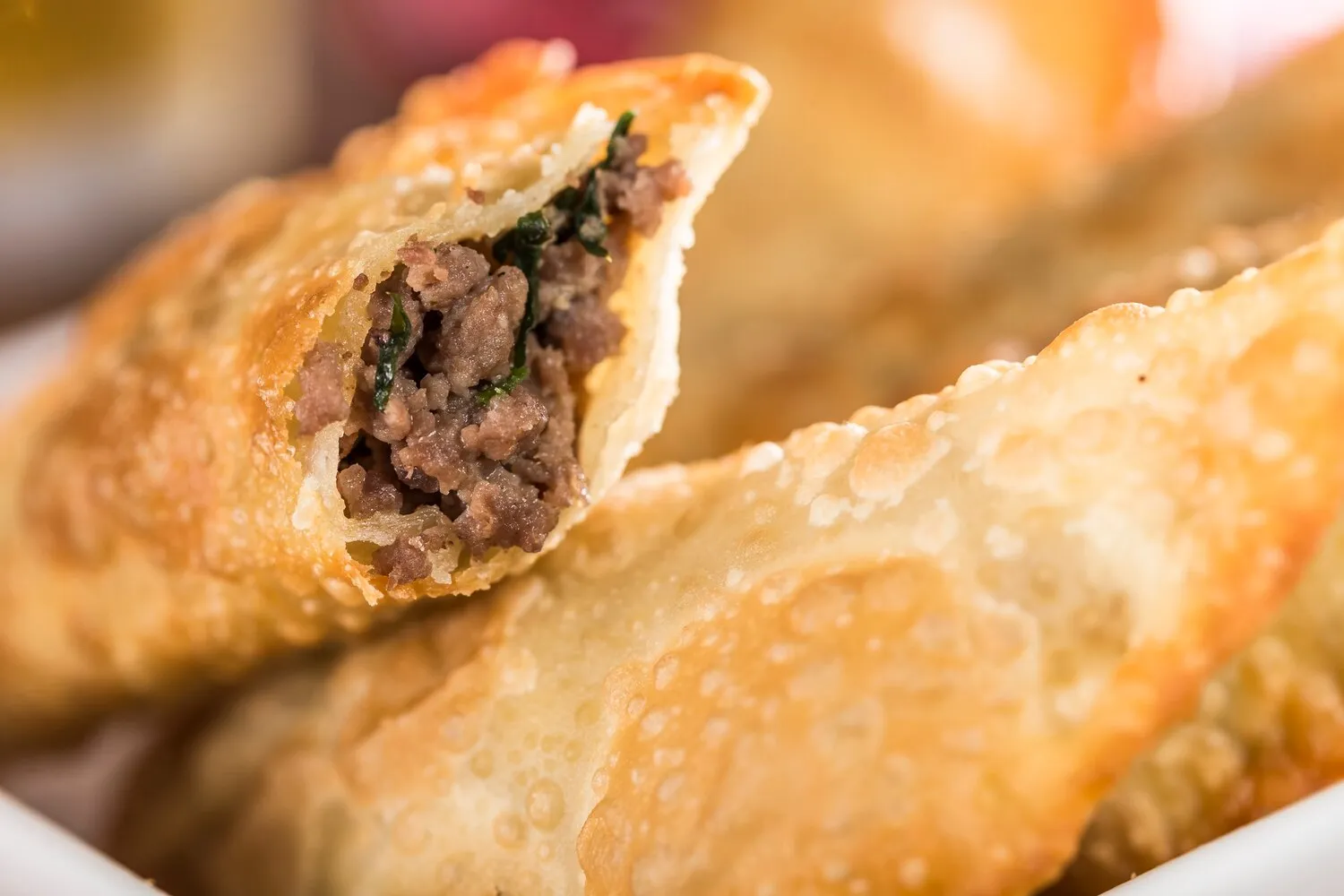

Pastel
Fried pastry with various fillings (meat, cheese, heart of palm).
Información Nutricional
* El % de Valor Diario (VD) indica cuánto aporta un nutriente en una porción de alimento a una dieta diaria. Se utilizan 2,000 calorías al día para consejos generales de nutrición.
Función Premium
Datavenia (Bar do Guido)
Función Premium
Pastel's origin in Brazil is linked to Asian immigrants, specifically the adaptation of spring rolls or fried wontons brought by Japanese immigrants in the early 20th century. Seeking to integrate into Brazilian society, they adapted their culinary traditions, creating a dish that resonated with local tastes and ingredients.
Función Premium
Pastel is deeply ingrained in Brazilian street food culture, commonly found at open-air markets (feiras), roadside stalls, and lanchonetes (snack bars). It's a quick, affordable, and beloved snack or light meal enjoyed by people of all ages and socioeconomic backgrounds.
Feiras (Open-Air Markets)
Pastel is a staple at feiras, often accompanied by caldo de cana (sugar cane juice). These markets are a vibrant part of Brazilian social life, and enjoying a pastel while browsing the stalls is a quintessential Brazilian experience.
Lanchonetes
Many lanchonetes serve pastel as a quick and easy meal option. It's a popular choice for lunch or a late-night snack.
Regional Variations
While the basic concept remains the same, regional variations in fillings and dough recipes exist, reflecting local ingredients and culinary preferences.
Social Gathering Food
Pastel is often prepared at home or purchased in bulk for parties and informal gatherings. It's easy to eat and share, making it a perfect food for social occasions.
Función Premium
Pastel offers a delightful combination of savory fillings encased in a crispy, deep-fried pastry. The flavors range from meaty and cheesy to vegetarian options, providing a diverse and satisfying culinary experience.
The most common fillings include seasoned ground beef, shredded chicken, melted cheese (typically mozzarella or catupiry), and heart of palm (palmito). Other variations can include shrimp, codfish (bacalhau), vegetables, or even sweet fillings like guava paste with cheese (Romeu e Julieta). The dough is typically made from wheat flour, water, and sometimes a small amount of cachaça or vinegar to enhance its crispness. The frying process imparts a rich, oily flavor and a satisfying crunch.
Función Premium
Dough Preparation
The dough should be rolled out very thinly to ensure maximum crispness. Some recipes recommend adding a small amount of cachaça or vinegar to the dough to enhance its texture.
Filling Quantity
Avoid overfilling the pastel, as this can cause it to burst during frying. A small amount of filling is sufficient.
Frying Temperature
The oil temperature should be hot enough to cook the pastel quickly and evenly, but not so hot that it burns. Aim for around 350°F (175°C).
Serving Suggestions
Pastel is best enjoyed hot and fresh. It's often served with hot sauce (molho de pimenta), vinegar peppers, or ketchup.
Finding Authenticity
The best pastel can be found at local feiras and lanchonetes. Look for places with a high turnover and a good reputation.
Función Premium
Explora platos y restaurantes adicionales de Appetizers
Explorar AppetizersDescubre los mejores lugares para comer y experiencias culinarias en Rio Claro.
Explorar Rio ClaroAprende más sobre la cultura gastronómica, la escena de restaurantes y el patrimonio culinario de Brazil.
Explorar Brazil