
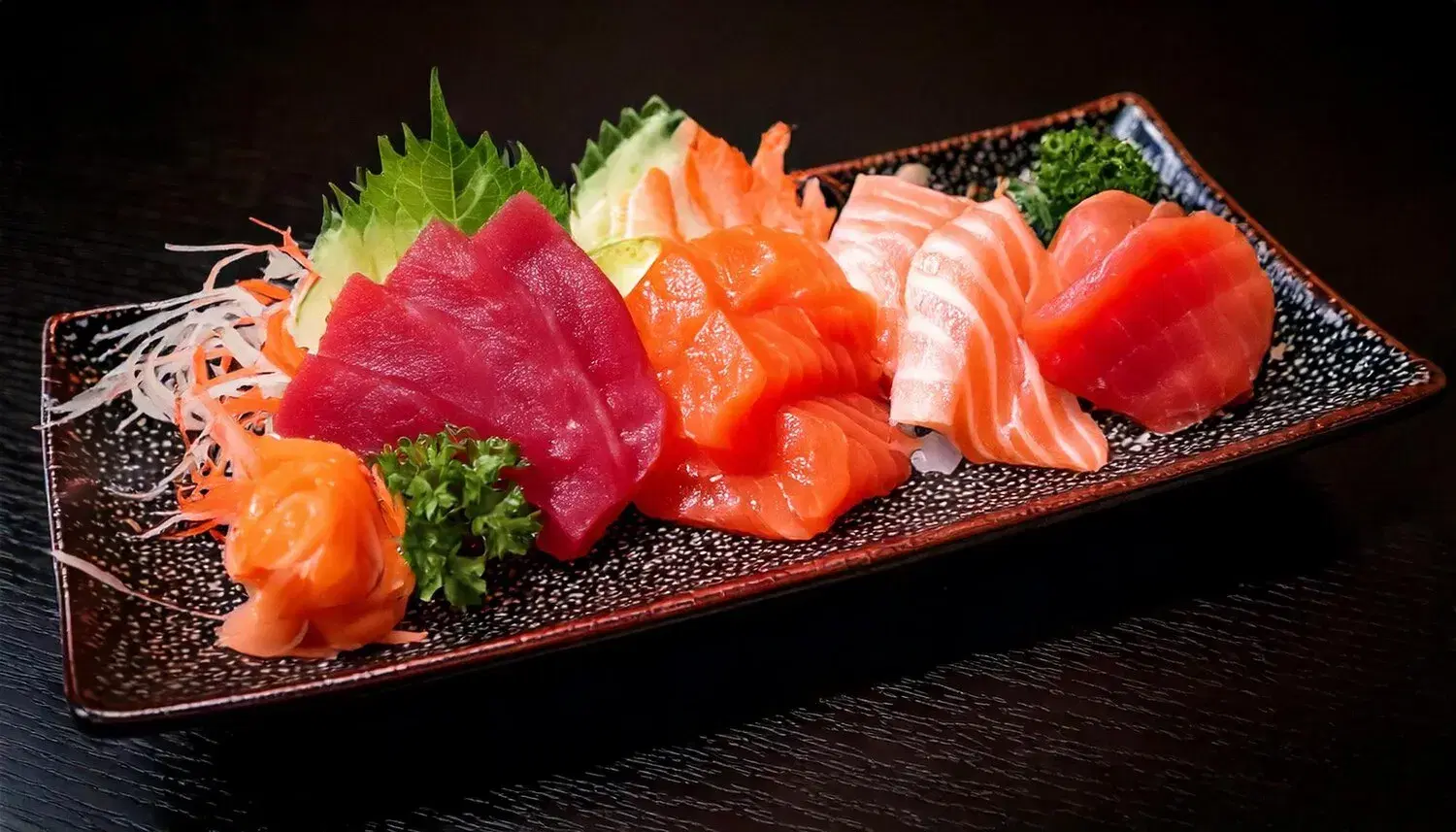

Sashimi
Thinly sliced raw fish, typically salmon or tuna.
Información Nutricional
* El % de Valor Diario (VD) indica cuánto aporta un nutriente en una porción de alimento a una dieta diaria. Se utilizan 2,000 calorías al día para consejos generales de nutrición.
Función Premium
Miray Sushi
Función Premium
The practice of eating raw fish in Japan dates back centuries, possibly influenced by Chinese cuisine. Preserving fish by wrapping it in rice was an early form, evolving into the separate serving of raw fish as a delicacy over time. Proper techniques for handling and preparing raw fish were refined, emphasizing freshness, cleanliness, and artistry.
Función Premium
Sashimi is deeply ingrained in Japanese cuisine and culture, representing simplicity, purity, and respect for ingredients. It's a symbol of culinary artistry and a cornerstone of formal Japanese dining.
Freshness and Quality
The quality and freshness of the fish are paramount. Only the highest grade fish, handled with utmost care, is considered suitable for sashimi. This emphasis on quality reflects a deep respect for the natural world.
Knife Skills and Presentation
The precise cutting techniques used to prepare sashimi are considered an art form. The chef's skill influences not only the texture and flavor but also the visual presentation, which is meticulously arranged to enhance the dining experience.
Formal Dining
Sashimi is frequently served as part of a multi-course Japanese meal, often appearing before sushi. The order of courses is carefully considered to provide a balanced and harmonious culinary journey.
Función Premium
Sashimi offers a delicate and pure flavor profile, highlighting the natural taste of the fish. The experience is enhanced by complementary elements like soy sauce, wasabi, and fresh garnishes.
The primary flavor is the clean, fresh taste of the raw fish. Salmon provides a rich, buttery flavor, while tuna can range from mild and subtle (like akami) to rich and fatty (like otoro). Soy sauce adds a salty, umami dimension, while wasabi contributes a sharp, pungent kick. Garnishes like shredded daikon radish and shiso leaves offer refreshing and peppery notes, respectively, cleaning the palate between bites.
Función Premium
Wasabi Etiquette
Avoid dissolving wasabi directly into the soy sauce. Instead, place a small amount of wasabi on the fish before dipping it lightly into the soy sauce. This preserves the clean flavor of both the wasabi and the fish.
Soy Sauce Usage
Only dip the fish, not the rice (if eating nigiri). Over-soaking the fish with soy sauce masks its delicate flavor. Aim for a light coating to enhance, not overwhelm, the taste.
Eating Order
Generally, it is recommended to eat sashimi from lighter-flavored fish to richer-flavored fish. This allows you to fully appreciate the nuances of each type.
Ginger Usage
Pickled ginger (gari) is intended as a palate cleanser between different types of sashimi, not as a topping to be eaten with the fish.
Función Premium
Explora platos y restaurantes adicionales de Raw Fish
Explorar Raw FishDescubre los mejores lugares para comer y experiencias culinarias en Parauapebas.
Explorar ParauapebasAprende más sobre la cultura gastronómica, la escena de restaurantes y el patrimonio culinario de Brazil.
Explorar Brazil