
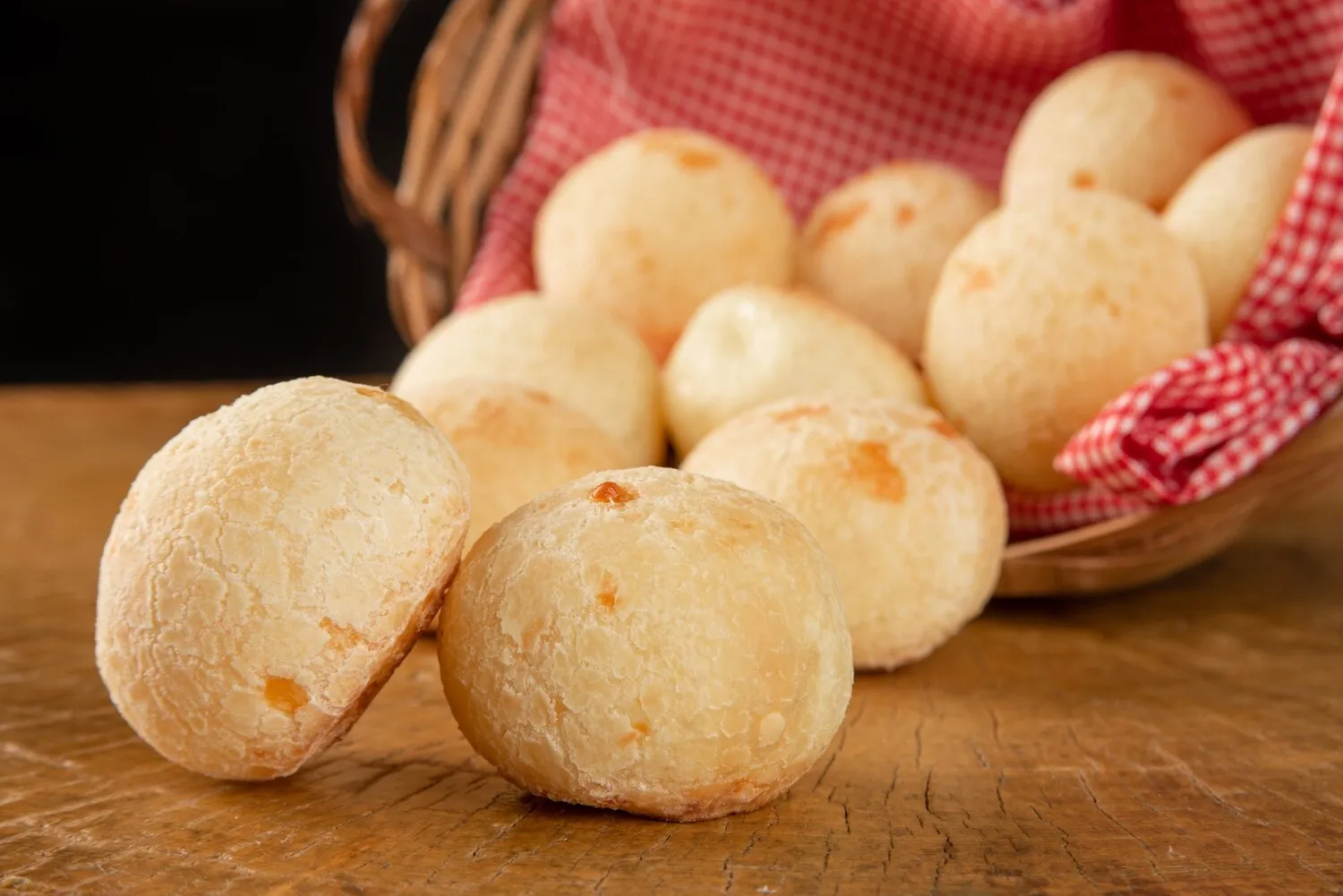

Pão de Queijo
Brazilian cheese bread, a popular and staple item in bakeries across Brazil.
Información Nutricional
* El % de Valor Diario (VD) indica cuánto aporta un nutriente en una porción de alimento a una dieta diaria. Se utilizan 2,000 calorías al día para consejos generales de nutrición.
Función Premium
Panificadora e Confeitaria Sabor do Trigo
Función Premium
The exact origins of Pão de Queijo are somewhat debated, but it's believed to have emerged in the state of Minas Gerais, Brazil, during the 18th century. Ingredients such as wheat flour were scarce, while cassava starch and cheese were readily available due to the region's dairy farming traditions. It's thought that the dish evolved from attempts to utilize these available resources, possibly originating in the kitchens of large farms or plantations.
Función Premium
Pão de Queijo is deeply ingrained in Brazilian culture, particularly in Minas Gerais. It's more than just food; it's a symbol of hospitality, comfort, and tradition, often enjoyed as a breakfast staple, a snack throughout the day, or served at social gatherings.
Breakfast Staple
Pão de Queijo is commonly eaten for breakfast, often paired with coffee. It's a quick and satisfying way to start the day.
Social Gatherings
It's frequently served as a snack or appetizer at parties, family gatherings, and other social events, showcasing Brazilian hospitality.
Regional Pride
In Minas Gerais, Pão de Queijo is a source of regional pride, with many families having their own cherished recipes passed down through generations.
Commercial Availability
Pão de Queijo is widely available pre-made in supermarkets and bakeries throughout Brazil, reflecting its widespread popularity and consumption.
Función Premium
Pão de Queijo boasts a unique combination of savory, cheesy, and slightly tangy flavors, with a chewy texture that distinguishes it from other breads.
The dominant flavor is cheesy, derived from the use of Minas cheese (a traditional Brazilian cheese), or a blend of other cheeses like Parmesan, mozzarella, or provolone. The tapioca flour contributes a subtly sweet and slightly fermented flavor, as well as the characteristic chewy texture. Salt provides balance, and milk and eggs add richness. Some recipes include a small amount of oil to enhance the overall moistness and flavor.
Función Premium
Tapioca Flour Type
Using a combination of sweet and sour tapioca flour (polvilho doce and polvilho azedo) is crucial for the characteristic chewy texture. Adjust the ratio to your preference, with more sour tapioca providing a tangier flavor.
Cheese Quality
The quality of the cheese significantly impacts the flavor. If Minas cheese is unavailable, experiment with a blend of Parmesan, mozzarella, provolone, or cheddar to replicate the savory and slightly tangy profile.
Temperature
Scalding the tapioca flour with hot milk or water is an important step to hydrate the starch and create the desired elasticity in the dough. This process helps to develop the characteristic chewy texture.
Baking Temperature
Baking at a high temperature (around 375-400°F or 190-200°C) helps to create a crispy exterior while maintaining a soft and chewy interior. The pão de queijo should be golden brown when done.
Función Premium
Explora platos y restaurantes adicionales de Handy food
Explorar Handy foodDescubre los mejores lugares para comer y experiencias culinarias en Manaus.
Explorar ManausAprende más sobre la cultura gastronómica, la escena de restaurantes y el patrimonio culinario de Brazil.
Explorar Brazil