
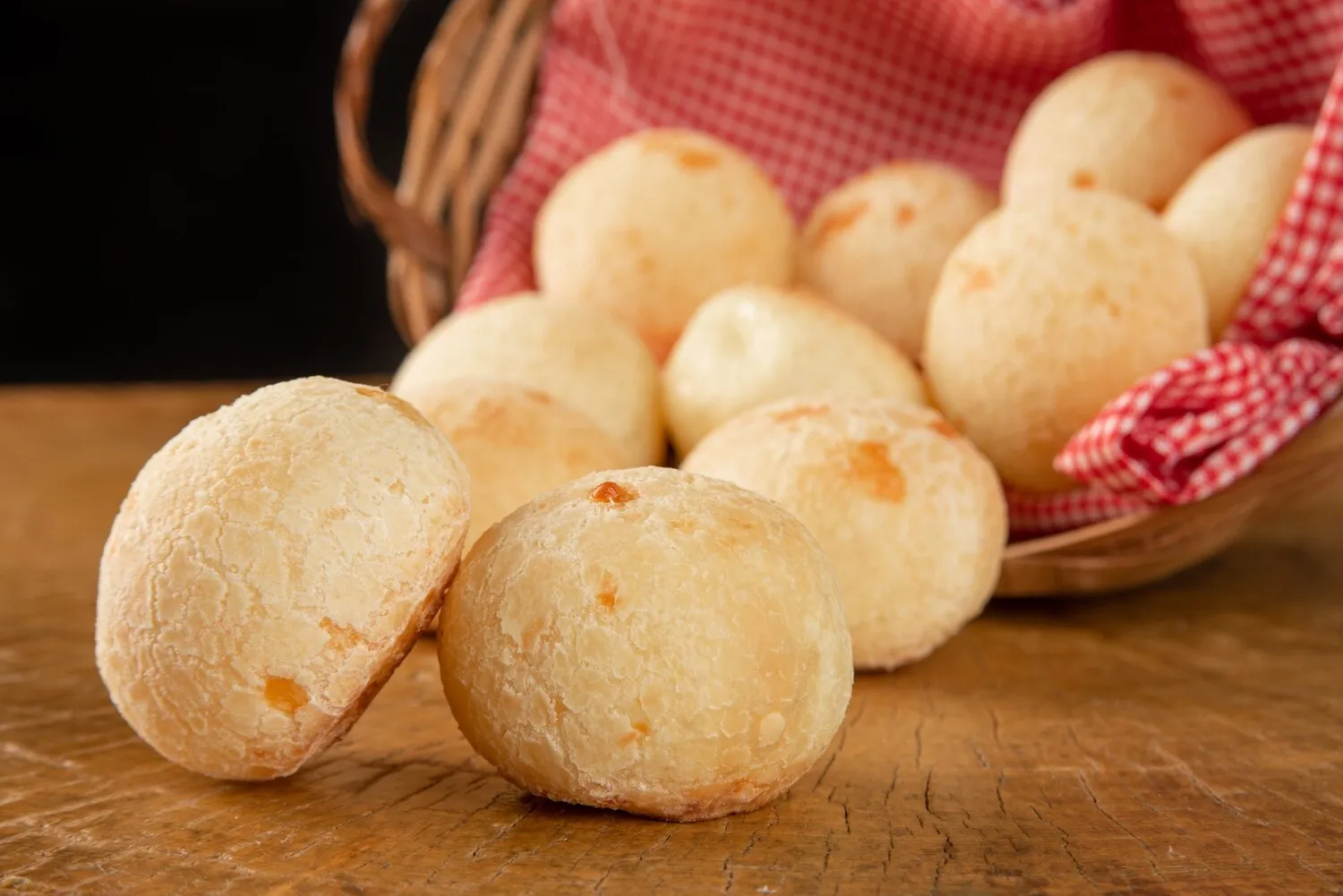

Pão de Queijo
Brazilian cheese bread.
Información Nutricional
* El % de Valor Diario (VD) indica cuánto aporta un nutriente en una porción de alimento a una dieta diaria. Se utilizan 2,000 calorías al día para consejos generales de nutrición.
Función Premium
BR Mania - Posto Comendador
Función Premium
The exact origins of Pão de Queijo are somewhat obscure, but it's believed to have emerged in the state of Minas Gerais during the 18th century. At the time, the region was a major producer of cheese and dairy products, while wheat flour was scarce. Enslaved Africans and their descendants are credited with pioneering the use of tapioca starch (polvilho) as a substitute, leading to the creation of this unique cheese bread. The dish remained relatively unknown outside Minas Gerais until the mid-20th century when it gained popularity across Brazil.
Función Premium
Pão de Queijo is deeply ingrained in Brazilian culture, particularly in Minas Gerais, where it is considered a staple food and a symbol of hospitality. It's commonly enjoyed for breakfast, as a snack, or as an accompaniment to coffee, and is readily available in bakeries, cafes, and homes throughout the country.
Minas Gerais Identity
Pão de Queijo is strongly associated with the state of Minas Gerais, where it originated and is considered a regional specialty. It represents the state's rich culinary heritage and its traditions of dairy farming and cheesemaking.
Social Gatherings
Pão de Queijo is often served at social gatherings, such as parties and family meals, reflecting its role as a comfort food and a symbol of sharing and community.
Breakfast Staple
It's a very common breakfast food, frequently paired with Brazilian coffee (cafezinho), reflecting the tradition of quick and easy breakfast solutions.
Función Premium
Pão de Queijo boasts a delightful combination of cheesy, slightly tangy, and subtly sweet flavors. The texture is equally appealing, offering a chewy interior and a crisp, slightly golden exterior.
The primary flavor components come from the cheese (typically Minas cheese, though other cheeses like Parmesan or mozzarella are often used), which provides a savory and sometimes tangy richness. The tapioca starch contributes a unique chewy texture and a mild, slightly fermented flavor. The addition of eggs enriches the dough and adds a subtle sweetness. Salt balances the flavors and enhances the overall taste profile. Variations may include different types of cheese, adding further complexity to the flavor.
Función Premium
Tapioca Starch Matters
Use both sweet (polvilho doce) and sour (polvilho azedo) tapioca starch for the best texture. The sour starch contributes to the airy, slightly tangy flavor and crispy crust, while the sweet starch provides chewiness.
Cheese Selection is Key
Authentic recipes call for Minas cheese, but if unavailable, a blend of Parmesan and mozzarella works well. Experiment with other cheeses like Gruyere or provolone for different flavor profiles.
Hot Liquid is Crucial
Scalding the tapioca starch with hot milk or water is essential for gelatinizing the starch and creating the characteristic chewy texture. Be careful not to add the liquid too quickly, as it can cause lumps to form.
Baking Time and Temperature
Bake at a relatively high temperature (around 375-400°F or 190-200°C) for a crispy exterior and a soft, chewy interior. Avoid opening the oven frequently during baking to prevent the dough from collapsing.
Freezing for Later
Unbaked Pão de Queijo can be frozen for several weeks. Freeze the shaped dough balls on a baking sheet before transferring them to a freezer bag. Bake directly from frozen, adding a few extra minutes to the baking time.
Función Premium
Explora platos y restaurantes adicionales de Handy food
Explorar Handy foodDescubre los mejores lugares para comer y experiencias culinarias en Maceió.
Explorar MaceióAprende más sobre la cultura gastronómica, la escena de restaurantes y el patrimonio culinario de Brazil.
Explorar Brazil