
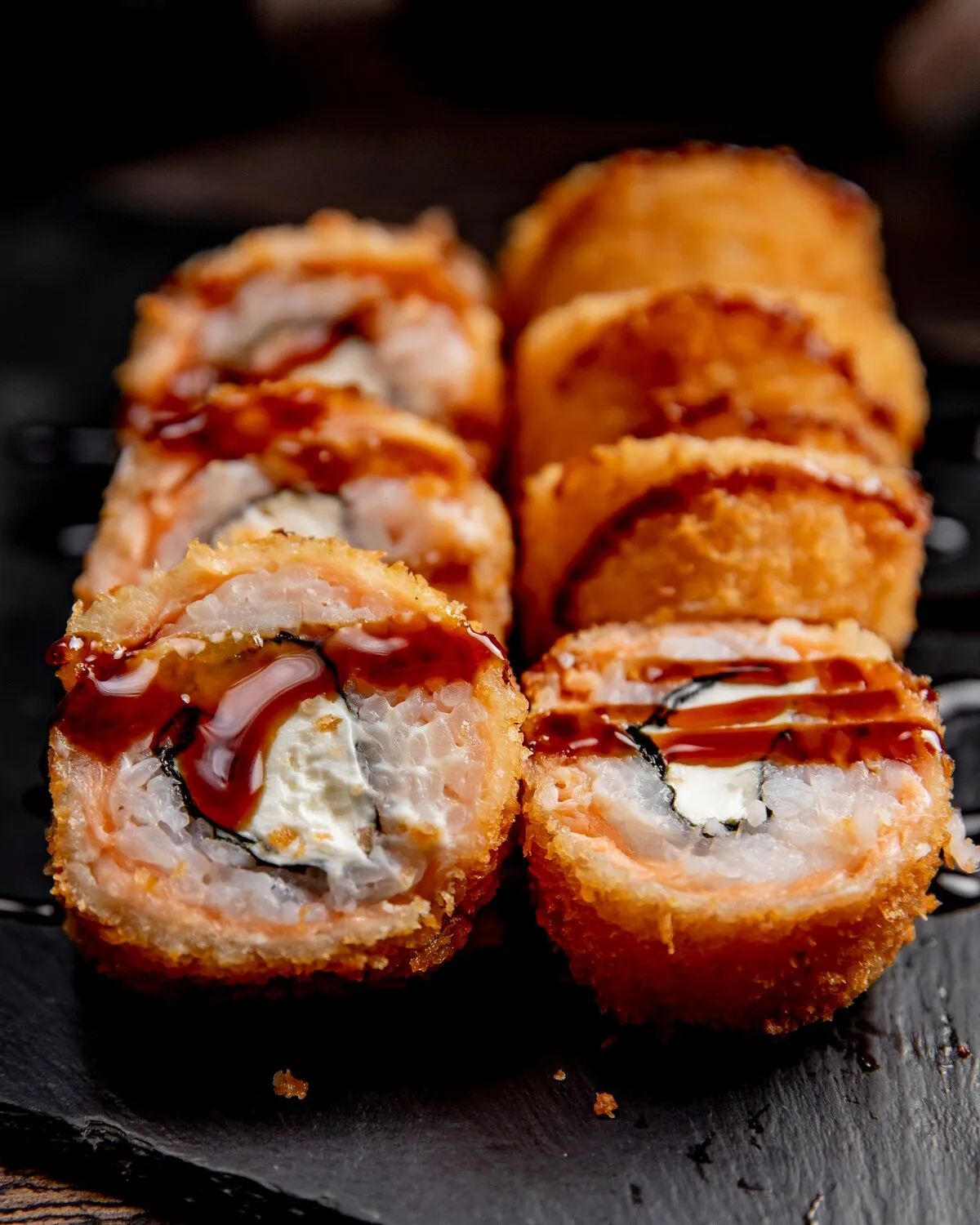

Hot Roll
Fried sushi rolls.
Información Nutricional
* El % de Valor Diario (VD) indica cuánto aporta un nutriente en una porción de alimento a una dieta diaria. Se utilizan 2,000 calorías al día para consejos generales de nutrición.
Función Premium
ásia bistrô
Función Premium
The hot roll, a fried sushi roll, is a relatively modern invention. While sushi originated in Japan, the hot roll is believed to have emerged as a Westernized adaptation, possibly in the United States, catering to palates unfamiliar or hesitant towards traditional raw fish preparations. It represents a fusion of Japanese sushi techniques and Western preferences for fried foods.
Función Premium
Hot rolls reflect the increasing globalization and adaptation of Japanese cuisine to suit diverse cultural preferences. It's a prime example of fusion cuisine, blurring the lines between traditional and contemporary tastes.
Fusion Cuisine
The hot roll highlights the ability of sushi to adapt and integrate with other culinary traditions, making it accessible and appealing to a wider audience.
Western Influence
The popularity of hot rolls in Western countries demonstrates the influence of local tastes and preferences on the evolution of traditional dishes.
Restaurant Staple
Hot rolls are a common item on the menu of many sushi restaurants in Western countries, particularly those catering to a less adventurous clientele.
Función Premium
The hot roll offers a blend of textures and temperatures, combining the familiar comfort of fried food with the fresh flavors of sushi ingredients. It typically balances savory, creamy, and sometimes slightly sweet notes.
The primary flavor profile comes from the combination of ingredients within the sushi roll (such as cooked seafood like shrimp or crab, vegetables like avocado and cucumber, and cream cheese), the crispy fried exterior, and the accompanying dipping sauce. The frying process imparts a savory, slightly oily richness and a crunchy texture, while the interior remains soft and moist. Dipping sauces often include soy sauce, spicy mayonnaise (sriracha mayo), eel sauce (unagi sauce), or a combination thereof, adding layers of umami, spice, and sweetness.
Función Premium
Proper Temperature Control
Maintaining the correct oil temperature (around 350-375°F or 175-190°C) is crucial for even frying and preventing the roll from becoming overly greasy.
Preventing Soggy Rolls
Ensure the sushi rice is properly prepared and not too wet, and avoid overfilling the roll with wet ingredients. Consider using panko breadcrumbs for a crispier coating.
Dipping Sauce Selection
Choose a dipping sauce that complements the flavors of the roll. Spicy mayonnaise or eel sauce are popular choices, but experiment with other options like teriyaki sauce or ponzu sauce.
Oil Selection
Use a neutral oil with a high smoke point such as canola or vegetable oil for frying.
Función Premium
Explora platos y restaurantes adicionales de Sushi
Explorar SushiDescubre los mejores lugares para comer y experiencias culinarias en Maceió.
Explorar MaceióAprende más sobre la cultura gastronómica, la escena de restaurantes y el patrimonio culinario de Brazil.
Explorar Brazil