
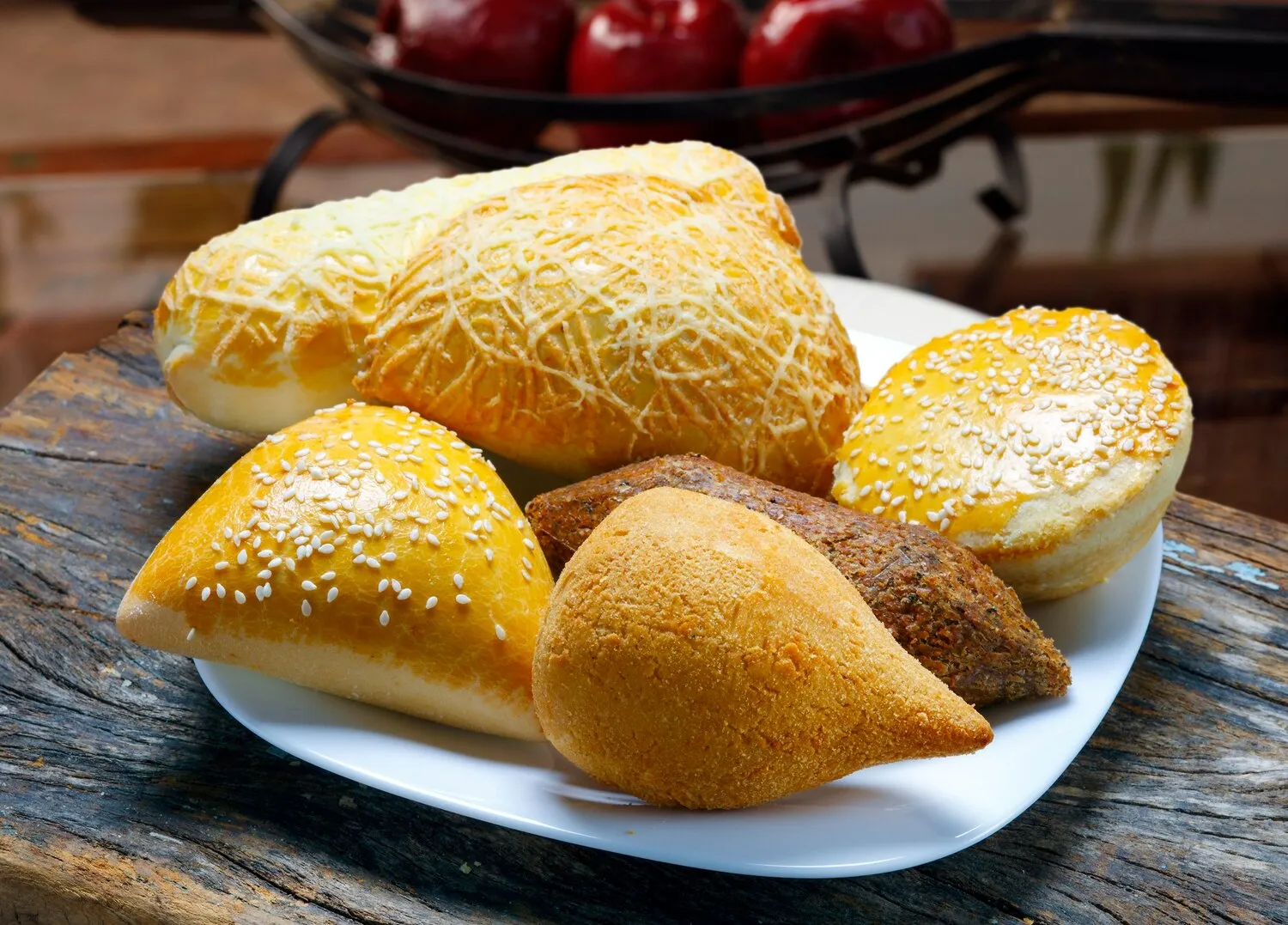

Salgados
Variety of savory pastries and snacks.
Información Nutricional
* El % de Valor Diario (VD) indica cuánto aporta un nutriente en una porción de alimento a una dieta diaria. Se utilizan 2,000 calorías al día para consejos generales de nutrición.
Función Premium
Padaria Bisco pão
Función Premium
The history of salgados in Brazil is intertwined with European culinary influences, particularly Portuguese and French. The Portuguese introduced techniques for frying and baking doughs, while French influence contributed to the refinement of pastry-making. The incorporation of local Brazilian ingredients further shaped the unique character of salgados.
Función Premium
Salgados are a ubiquitous part of Brazilian culture, deeply embedded in social gatherings, celebrations, and everyday snacking. They represent accessibility and convenience, enjoyed by people from all walks of life.
Party Staple
Salgados are essential at birthday parties, weddings, and other social events. They are often served as appetizers or snacks throughout the celebration.
Street Food and Bakeries
Salgados are widely available at street vendors, bakeries (padarias), and lanchonetes (snack bars). They are a convenient and affordable option for a quick meal or snack.
Regional Variations
While many salgados are popular nationwide, certain regional variations exist, reflecting local ingredients and culinary traditions. For example, some regions may have unique fillings or dough preparations.
Family Traditions
Many families have their own special recipes and techniques for making salgados, passed down through generations. This adds a personal and nostalgic element to the dish.
Función Premium
Salgados offer a diverse range of savory flavors, from creamy and cheesy fillings to spiced meats and vegetables. The flavor profiles vary widely depending on the specific type of salgado.
Common flavors include chicken (often seasoned with herbs and spices), cheese (such as catupiry or requeijão), ground beef (sometimes with olives and hard-boiled eggs), hearts of palm, shrimp, and various vegetables. The dough itself can be seasoned with garlic, onion, or herbs. Frying adds a crispy texture and a savory, slightly oily flavor.
Función Premium
Dough Consistency
The dough should be pliable and easy to work with. If it's too sticky, add a little more flour. If it's too dry, add a little more liquid. Rest the dough for at least 30 minutes before using to allow the gluten to relax.
Filling Preparation
Ensure the filling is well-seasoned and not too watery. Excess moisture can make the dough soggy and prevent it from frying properly. Let the filling cool completely before assembling the salgados.
Frying Temperature
Maintain a consistent frying temperature (around 350°F or 175°C) for even cooking and a crispy exterior. Avoid overcrowding the fryer, as this will lower the temperature and result in greasy salgados.
Breading Techniques
For a crispier crust, double-bread the salgados by dipping them in egg, then breadcrumbs, then egg again, and finally breadcrumbs. This creates a thicker, more protective layer.
Freezing for Later
Salgados can be prepared ahead of time and frozen before frying. Freeze them individually on a baking sheet, then transfer them to a freezer bag. Fry directly from frozen for best results.
Función Premium
Explora platos y restaurantes adicionales de Salty snacks
Explorar Salty snacksDescubre los mejores lugares para comer y experiencias culinarias en Juazeiro do Norte.
Explorar Juazeiro do NorteAprende más sobre la cultura gastronómica, la escena de restaurantes y el patrimonio culinario de Brazil.
Explorar Brazil