
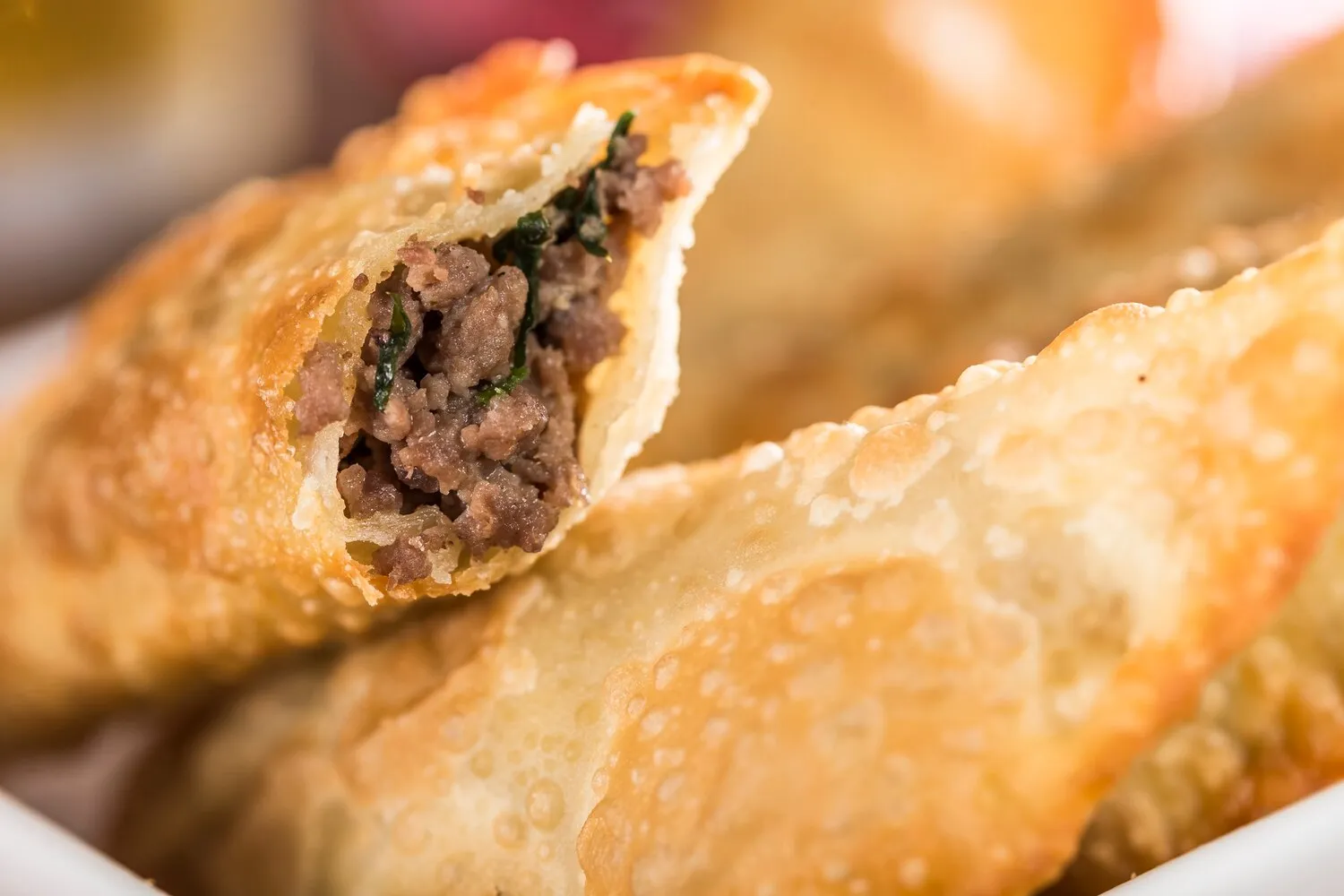

Pastel
Fried pastry with various fillings.
Información Nutricional
* El % de Valor Diario (VD) indica cuánto aporta un nutriente en una porción de alimento a una dieta diaria. Se utilizan 2,000 calorías al día para consejos generales de nutrición.
Función Premium
Restaurante e Lanchonete Fratelli
Función Premium
Pastels are believed to have originated from Chinese egg rolls brought to Brazil by Japanese immigrants. The large influx of Japanese immigrants in the early 20th century brought their culinary traditions, which were adapted and localized over time, eventually giving rise to the pastel as it is known today. The use of fried dough with savory fillings is a common theme in many cultures, but the Brazilian pastel developed its unique characteristics.
Función Premium
Pastels hold a significant place in Brazilian street food culture and are a popular and accessible snack enjoyed by people of all ages and backgrounds. They are commonly found at street fairs, markets, and 'pastelarias' (pastel shops), making them a ubiquitous part of daily life.
Street Food Staple
Pastels are a quintessential Brazilian street food, readily available at 'feiras' (street markets) throughout the country. The act of enjoying a freshly fried pastel at a fair is a common and cherished social experience.
Pastelarias
Dedicated 'pastelarias' are common establishments, often family-owned, that specialize in making and selling pastels. These shops offer a wide variety of fillings and are a popular destination for a quick and affordable meal.
Cultural Fusion
The pastel's origin reflects the cultural fusion that characterizes Brazilian cuisine, showcasing the adaptation of foreign influences into a uniquely Brazilian dish. It demonstrates the creative ways in which immigrant communities have shaped the country's culinary landscape.
Función Premium
Pastels are known for their savory fillings encased in a crispy, deep-fried dough, offering a delightful contrast of textures and flavors. The flavor profile depends heavily on the filling, but the overall experience is savory, often salty, and sometimes tangy or spicy.
The flavor is largely determined by the filling. Common fillings include ground beef (carne), cheese (queijo), chicken (frango), heart of palm (palmito), and shrimp (camarão). Ground beef is often seasoned with onions, garlic, and various spices. Cheese fillings usually involve a mild, melting cheese. Chicken fillings can be shredded or diced and seasoned similarly to ground beef. Heart of palm offers a mild, slightly sweet, and earthy flavor. Shrimp fillings are seasoned with garlic, onions, and herbs. The deep-frying process contributes a rich, savory, and slightly oily flavor to the dough, enhancing the overall experience. Common additions are vinegars, or hot sauces to give the perfect flavor.
Función Premium
Dough Consistency
The dough should be rolled out very thinly to ensure a crispy texture. Some recipes call for adding cachaça (Brazilian rum) or vinegar to the dough for extra crispness.
Filling Preparation
Ensure the filling is not too wet, as this can cause the dough to become soggy. Cook fillings beforehand to reduce moisture and enhance flavors. Properly seasoned filling will enhance the overall experience.
Frying Temperature
Maintain a consistent oil temperature (around 350-375°F or 175-190°C) for even cooking and a golden-brown color. Avoid overcrowding the fryer to prevent the oil temperature from dropping.
Serving Suggestions
Serve pastels immediately after frying for the best taste and texture. Common accompaniments include hot sauce, vinegar-based sauces (molho de pimenta), and a cold beer or sugarcane juice (caldo de cana).
Función Premium
Explora platos y restaurantes adicionales de Pastry
Explorar PastryDescubre los mejores lugares para comer y experiencias culinarias en Jaraguá do Sul.
Explorar Jaraguá do SulAprende más sobre la cultura gastronómica, la escena de restaurantes y el patrimonio culinario de Brazil.
Explorar Brazil