
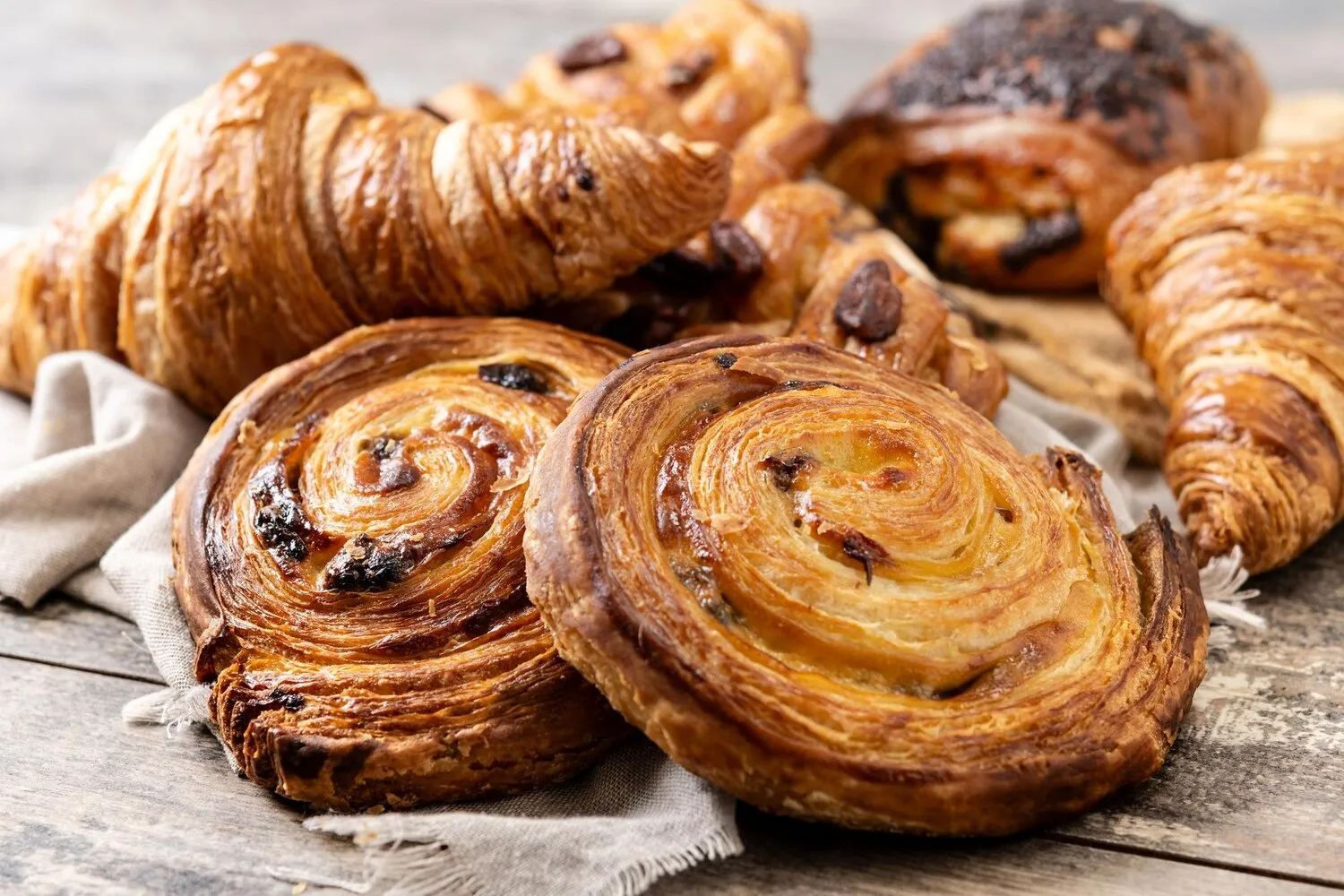

Pastries
Sweet and savory pastries are available at Imprensa Food Square.
Información Nutricional
* El % de Valor Diario (VD) indica cuánto aporta un nutriente en una porción de alimento a una dieta diaria. Se utilizan 2,000 calorías al día para consejos generales de nutrición.
Función Premium
Imprensa Food Square
Función Premium
Pastries have a rich and varied history, dating back to ancient civilizations like the Egyptians, Greeks, and Romans, who created early forms of layered dough and filled breads. The evolution of pastries continued through the medieval period with the development of puff pastry and various fillings. Colonization and trade further diversified pastry traditions across the globe, leading to the incredible variety we see today.
Función Premium
Pastries hold significant cultural importance across many societies, often associated with celebrations, holidays, and special occasions. They can also reflect regional culinary traditions and local ingredients, showcasing the unique flavors of a particular place.
Celebrations and Holidays
Pastries are frequently served during holidays like Christmas (e.g., mince pies, stollen), Easter (e.g., hot cross buns, pastiera), and birthdays (e.g., cakes, cupcakes). They symbolize joy, abundance, and togetherness.
Regional Specialties
Many regions boast their own unique pastry specialties, reflecting local ingredients and culinary techniques. Examples include French croissants, Italian cannoli, Portuguese pastel de nata, and Argentinian empanadas.
Social Gatherings
Pastries are often enjoyed during social gatherings like tea parties, brunches, and picnics, providing a sweet or savory treat to share with friends and family.
Función Premium
The flavors of pastries are incredibly diverse, spanning the spectrum from sweet to savory. Sweet pastries often feature combinations of sugar, butter, eggs, and flour, enhanced by fruits, creams, chocolates, and spices. Savory pastries incorporate ingredients like cheeses, meats, vegetables, and herbs, offering a wide range of tastes and textures.
Sweet pastries commonly utilize ingredients like granulated sugar, brown sugar, honey, maple syrup, and fruit purees to achieve sweetness. Common spices include cinnamon, nutmeg, cardamom, and vanilla. Fillings range from custards and creams (pastry cream, whipped cream, ganache) to jams, fruit compotes, and nut pastes. Savory pastries rely on salt, herbs (rosemary, thyme, oregano), spices (paprika, cayenne pepper), and flavorful fillings like cheeses (cheddar, Gruyere, feta), meats (ham, bacon, sausage), vegetables (spinach, mushrooms, onions), and eggs.
Función Premium
Temperature Matters
Keep butter and other fats cold when making pastry dough to prevent the formation of gluten and ensure a flaky texture. For fillings, ensure ingredients are at the correct temperature for proper emulsification.
Precise Measurements
Baking, especially pastry-making, is a science. Use accurate measuring tools and follow recipes closely to ensure consistent results. A kitchen scale is highly recommended for weighing ingredients.
Don't Overwork the Dough
Overworking pastry dough develops gluten, resulting in a tough and chewy texture. Handle the dough gently and mix only until the ingredients are combined.
Resting Time
Allowing the dough to rest in the refrigerator chills the fats, relaxes the gluten, and makes it easier to roll out. This is especially important for puff pastry and shortcrust pastry.
Función Premium
Explora platos y restaurantes adicionales de Pastries
Explorar PastriesDescubre los mejores lugares para comer y experiencias culinarias en Fortaleza.
Explorar FortalezaAprende más sobre la cultura gastronómica, la escena de restaurantes y el patrimonio culinario de Brazil.
Explorar Brazil