
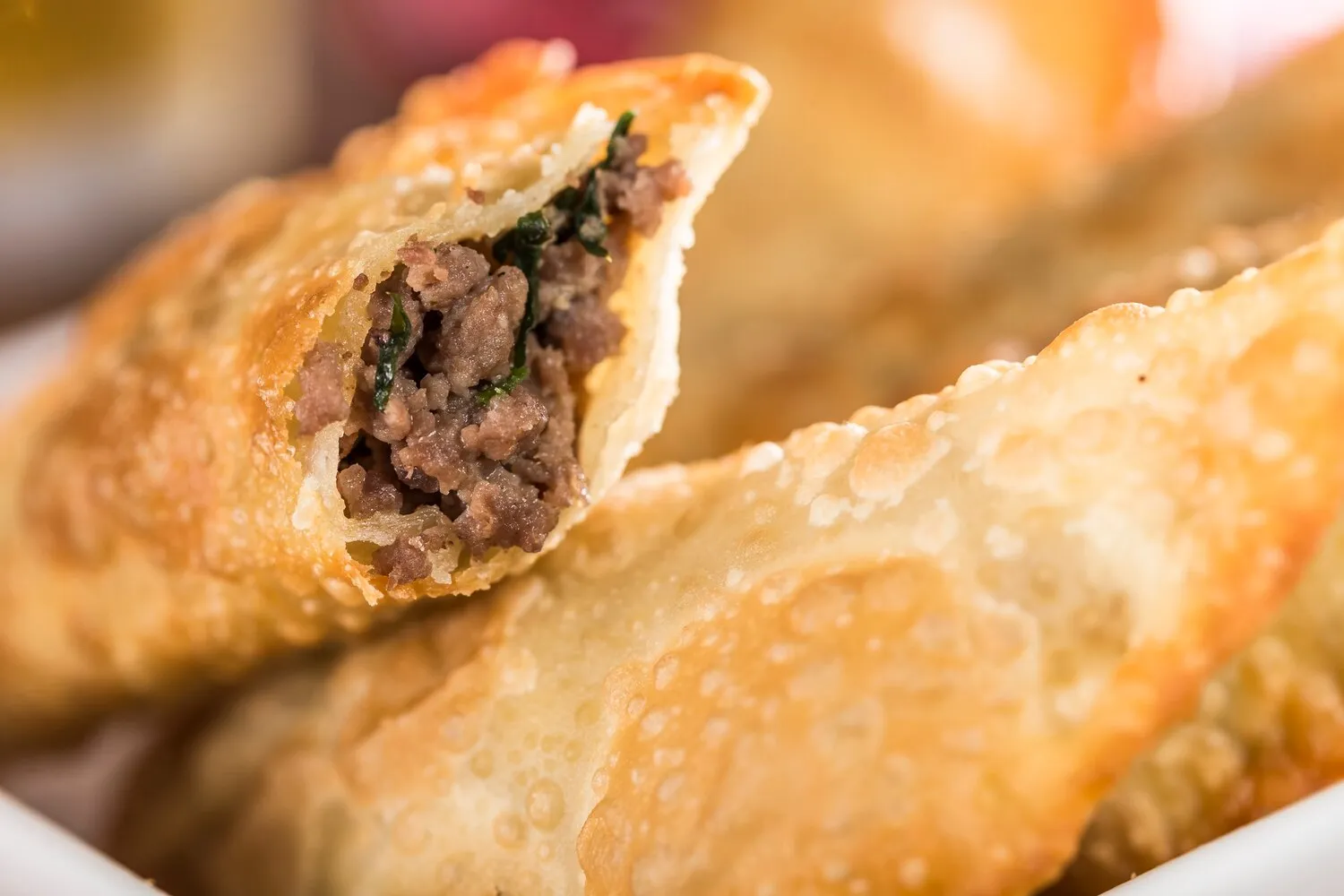

Pastel
Fried pastry with various fillings such as cheese, meat, or chicken.
Información Nutricional
* El % de Valor Diario (VD) indica cuánto aporta un nutriente en una porción de alimento a una dieta diaria. Se utilizan 2,000 calorías al día para consejos generales de nutrición.
Función Premium
Función Premium
The pastel's origins can be traced back to Asian immigrants, particularly from China and Japan, who adapted their traditional fried dumplings to suit local ingredients and tastes upon arriving in Brazil. The technique of frying dough was already present in Brazilian cuisine, likely influenced by Portuguese and African culinary traditions. These influences merged, resulting in the now-iconic Brazilian pastel.
Función Premium
Pastel is deeply ingrained in Brazilian culture, particularly as a popular street food and market staple. It's associated with casual eating, social gatherings, and quick, affordable meals.
Feiras (Street Markets)
Pastel is almost always found at 'feiras,' which are outdoor street markets that take place weekly in Brazilian cities. Eating pastel at a feira is a quintessential Brazilian experience.
Lanchonetes (Snack Bars)
Many lanchonetes, or snack bars, also serve pastel, making it a readily available and convenient option for a quick lunch or snack.
Social Gatherings
Pastel is often served at informal gatherings, parties, and sporting events, demonstrating its role as a casual and accessible food.
Función Premium
Pastel flavors are a vibrant mix of savory, salty, and sometimes spicy, depending on the filling. The crispy, fried dough provides a textural contrast to the soft, flavorful fillings.
The primary flavors come from the fillings, which can vary widely. Common fillings include: ground beef (often seasoned with onions, garlic, and herbs); cheese (typically mozzarella or a similar melting cheese); chicken (shredded and seasoned); heart of palm (palmito), and shrimp. A vinegary chili sauce is a common accompaniment, adding a spicy and acidic counterpoint to the richness of the pastry. The fried dough itself imparts a slightly oily, savory flavor.
Función Premium
Dough Consistency
The dough should be thin and pliable, but not too sticky. A slightly elastic dough will hold its shape well during frying.
Filling Preparation
Make sure the filling is not too wet, as excess moisture can cause the dough to become soggy. Drain any excess liquid from the filling before assembling the pastéis.
Frying Temperature
The oil should be hot enough (around 350-375°F or 175-190°C) to cook the dough quickly and evenly, resulting in a crispy exterior. Avoid overcrowding the fryer to maintain the oil temperature.
Serving Immediately
Pastel is best enjoyed hot and fresh from the fryer. The crispy texture diminishes as it cools down.
Función Premium
Explora platos y restaurantes adicionales de Brazilian Snack
Explorar Brazilian SnackDescubre los mejores lugares para comer y experiencias culinarias en Feira de Santana.
Explorar Feira de SantanaAprende más sobre la cultura gastronómica, la escena de restaurantes y el patrimonio culinario de Brazil.
Explorar Brazil