
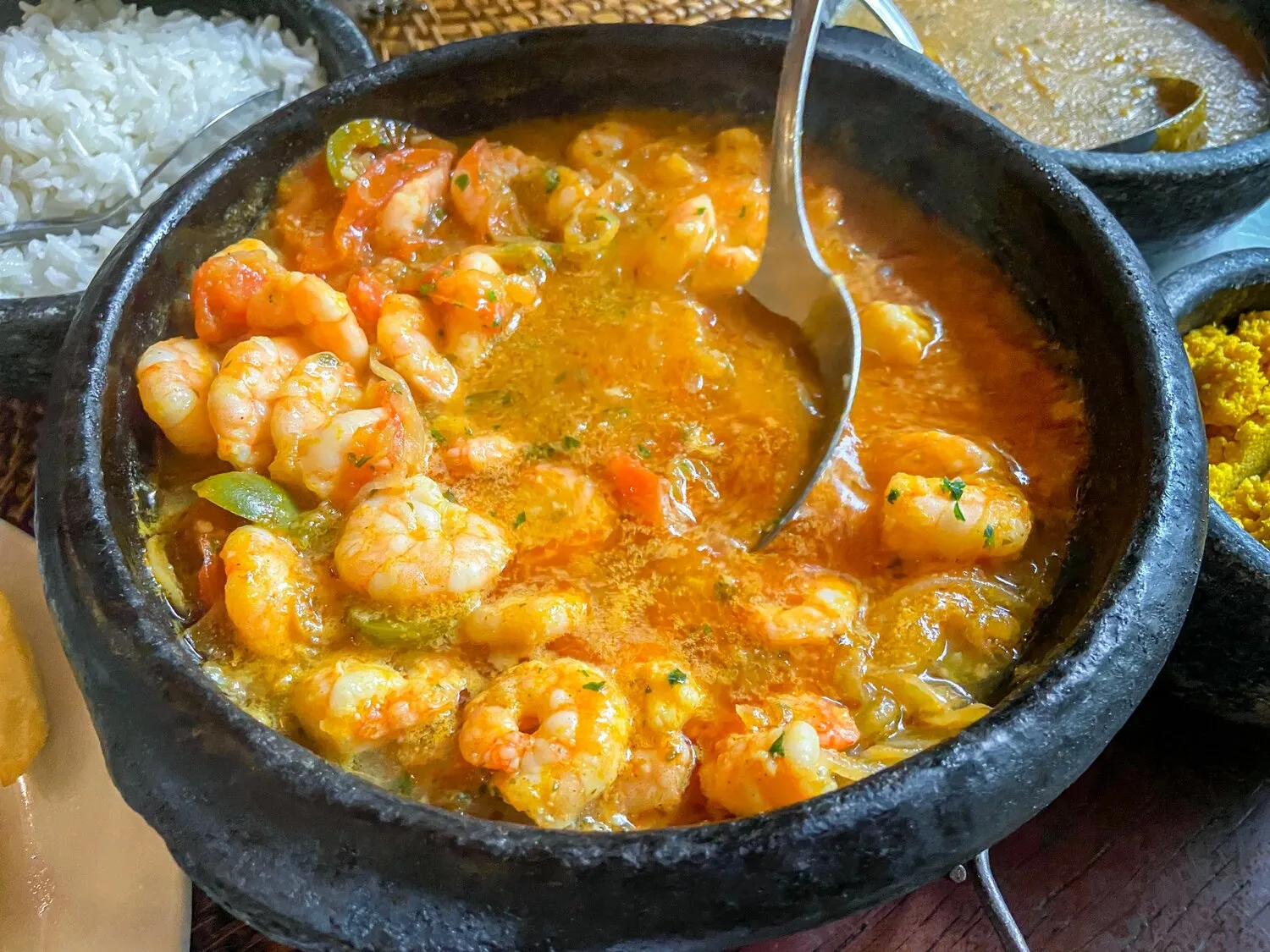

Moqueca de Camarão
Shrimp moqueca, a traditional Brazilian seafood stew cooked in coconut milk, tomatoes, onions, and peppers.
Información Nutricional
* El % de Valor Diario (VD) indica cuánto aporta un nutriente en una porción de alimento a una dieta diaria. Se utilizan 2,000 calorías al día para consejos generales de nutrición.
Función Premium
Flor do Maracujá
Función Premium
Moqueca's history is rooted in the indigenous tribes of Brazil, who cooked fish and shellfish in clay pots. African influences, brought by enslaved people, introduced ingredients like coconut milk, dendê oil (palm oil), and peppers, shaping the dish into its modern form. Portuguese colonizers also contributed with techniques and ingredients, further enriching the stew's culinary heritage.
Función Premium
Moqueca is more than just a dish; it's a symbol of Brazilian coastal culture, representing community, family gatherings, and the bounty of the sea. It’s deeply intertwined with regional identities, particularly in the states of Bahia and Espírito Santo.
Regional Variations
Two main variations exist: Moqueca Baiana (from Bahia) and Moqueca Capixaba (from Espírito Santo). The key difference lies in the use of dendê oil; Baiana uses it, while Capixaba doesn't. The style represents pride for the respective regions.
Family Tradition
Moqueca is often prepared for special occasions and family meals, emphasizing the importance of sharing and togetherness. Recipes are passed down through generations, with each family adding their unique touch.
Celebrations
In coastal towns, moqueca is frequently served at festivals and celebrations, connecting the dish to the area's rich maritime history and cultural identity.
Función Premium
Moqueca de Camarão offers a vibrant blend of sweet, savory, and slightly spicy flavors, harmonizing the natural sweetness of shrimp with the richness of coconut milk and the tang of tomatoes.
The predominant flavors are those of sweet shrimp, creamy coconut milk, tangy tomatoes and onions, and a subtle heat from chili peppers. Cilantro adds a fresh, herbaceous note. Dendê oil (palm oil), used primarily in the Moqueca Baiana variation, provides a distinctive reddish hue and a slightly earthy, nutty flavor that distinguishes it from the Moqueca Capixaba which doesn't traditionally use it.
Función Premium
Freshness is Key
Use the freshest shrimp possible for the best flavor and texture. Look for firm, translucent shrimp with a clean, sea-like smell.
Don't Overcook the Shrimp
Shrimp cooks quickly, so be careful not to overcook it, or it will become rubbery. Add it towards the end of the cooking process and cook until it turns pink and opaque.
Low and Slow
Simmer the moqueca gently over low heat to allow the flavors to meld together without burning the ingredients.
Proper Pot
Traditionally, moqueca is prepared in a clay pot (panela de barro), which imparts a unique earthy flavor. If you don't have one, a heavy-bottomed pot will work well.
Función Premium
Explora platos y restaurantes adicionales de Brazilian Seafood
Explorar Brazilian SeafoodDescubre los mejores lugares para comer y experiencias culinarias en Feira de Santana.
Explorar Feira de SantanaAprende más sobre la cultura gastronómica, la escena de restaurantes y el patrimonio culinario de Brazil.
Explorar Brazil