
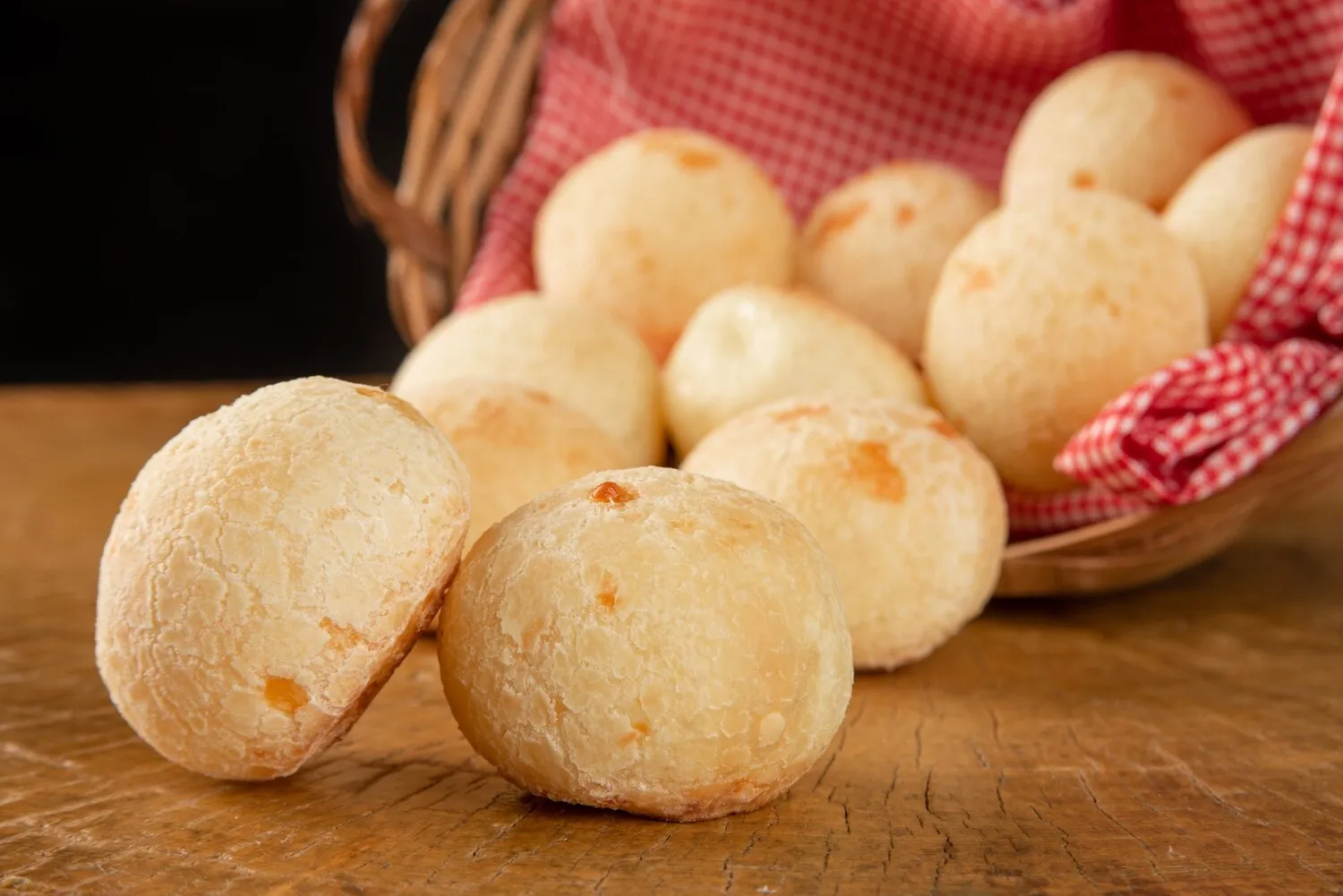

Pão de Queijo
Traditional Brazilian cheese bread. A small, baked cheese roll, a popular snack and breakfast item.
Información Nutricional
* El % de Valor Diario (VD) indica cuánto aporta un nutriente en una porción de alimento a una dieta diaria. Se utilizan 2,000 calorías al día para consejos generales de nutrición.
Función Premium
Función Premium
The exact origins of Pão de Queijo are debated, but it's believed to have emerged in the state of Minas Gerais during the 18th century. The dish arose from a combination of factors: readily available ingredients like cassava starch (polvilho), local cheese (Minas cheese), and a history of resourceful cooking by enslaved Africans and farmers adapting to limited resources. There is some influence from Portuguese bread making, but the specific ingredients used give Pão de Queijo its unique character.
Función Premium
Pão de Queijo is deeply ingrained in Brazilian food culture, especially in Minas Gerais. It is more than just a snack; it's a symbol of hospitality, comfort, and tradition, and is enjoyed throughout the day.
Breakfast Staple
Pão de Queijo is a common breakfast item, often enjoyed with coffee. It's a quick, convenient, and satisfying way to start the day.
Social Gathering Food
It's frequently served at social gatherings, parties, and as a snack with friends and family. It represents sharing and conviviality.
Regional Identity
Pão de Queijo is particularly associated with the state of Minas Gerais, where it originated. It's considered a regional delicacy and a source of pride for the people of Minas Gerais.
Symbol of Hospitality
Offering Pão de Queijo to guests is a sign of welcome and hospitality in Brazilian culture.
Función Premium
Pão de Queijo boasts a savory, cheesy flavor with a slightly tangy and chewy texture. The combination of tapioca starch and cheese creates a unique taste and feel.
The dominant flavor is cheesy, typically from Minas cheese (queijo Minas), which can range from mild and fresh to more aged and flavorful. The tapioca starch (polvilho doce or azedo - sweet or sour) contributes a subtle tanginess and a characteristic chewy texture. Eggs add richness and structure, while a touch of oil or butter provides further flavor and moisture. The overall flavor profile is savory, slightly tangy, and subtly sweet.
Función Premium
Polvilho Choice
Using a blend of sweet (doce) and sour (azedo) tapioca starch (polvilho) is crucial for achieving the characteristic chewy texture and subtle tang. Experiment with different ratios to find your preference.
Cheese Quality
The type and quality of cheese significantly impact the flavor. Minas cheese is traditional, but other semi-hard cheeses like Parmesan or Gruyere can be added for different flavor profiles. Make sure to use fresh, high-quality cheese.
Oven Temperature
Baking at the correct temperature is essential for achieving a puffy, golden-brown exterior and a soft, chewy interior. Preheat your oven thoroughly and monitor the baking time carefully.
Mixing Technique
Scalding the polvilho with hot liquid (water or milk) before adding the other ingredients helps to gelatinize the starch and creates a smoother dough. Be careful not to burn yourself.
Freezing for Later
Pão de Queijo dough can be frozen before baking. Simply shape the dough into balls, freeze them, and then bake from frozen when you're ready to enjoy them. Add a few minutes to the baking time.
Función Premium
Explora platos y restaurantes adicionales de Handy food
Explorar Handy foodDescubre los mejores lugares para comer y experiencias culinarias en Divinópolis.
Explorar DivinópolisAprende más sobre la cultura gastronómica, la escena de restaurantes y el patrimonio culinario de Brazil.
Explorar Brazil