
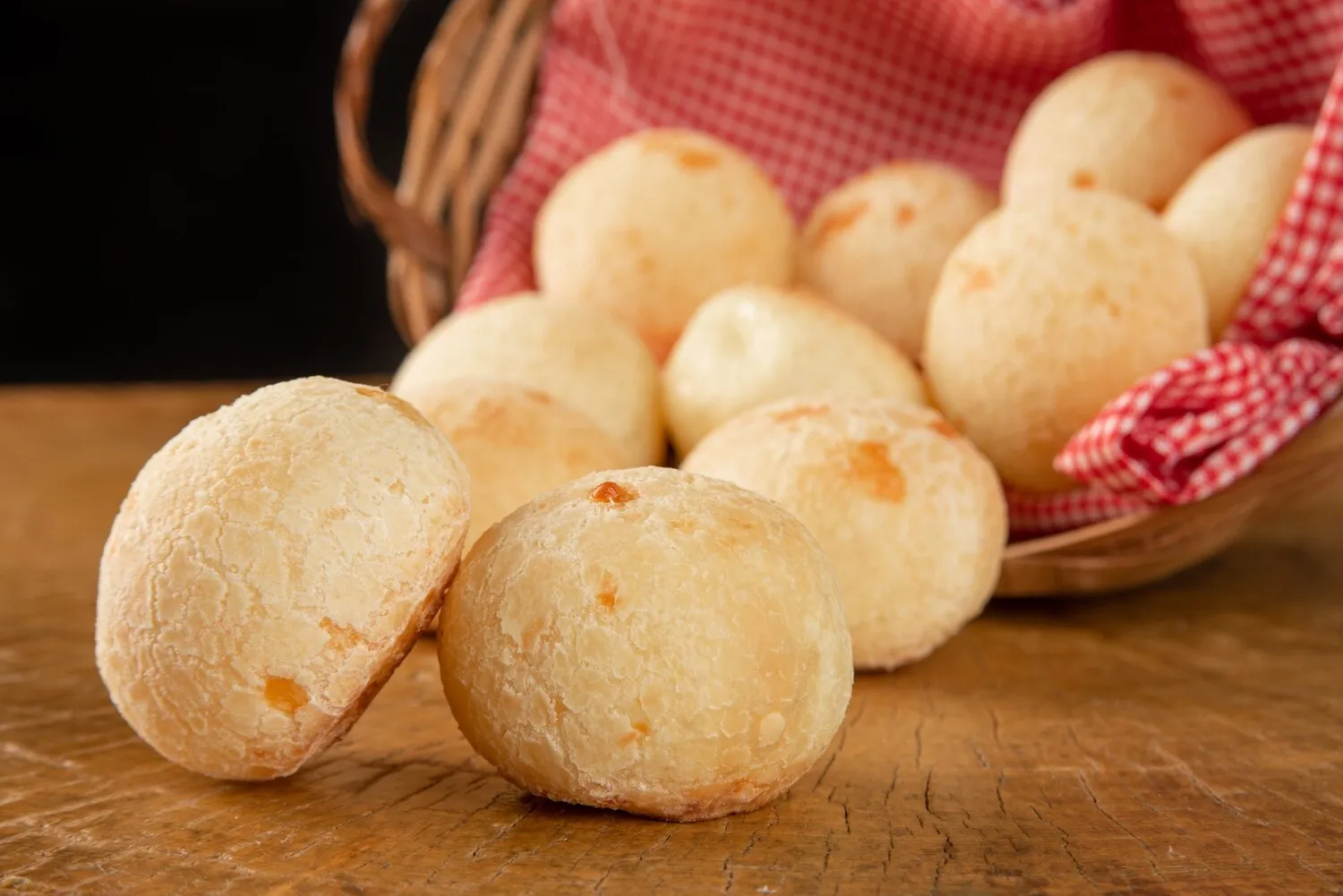

Pão de Queijo
Brazilian cheese bread, a popular snack made with tapioca flour, cheese, and milk.
Información Nutricional
* El % de Valor Diario (VD) indica cuánto aporta un nutriente en una porción de alimento a una dieta diaria. Se utilizan 2,000 calorías al día para consejos generales de nutrición.
Función Premium
Grão Espresso Shopping Praça da Moça
Función Premium
The exact origins of Pão de Queijo are somewhat debated, but it's widely believed to have originated in the state of Minas Gerais, Brazil, during the 18th century. At this time, the vast inland region was a major dairy and cheese producer. The dish likely arose from a combination of readily available ingredients like milk, cheese, and tapioca starch (a local adaptation for wheat flour scarcity), and the ingenuity of enslaved Africans and cooks who adapted traditional recipes.
Función Premium
Pão de Queijo is deeply ingrained in Brazilian culture, particularly in Minas Gerais, where it's considered a staple food. It's more than just a snack; it represents hospitality, comfort, and a taste of home.
Breakfast Staple
Pão de Queijo is commonly enjoyed for breakfast, often paired with coffee. It's a quick and easy way to start the day.
Social Gathering Food
It's frequently served at social gatherings, parties, and coffee breaks, representing a welcoming and sharing spirit.
Regional Pride
In Minas Gerais, Pão de Queijo is a source of regional pride. Variations in cheese and preparation methods are common, leading to unique local specialties.
National Symbol
Due to its widespread popularity, Pão de Queijo is considered a symbol of Brazilian cuisine and culture. It's found everywhere from street vendors to upscale restaurants.
Función Premium
Pão de Queijo offers a delightful combination of cheesy, subtly tangy, and chewy textures and flavors.
The dominant flavor is the rich, savory taste of cheese. Minas cheese, a semi-hard cow's milk cheese, is traditionally used, imparting a slightly tangy and earthy note. The tapioca flour contributes a unique chewy and slightly elastic texture, while the milk adds moisture and subtle sweetness. The baking process creates a crisp exterior that contrasts beautifully with the soft, airy interior. Overall, it's a comforting and flavorful snack with a satisfyingly savory profile.
Función Premium
Choosing the Right Tapioca Flour
Using a blend of sweet and sour tapioca starch creates the ideal chewy texture and slight tang. Experiment with ratios to find your preferred balance.
Cheese Selection is Key
While Minas cheese is traditional, other cheeses like mozzarella, parmesan, or provolone can be used for variations in flavor. Consider using a blend of cheeses for a more complex taste.
Temperature Matters
Using warm milk and melted butter helps the starches hydrate properly, resulting in a smoother batter. Allow the batter to rest for a few minutes before baking.
Baking Technique
Baking at a high temperature initially helps to create a crisp exterior and allows the bread to puff up. Avoid opening the oven door frequently during baking to prevent the Pão de Queijo from collapsing.
Freezing for Later
Unbaked Pão de Queijo can be frozen for later use. Simply bake them directly from frozen, adding a few extra minutes to the baking time.
Función Premium
Explora platos y restaurantes adicionales de Handy food
Explorar Handy foodDescubre los mejores lugares para comer y experiencias culinarias en Diadema.
Explorar DiademaAprende más sobre la cultura gastronómica, la escena de restaurantes y el patrimonio culinario de Brazil.
Explorar Brazil