
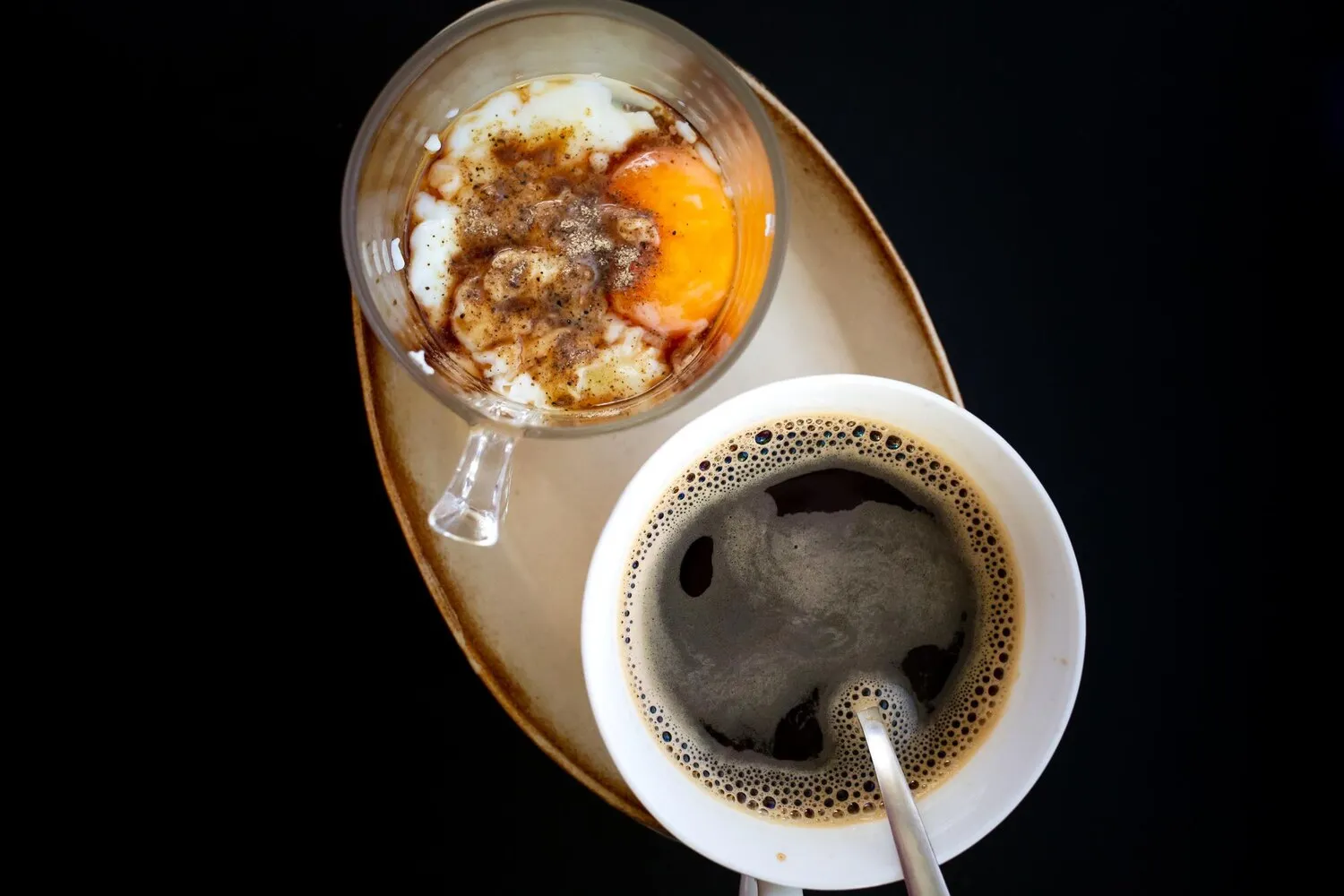

Espresso
A concentrated coffee beverage brewed by forcing hot water through finely-ground coffee beans.
Información Nutricional
* El % de Valor Diario (VD) indica cuánto aporta un nutriente en una porción de alimento a una dieta diaria. Se utilizan 2,000 calorías al día para consejos generales de nutrición.
Función Premium
Grão Espresso Shopping Praça da Moça
Función Premium
Espresso's origins lie in late 19th-century Italy, driven by a desire to brew coffee more quickly and individually. Early machines used steam pressure, evolving to lever-operated machines in the mid-20th century and eventually to the electric pump-driven systems we know today. The development was closely linked to the growth of Italian coffee culture and the desire for a strong, concentrated coffee experience.
Función Premium
Espresso is deeply ingrained in Italian culture and has become a global phenomenon. It's more than just a beverage; it's a social ritual, a daily routine, and a symbol of Italian identity.
Italian Coffee Culture
In Italy, espresso is typically consumed quickly at the bar, often standing. It's a social experience, a brief moment of connection before continuing the day. Coffee bars ('bars' in Italian) are central hubs for social interaction.
Espresso Variations
Espresso forms the base for a wide range of coffee drinks, including cappuccino, latte, macchiato, and americano. These variations have spread globally, adapting to local tastes and preferences.
Espresso as an Art
The preparation of espresso is considered an art form, with skilled baristas meticulously controlling the extraction process to achieve the perfect shot. Barista competitions showcase skill and innovation in espresso preparation.
Regional variations
While espresso is enjoyed throughout Italy, regional preferences can vary in terms of bean type, roast level, and serving style.
Función Premium
Espresso boasts a concentrated and complex flavor profile, highlighting the inherent qualities of the coffee bean. It is characterized by its intense aroma, rich body, and a distinct balance of sweetness, acidity, and bitterness.
The flavor of espresso is profoundly influenced by the coffee beans used, the roasting level, the grind size, water temperature, and the extraction process. High-quality espresso showcases nuanced flavors like chocolate, caramel, nuts, fruits, and floral notes. The 'crema,' a reddish-brown foam on top, contributes to the texture and flavor perception. A well-extracted espresso should have a pleasant balance of acidity (brightness), sweetness (caramelization), and bitterness (from the roasting process), while a poorly extracted one might be sour or overly bitter.
Función Premium
Bean Selection
Choose high-quality, freshly roasted coffee beans that are appropriate for espresso brewing. Arabica beans are generally preferred for their balanced flavor profiles.
Grind Size
The grind size is crucial for proper extraction. A fine, consistent grind is essential to create resistance and allow for even saturation of the coffee grounds. Adjust the grind based on the coffee beans and the espresso machine.
Tamping Technique
Tamp the coffee grounds evenly and firmly with a calibrated tamper. Consistent tamping pressure is essential for consistent extraction.
Water Temperature
Maintain the correct water temperature (around 195-205°F or 90-96°C) for optimal extraction. Too hot, and the espresso will be bitter; too cold, and it will be sour.
Extraction Time
The ideal extraction time is typically between 25 and 30 seconds. Adjust the grind size and tamping pressure to achieve this range. The visual cue is the 'mouse tail' flow of the espresso.
Función Premium
Explora platos y restaurantes adicionales de Coffee
Explorar CoffeeDescubre los mejores lugares para comer y experiencias culinarias en Diadema.
Explorar DiademaAprende más sobre la cultura gastronómica, la escena de restaurantes y el patrimonio culinario de Brazil.
Explorar Brazil