
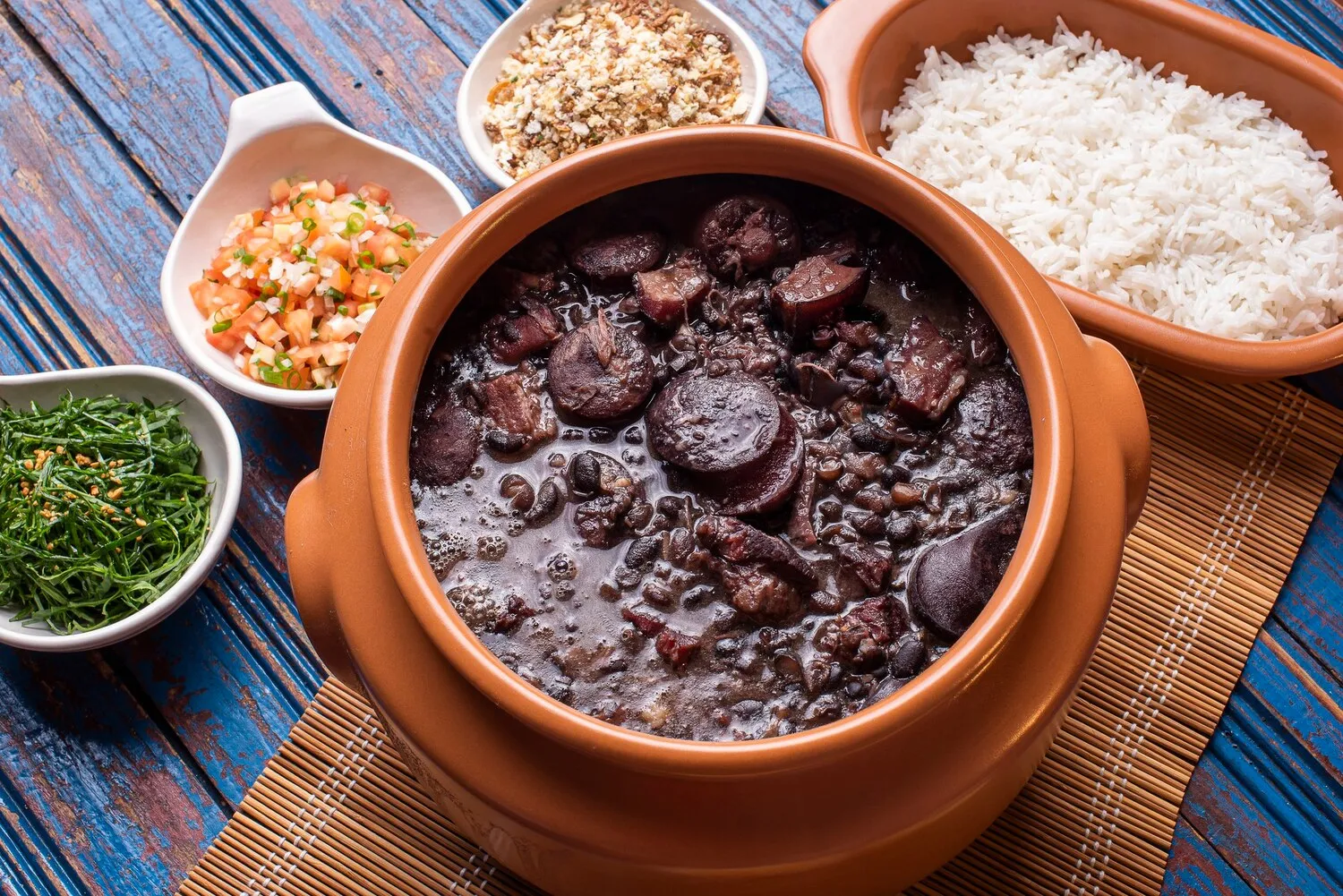

Feijoada
Feijoada completa, tradicional prato brasileiro.
Información Nutricional
* El % de Valor Diario (VD) indica cuánto aporta un nutriente en una porción de alimento a una dieta diaria. Se utilizan 2,000 calorías al día para consejos generales de nutrición.
Función Premium
Función Premium
Feijoada's origins are debated, but it's widely believed to have evolved from slave cuisine, utilizing leftover pork parts like ears, feet, and tails. However, some historians argue it's a more recent adaptation of European stews, influenced by the variety of beans and meats available in Brazil.
Función Premium
Feijoada is more than just a dish; it's a cultural icon in Brazil. It's a communal meal, often enjoyed on weekends with family and friends. It symbolizes togetherness, celebration, and Brazilian identity.
Feijoada on Saturdays
It is a common tradition for restaurants and families to prepare feijoada on Saturdays, making it a social event.
Regional Variations
While the core ingredients remain consistent, regional variations exist, reflecting local preferences and available ingredients. For example, some regions might include different types of sausages or vegetables.
Side Dishes and Accompaniments
Feijoada is traditionally served with accompaniments like white rice, collard greens (couve), farofa (toasted cassava flour), orange slices, and hot sauce (pimenta). These side dishes balance the richness of the feijoada and provide contrasting textures and flavors.
Función Premium
Feijoada is characterized by its rich, savory, and smoky flavors, stemming from the combination of black beans, various cuts of pork, and smoked sausages. It's a hearty and comforting dish with a complex profile.
The primary flavor foundation is black beans, slow-cooked to a creamy consistency. Various pork cuts contribute distinct flavors and textures, from the fatty richness of pork belly to the salty tang of smoked sausage (linguiça and paio are common). Bay leaves, garlic, onions, and sometimes orange slices add aromatic complexity. The overall flavor is robust, earthy, and deeply satisfying.
Función Premium
Soaking the Beans
Soak the black beans for at least 12 hours (or overnight) before cooking to reduce cooking time and improve digestibility.
Desalting the Meats
Desalt the salted pork cuts (like dried beef or salted belly) by soaking them in water for several hours, changing the water frequently. This removes excess salt and prevents the feijoada from becoming too salty.
Cooking Time
Slow cooking is key to a delicious feijoada. Allow ample time for the beans and meats to simmer together, allowing the flavors to meld and develop fully. A pressure cooker can significantly reduce cooking time, but traditional slow cooking is often preferred for optimal flavor.
Orange Slices
Serving orange slices with feijoada helps to aid digestion and cleanse the palate between bites.
Función Premium
Explora platos y restaurantes adicionales de Traditional Brazilian
Explorar Traditional BrazilianDescubre los mejores lugares para comer y experiencias culinarias en Curitiba.
Explorar CuritibaAprende más sobre la cultura gastronómica, la escena de restaurantes y el patrimonio culinario de Brazil.
Explorar Brazil