
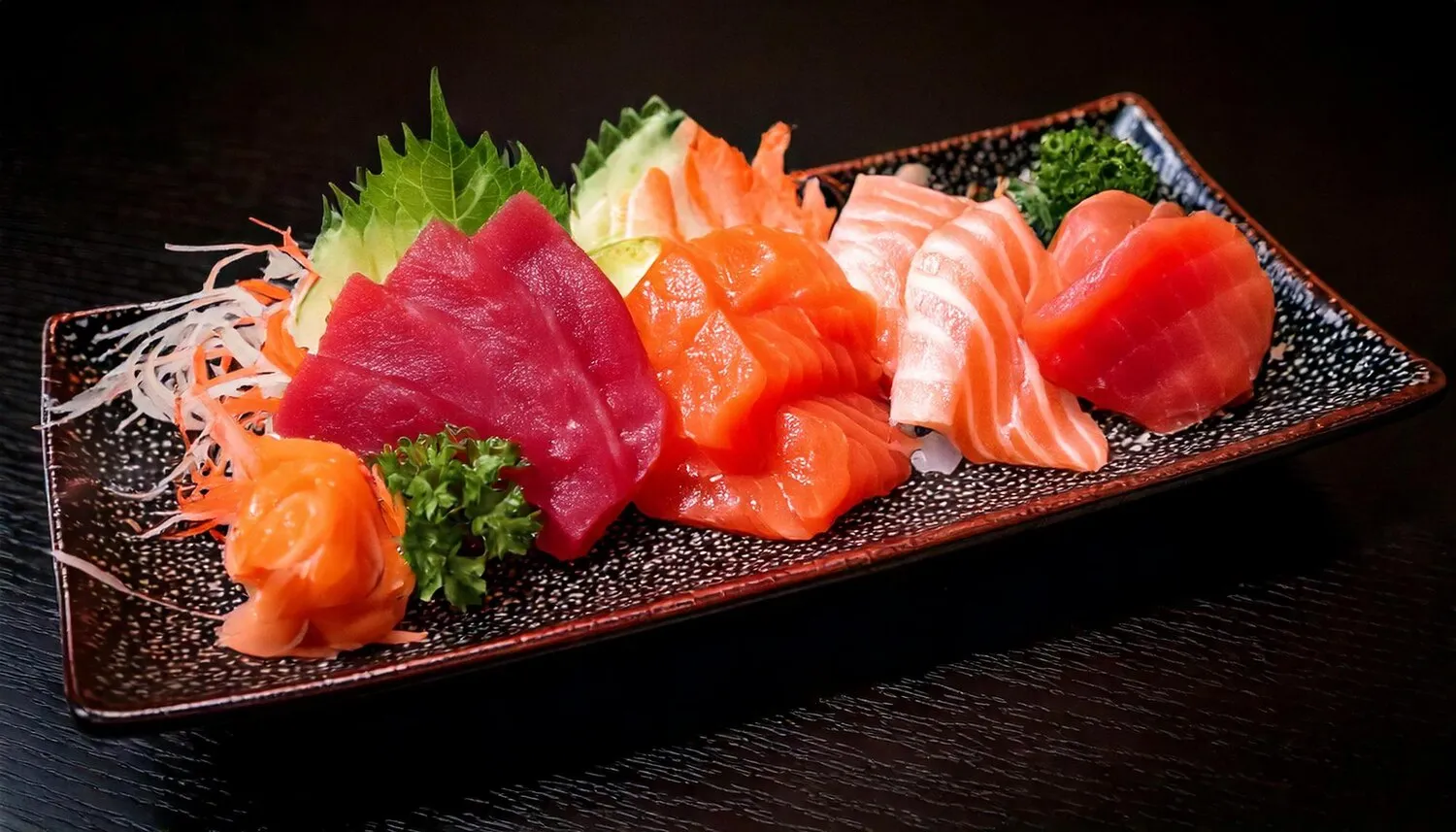

Sashimi
Thinly sliced raw fish, typically served with soy sauce and wasabi.
Información Nutricional
* El % de Valor Diario (VD) indica cuánto aporta un nutriente en una porción de alimento a una dieta diaria. Se utilizan 2,000 calorías al día para consejos generales de nutrición.
Función Premium
Tokyo Dome
Función Premium
The practice of eating raw fish in Japan dates back centuries. The earliest forms were likely a response to food scarcity and a desire to preserve fish for longer periods. Techniques like pickling and fermenting fish evolved, leading to simpler, fresher preparations like sashimi as preservation methods improved.
Función Premium
Sashimi holds a prominent place in Japanese cuisine and dining culture, representing simplicity, freshness, and respect for the ingredients. It is often considered an art form, with chefs meticulously preparing and presenting each slice.
Presentation
The presentation of sashimi is highly valued. The slices are arranged artfully, often with edible garnishes like daikon radish, seaweed, and shiso leaves. The visual appeal is considered as important as the taste.
Seasonal Eating
Certain types of fish are preferred during specific seasons, aligning with when they are at their peak flavor and texture. This reflects a respect for the natural cycles and a desire to enjoy the freshest possible ingredients.
Dining Etiquette
Proper etiquette dictates using chopsticks to pick up sashimi, dipping it lightly in soy sauce (only the fish, not the rice if served with sushi), and eating each piece in one bite to fully appreciate the flavor and texture. Sharing sashimi platters is common, fostering a sense of community.
Función Premium
Sashimi offers a delicate and clean flavor profile, emphasizing the natural taste and texture of the fish. It's a balance of subtle sweetness, umami, and the slight pungency of accompaniments.
The core flavor of sashimi depends entirely on the type of fish used. Tuna (maguro) provides a rich, meaty taste, while salmon (sake) offers a buttery, delicate flavor. White fish like sea bream (tai) are often subtle and firm. The soy sauce (shoyu) adds saltiness and umami, enhancing the fish's flavor without overpowering it. Wasabi provides a sharp, cleansing heat that contrasts with the coolness of the fish. Ginger (gari), served as a palate cleanser, provides a spicy and slightly sweet note.
Función Premium
Freshness is Key
Ensure the sashimi is sourced from a reputable establishment that prioritizes freshness and proper handling of the fish. Fresh sashimi should have a vibrant color, a firm texture, and no fishy odor.
Wasabi Usage
Use wasabi sparingly. A small dab placed directly on the fish is sufficient to add a touch of heat and enhance the flavor. Avoid mixing wasabi into the soy sauce, as this dulls the flavor of both.
Soy Sauce Dip
Dip only the fish into the soy sauce, not the entire slice. Over-soaking the sashimi masks its delicate flavor.
Order of Eating
It is often recommended to eat sashimi from lightest to richest in flavor. Start with white fish and move to richer options like tuna or salmon. This allows you to better appreciate the nuances of each type.
Función Premium
Explora platos y restaurantes adicionales de Raw Fish
Explorar Raw FishDescubre los mejores lugares para comer y experiencias culinarias en Campo Grande.
Explorar Campo GrandeAprende más sobre la cultura gastronómica, la escena de restaurantes y el patrimonio culinario de Brazil.
Explorar Brazil