
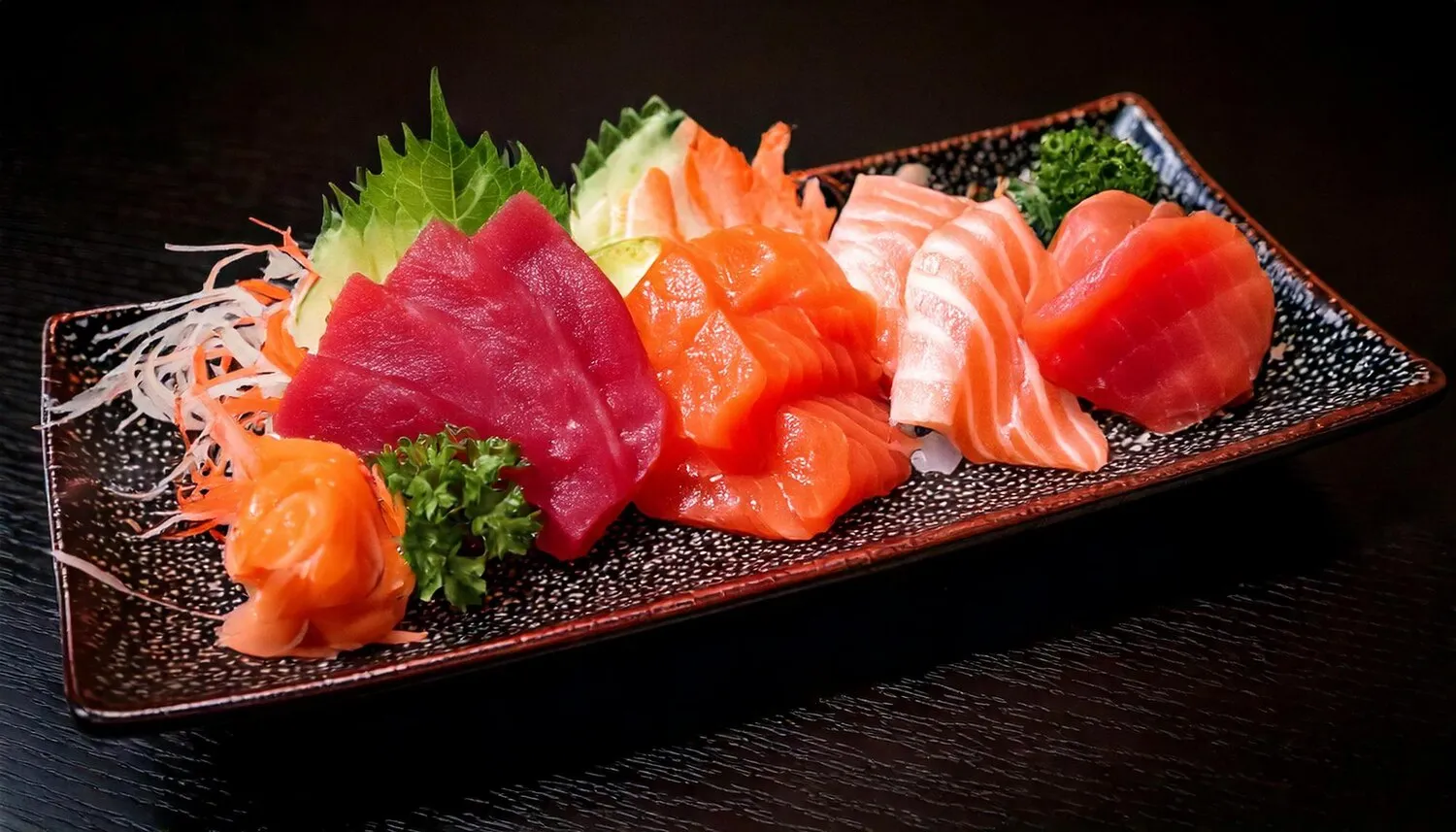

Sashimi
Fresh sliced raw fish.
Información Nutricional
* El % de Valor Diario (VD) indica cuánto aporta un nutriente en una porción de alimento a una dieta diaria. Se utilizan 2,000 calorías al día para consejos generales de nutrición.
Función Premium
IKI Culinária Japonesa
Función Premium
The practice of eating raw fish in Japan dates back centuries, with its origins linked to the need to preserve fish before refrigeration. Early methods included pickling in vinegar or fermenting with rice. Sashimi evolved alongside sushi, becoming a refined culinary art emphasizing the quality and freshness of the fish.
Función Premium
Sashimi is more than just food; it's a reflection of Japanese culinary philosophy that values simplicity, freshness, and respect for ingredients. It's often served on special occasions and is considered a high-end delicacy.
Presentation is Key
The aesthetic presentation of sashimi is as important as its taste. Slices are carefully arranged on a plate, often with garnishes such as seaweed, daikon radish, or edible flowers, to create a visually appealing and harmonious dish.
Freshness and Quality
Sashimi demands the highest quality and freshness of fish. Skilled chefs carefully select and prepare the fish to ensure its safety and optimal flavor. The origin and handling of the fish are crucial considerations.
A Culinary Art Form
Preparing sashimi is a culinary art form that requires years of training. Chefs must master the art of filleting and slicing fish to achieve the perfect texture and flavor. The precise angle and thickness of the slices can significantly impact the taste and mouthfeel.
Función Premium
Sashimi offers a pure and delicate taste experience, emphasizing the natural flavors of the fish. The primary flavors are umami, saltiness (from soy sauce), and a hint of spiciness from wasabi and the freshness of the fish itself.
The taste varies significantly depending on the type of fish. Tuna (maguro) offers a rich, fatty flavor, while salmon (sake) is milder and sweeter. Yellowtail (hamachi) has a buttery texture and clean taste. Sea bream (tai) is delicate and slightly sweet. Other common types include mackerel (saba), squid (ika), and octopus (tako). Soy sauce provides saltiness and umami, while wasabi adds a pungent kick that complements the fish's natural flavors. Ginger is often served as a palate cleanser between different types of sashimi.
Función Premium
Wasabi Usage
Avoid dissolving wasabi directly into the soy sauce, as this can overwhelm the fish's delicate flavor. Instead, place a small amount of wasabi directly onto the sashimi before dipping it lightly in soy sauce.
Soy Sauce Dipping
Dip only the edge of the sashimi slice into the soy sauce to avoid overpowering the fish's natural flavor. Over-soaking it is generally frowned upon.
Eating Order
Start with the milder-flavored fish and gradually move towards the stronger-flavored ones. This allows you to fully appreciate the nuances of each type of sashimi. White fish before red fish is the common practice.
Ginger as Palate Cleanser
Use pickled ginger (gari) as a palate cleanser between different types of sashimi to refresh your taste buds and prepare you for the next flavor.
Función Premium
Explora platos y restaurantes adicionales de Sashimi
Explorar SashimiDescubre los mejores lugares para comer y experiencias culinarias en Campinas.
Explorar CampinasAprende más sobre la cultura gastronómica, la escena de restaurantes y el patrimonio culinario de Brazil.
Explorar Brazil