
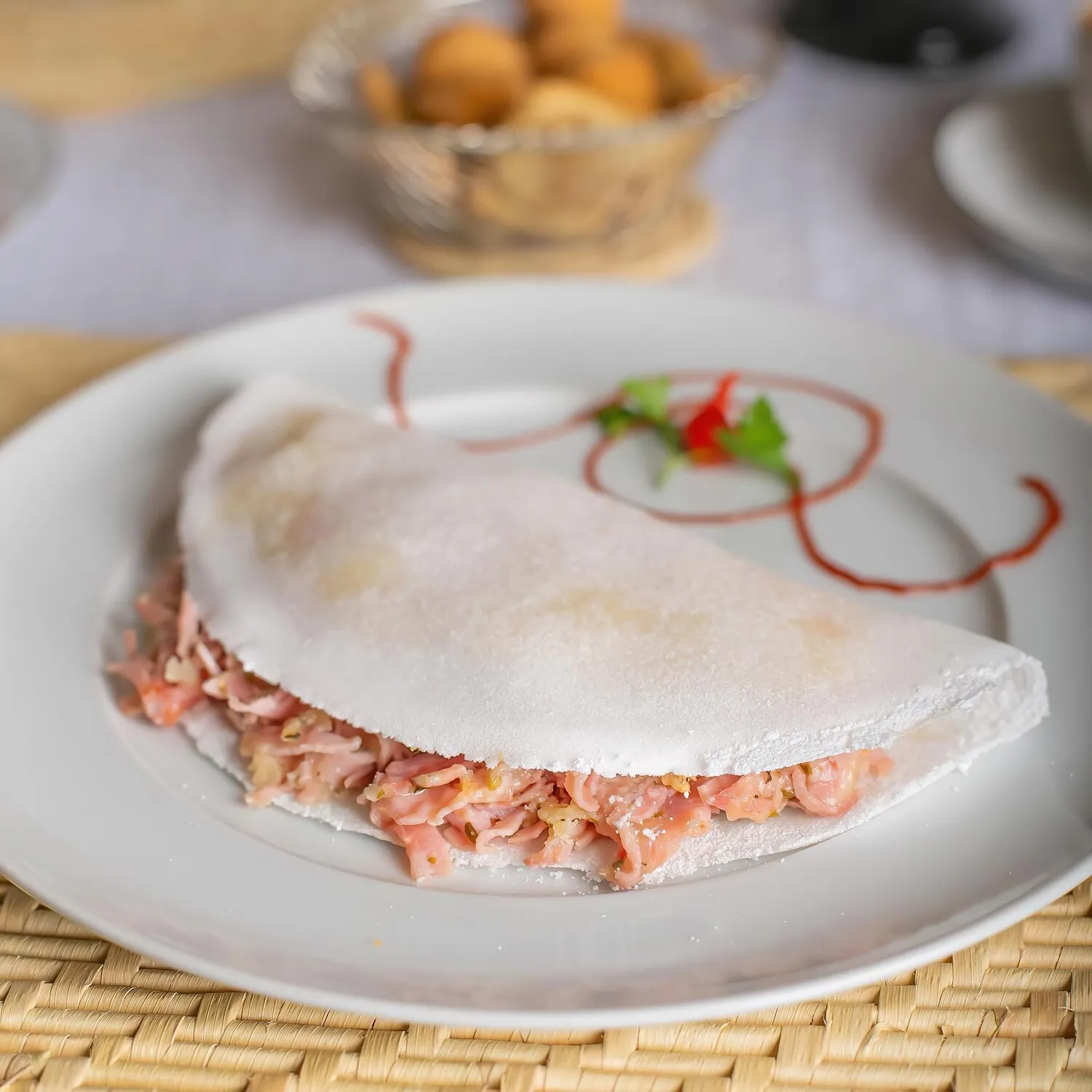

Tapioca
Gluten-free flatbread made from tapioca starch, often filled with sweet or savory ingredients like cheese, coconut, or meat.
Información Nutricional
* El % de Valor Diario (VD) indica cuánto aporta un nutriente en una porción de alimento a una dieta diaria. Se utilizan 2,000 calorías al día para consejos generales de nutrición.
Función Premium
Mangai
Función Premium
Tapioca's origins trace back to indigenous tribes in Brazil, who discovered the process of extracting starch from the cassava root long before European colonization. It was a staple food for these communities. Portuguese colonizers adopted it, and over time, its popularity spread throughout Brazil and beyond, evolving into various sweet and savory dishes.
Función Premium
Tapioca is deeply ingrained in Brazilian culture, particularly as a popular street food and a breakfast/snack option. It represents simplicity, resourcefulness, and a connection to the country's indigenous heritage.
Street Food Staple
Tapioca is commonly sold by street vendors throughout Brazil, prepared fresh on portable griddles. It's a quick and affordable meal or snack.
Regional Variations
Different regions of Brazil have their own unique variations of tapioca fillings and preparation methods. In some areas, it's thicker and more pancake-like, while in others, it's a thinner, crepe-style preparation.
Healthier Alternative
Tapioca is often seen as a healthier alternative to bread, especially for those with gluten sensitivities. This has contributed to its increasing popularity in recent years.
Función Premium
Tapioca has a naturally mild and slightly sweet flavor, making it highly versatile. The flavor profile largely depends on the fillings and toppings used.
On its own, tapioca has a subtle, almost neutral flavor. When prepared as a crepe or pancake, it takes on the taste of the butter or oil it's cooked in, and the filling dictates the overall flavor experience. Sweet fillings often include coconut, condensed milk, chocolate, fruits, or doce de leite (caramel). Savory options feature cheese, ham, chicken, vegetables, or sun-dried tomatoes. The chewy texture of the tapioca adds another layer to the sensory experience.
Función Premium
Hydration is Key
The tapioca starch needs to be properly hydrated before cooking. This is usually achieved by adding a small amount of water and mixing until it resembles a coarse, slightly damp powder.
Heat Control
Cook the tapioca over medium heat to prevent burning. The goal is to lightly toast the starch until it binds together into a crepe-like form, without overcooking it.
Fresh Ingredients
Using fresh, high-quality fillings will greatly enhance the flavor of your tapioca. Don't be afraid to experiment with different combinations.
Press Lightly
After adding the tapioca starch to the pan, use a spatula to gently press it down to create an even layer. Avoid pressing too hard, as this can make the tapioca tough.
Función Premium
Explora platos y restaurantes adicionales de Brazilian
Explorar BrazilianDescubre los mejores lugares para comer y experiencias culinarias en Brasília.
Explorar BrasíliaAprende más sobre la cultura gastronómica, la escena de restaurantes y el patrimonio culinario de Brazil.
Explorar Brazil