
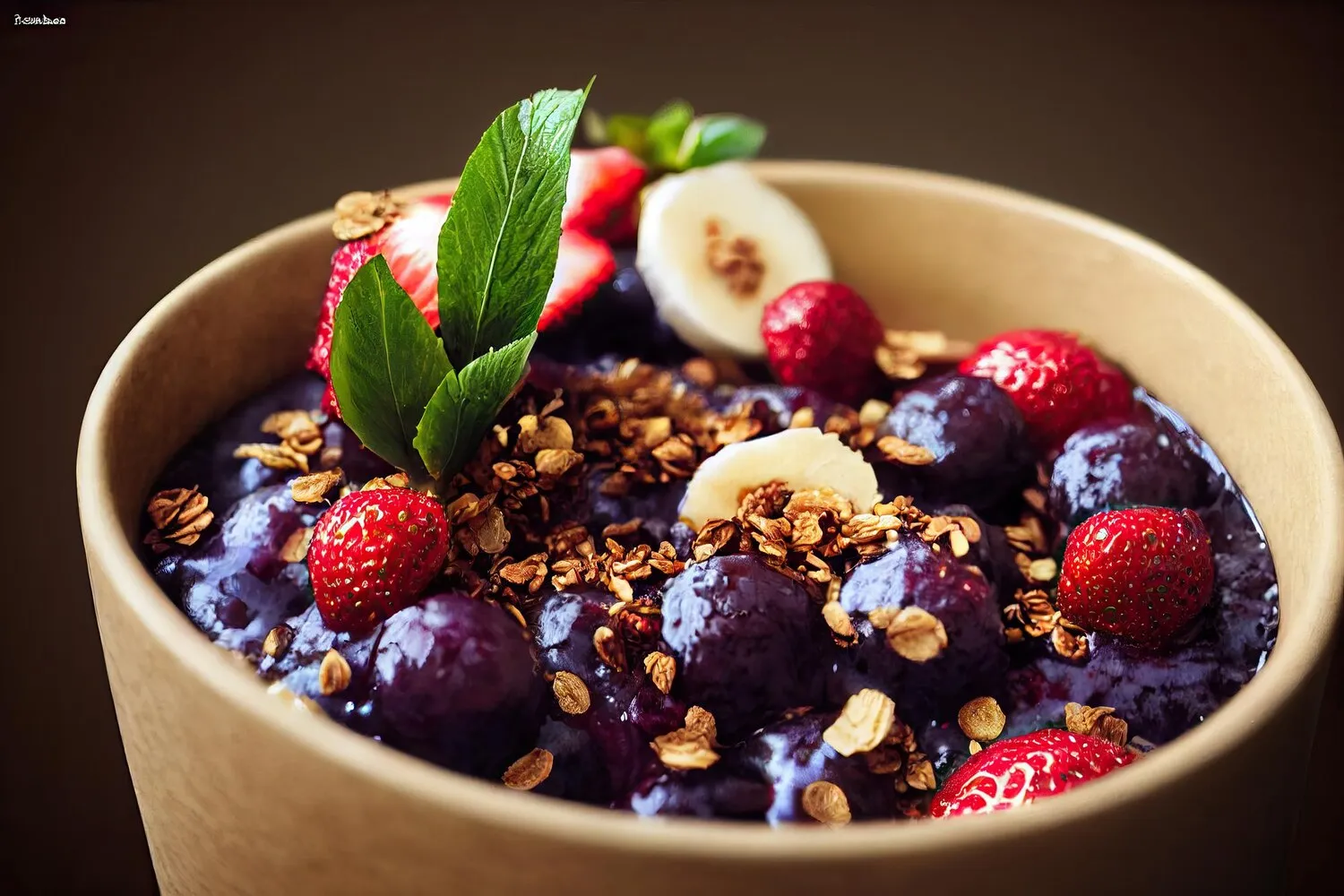

Açaí
While available in many forms, traditionally consumed with tapioca flour or as a side dish for savory meals. Likely available as a standalone dessert or snack.
Información Nutricional
* El % de Valor Diario (VD) indica cuánto aporta un nutriente en una porción de alimento a una dieta diaria. Se utilizan 2,000 calorías al día para consejos generales de nutrición.
Función Premium
No Se Encontraron Platos Similares
No pudimos encontrar platos similares en este momento. ¡Intenta explorar otros restaurantes!
Açaí has been a staple food in the Amazon region for centuries, consumed by indigenous populations long before European colonization. It provided essential nutrients and energy. Over time, its consumption spread within Brazil, initially remaining a regional specialty. It gained international popularity in the late 20th and early 21st centuries due to its perceived health benefits.
Función Premium
Açaí is deeply embedded in the culture of the Amazon region, particularly among indigenous communities. Its consumption is often linked to traditional practices and livelihoods. Its rise to popularity in Brazil and globally has also transformed it into a symbol of healthy eating and Brazilian identity.
Indigenous Significance
Açaí is traditionally harvested and consumed by indigenous Amazonian populations. It has served as a primary food source, providing essential nutrients and energy for generations. Harvesting and preparation techniques are often passed down through families.
Regional Staple
Within Brazil, açaí is particularly popular in the Northern states, where it is frequently consumed with savory meals like fish or shrimp, or with tapioca. This is a more traditional preparation compared to the sweetened, blended versions popular in other parts of Brazil and internationally.
Health Food Trend
The rise of açaí bowls as a health food has contributed significantly to its global popularity. Often marketed as a superfood due to its antioxidant properties, it is now a common breakfast or snack option in many countries.
Función Premium
Açaí has a unique flavor profile that is often described as earthy and slightly tart. It's not naturally very sweet, and its taste is often enhanced by the addition of other ingredients.
The flavor is best described as a blend of berry and chocolate, with a subtle earthy undertone. While the berry itself isn't overly sweet, it provides a refreshing base. Often, sweeteners like guarana syrup, honey, or sugar are added to enhance the sweetness. When blended with other fruits, like bananas or strawberries, it adopts characteristics of those fruits. Açaí powder has a more concentrated earthy and subtly bitter flavor compared to fresh or frozen pulp.
Función Premium
Blending Consistency
Açaí pulp can be quite thick when frozen. Adding a liquid, such as water, juice, or plant-based milk, will help achieve a smoother consistency when blending. Start with a small amount of liquid and gradually add more until you reach the desired texture.
Sweetness Control
Açaí itself is not very sweet, so you can control the sweetness level by using natural sweeteners like honey, maple syrup, or dates. Be mindful of added sugar content, especially if you are concerned about calorie intake.
Proper Storage
If you are using frozen açaí pulp, store it in the freezer until ready to use. Once thawed, consume it immediately to prevent spoilage.
Ethical Sourcing
Consider the ethical and environmental aspects of açaí harvesting. Look for brands that practice sustainable harvesting methods and support fair trade practices to ensure the long-term health of the Amazon rainforest and its communities.
Función Premium
Explora platos y restaurantes adicionales de Açaí
Explorar AçaíDescubre los mejores lugares para comer y experiencias culinarias en Belém.
Explorar BelémAprende más sobre la cultura gastronómica, la escena de restaurantes y el patrimonio culinario de Brazil.
Explorar Brazil