
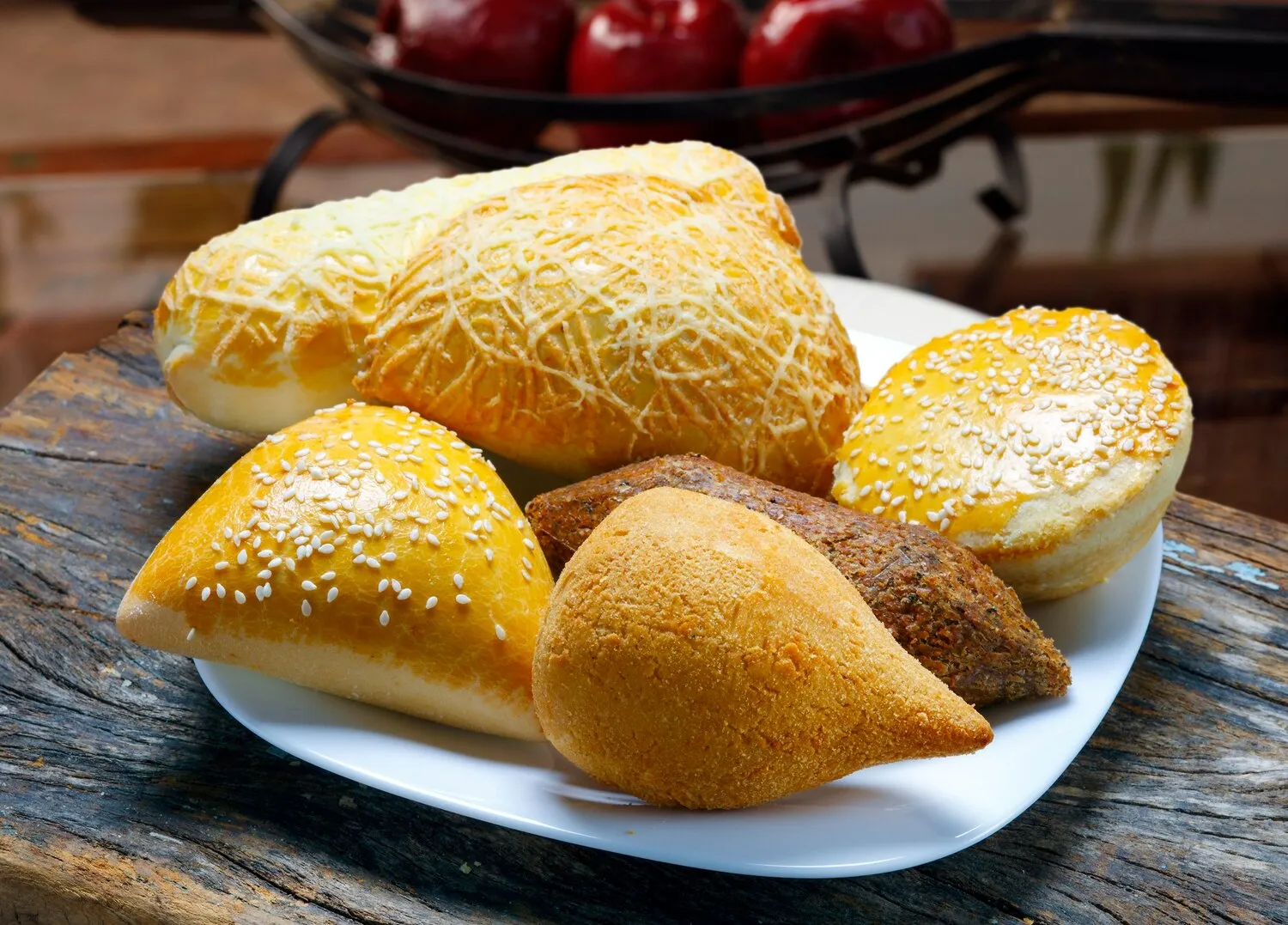

Salgados
Assorted savory pastries and snacks, such as risoles and empadas.
Información Nutricional
* El % de Valor Diario (VD) indica cuánto aporta un nutriente en una porción de alimento a una dieta diaria. Se utilizan 2,000 calorías al día para consejos generales de nutrición.
Función Premium
Padaria Bom Jesus
Función Premium
Salgados, meaning 'salted pastries,' have a history rooted in Portuguese cuisine influenced by global trade and culinary exchange. The use of savory fillings and various doughs reflects a blend of European techniques with spices and ingredients from former Portuguese colonies. The concept of small, easily consumed savory snacks aligns with a long tradition of street food and social gatherings in Portugal.
Función Premium
Salgados are a cornerstone of Portuguese culinary culture, deeply integrated into social gatherings, celebrations, and everyday life.
Social Gatherings
Salgados are ubiquitous at parties, weddings, christenings, and other social events. They are a convenient and crowd-pleasing option for appetizers and snacks.
Café Culture
Portuguese cafés (pastelarias) typically offer a wide array of salgados. They are often enjoyed with coffee or a soft drink as a quick and satisfying meal.
Family Tradition
Many families have their own recipes for salgados, passed down through generations. Making salgados together can be a cherished family activity.
Regional Variations
Different regions of Portugal have their own unique variations of salgados, with local ingredients and flavor combinations.
Función Premium
Salgados are characterized by a diverse range of savory flavors, depending on the filling and preparation. The common thread is a balance of richness, spice, and a satisfyingly savory taste.
Common fillings include chicken (frango), shrimp (camarão), codfish (bacalhau), beef (carne), and cheese (queijo). The doughs vary from crispy and flaky pastry (massa folhada) to smooth, creamy doughs (like in risoles). Spices such as paprika, nutmeg, parsley, and garlic are frequently used to enhance the savory flavors. The overall flavor profile depends heavily on the specific salgado, but a common theme is rich, savory fillings encased in flavorful crusts or doughs.
Función Premium
Dough Preparation
The type of dough greatly influences the final product. For a flaky crust, ensure the butter is very cold when making the dough. For a smoother dough, follow the recipe carefully, paying attention to the consistency.
Filling Consistency
The filling should be thick enough to hold its shape and prevent the salgado from becoming soggy. Use a binding agent, such as béchamel sauce or breadcrumbs, if needed.
Frying Temperature
Maintain a consistent oil temperature (around 350°F or 175°C) when frying salgados. Too low, and they will absorb too much oil; too high, and they will burn on the outside before the inside is heated through.
Freezing for Later
Salgados can be prepared ahead of time and frozen before frying or baking. Thaw them completely before cooking to ensure even heating.
Función Premium
Explora platos y restaurantes adicionales de Pastries
Explorar PastriesDescubre los mejores lugares para comer y experiencias culinarias en Anápolis.
Explorar AnápolisAprende más sobre la cultura gastronómica, la escena de restaurantes y el patrimonio culinario de Brazil.
Explorar Brazil