
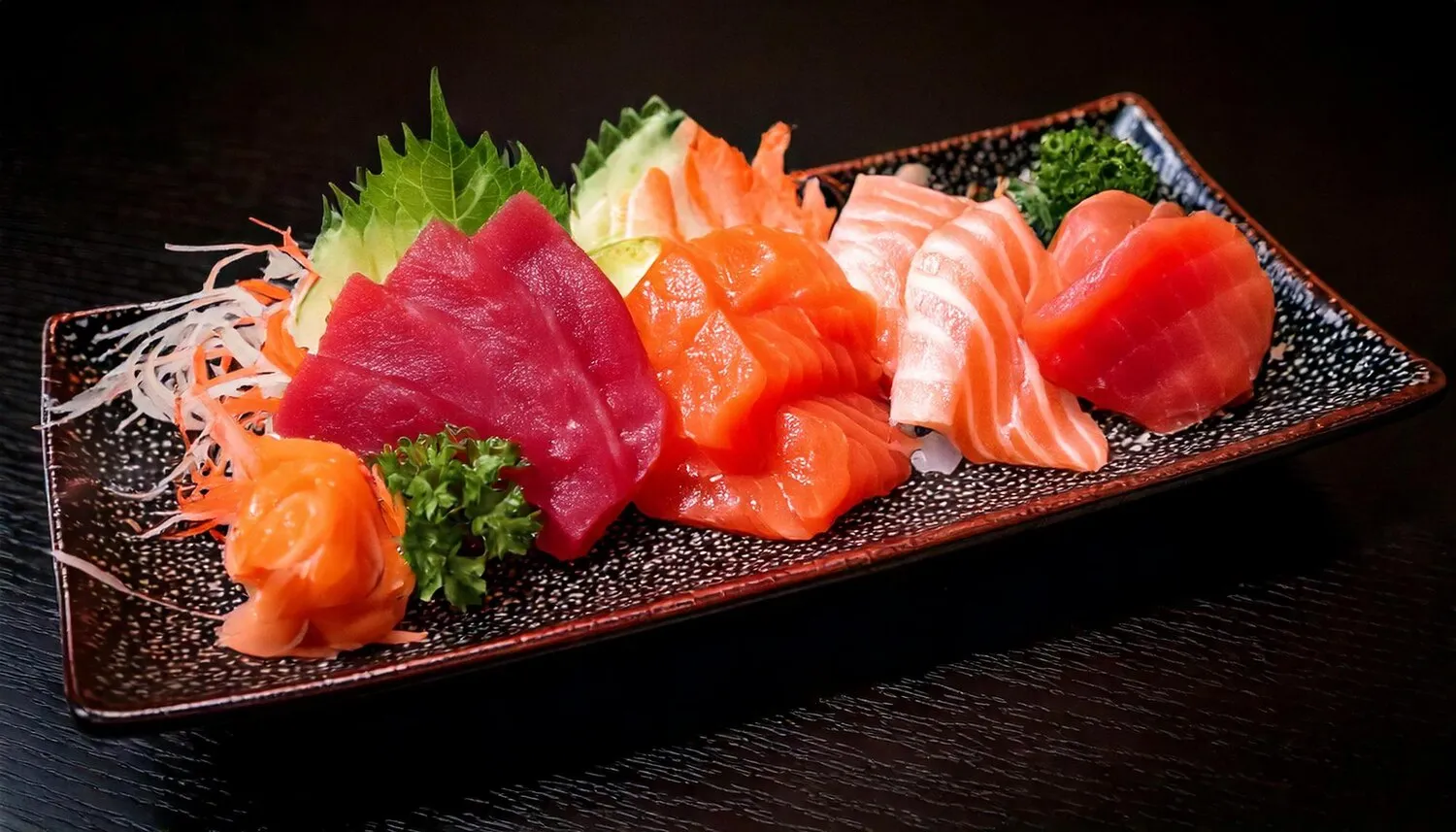

Sashimi
Thinly sliced raw fish.
Información Nutricional
* El % de Valor Diario (VD) indica cuánto aporta un nutriente en una porción de alimento a una dieta diaria. Se utilizan 2,000 calorías al día para consejos generales de nutrición.
Función Premium
Bento Restaurante
Función Premium
The origins of sashimi can be traced back to ancient Japan, where raw fish was initially consumed out of necessity due to preservation limitations. Over time, techniques for handling and preparing fish improved, leading to the development of sashimi as a distinct culinary art form. Initially, it was a delicacy enjoyed primarily by the elite.
Función Premium
Sashimi is deeply embedded in Japanese culture, representing respect for nature, culinary artistry, and seasonal ingredients.
Presentation
The presentation of sashimi is as important as the taste. It is meticulously arranged to highlight the colors and textures of the fish, often with garnishes like seaweed, daikon radish, and edible flowers, reflecting a deep appreciation for aesthetics.
Seasonality
The best sashimi is made with fish that are in season. The Japanese believe that seasonal ingredients offer the most vibrant flavors and nutritional value. Expert chefs understand which fish are at their peak during different times of the year.
Chef's Expertise
Preparing sashimi requires specialized knife skills and knowledge of fish anatomy. Chefs undergo years of training to learn how to properly slice fish to enhance its texture and flavor. The knife used (Yanagiba) is specifically designed for this purpose.
Función Premium
Sashimi offers a pure and delicate taste of the sea, emphasizing the natural flavors and textures of the fish.
The flavor profile of sashimi is highly dependent on the type of fish. Tuna (Maguro) offers a rich, almost buttery flavor. Salmon (Sake) is known for its fatty, slightly sweet taste. Yellowtail (Hamachi) is milder and cleaner. The subtle flavors are enhanced by condiments like soy sauce (Shoyu) and wasabi, which add salty and spicy notes, respectively. Ginger (Gari) is used as a palate cleanser between different types of fish.
Función Premium
Soy Sauce Etiquette
Avoid over-soaking the sashimi in soy sauce, as it can mask the delicate flavor of the fish. Dip only a small portion of the fish, and never mix wasabi directly into the soy sauce in a high-end establishment; instead, place a small amount of wasabi directly onto the fish.
Order of Consumption
It is generally recommended to start with the lighter-flavored fish and gradually move towards the richer, more fatty varieties. This allows you to fully appreciate the nuances of each type of fish.
Freshness is Paramount
The quality of sashimi relies heavily on the freshness of the fish. It is crucial to choose reputable establishments with high standards of hygiene and sourcing practices. The fish should be firm, translucent, and have a clean, fresh aroma.
Función Premium
Explora platos y restaurantes adicionales de Sushi
Explorar SushiDescubre los mejores lugares para comer y experiencias culinarias en Anápolis.
Explorar AnápolisAprende más sobre la cultura gastronómica, la escena de restaurantes y el patrimonio culinario de Brazil.
Explorar Brazil