
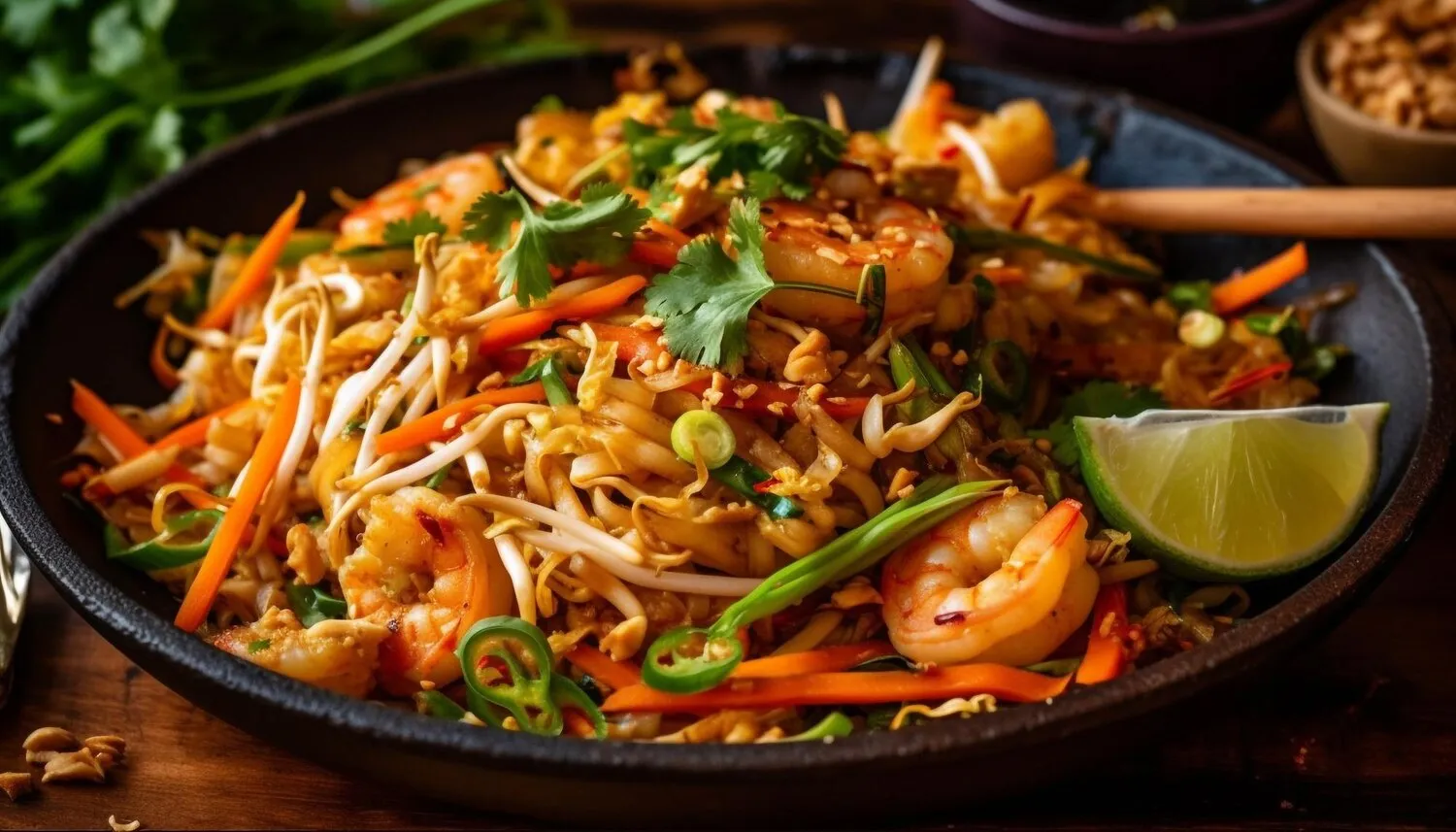

Pad Thai
Thai stir-fried rice noodle dish commonly served as a street food and at most restaurants in Thailand. It is made with rice noodles, tofu, shrimp, bean sprouts, and peanuts.
Información Nutricional
* El % de Valor Diario (VD) indica cuánto aporta un nutriente en una porción de alimento a una dieta diaria. Se utilizan 2,000 calorías al día para consejos generales de nutrición.
Función Premium
Función Premium
Pad Thai's history is relatively recent, originating in the 1930s during Plaek Phibunsongkhram's (also known as Phibun) premiership. It was part of a national campaign to create a unified Thai identity and reduce the country's dependence on imported rice. The government promoted rice noodles and subsidized ingredients to make it accessible and popular, effectively establishing it as a national dish and replacing Chinese-influenced noodle dishes.
Función Premium
Pad Thai holds significant cultural importance in Thailand, representing national identity and culinary ingenuity. Its widespread availability and accessibility make it a symbol of Thai hospitality and street food culture.
National Identity
Pad Thai is considered one of Thailand's national dishes, promoted by the government to unify the country and showcase Thai cuisine to the world.
Street Food Culture
Pad Thai is a ubiquitous street food in Thailand, readily available from countless vendors and representing the vibrant and affordable culinary scene.
Tourist Attraction
Pad Thai is a must-try dish for tourists visiting Thailand, often ranked as a top culinary experience and a symbol of Thai culture.
Función Premium
Pad Thai is a harmonious blend of sweet, sour, salty, and umami flavors, creating a complex and satisfying taste experience.
The sweetness comes from palm sugar (or brown sugar as a substitute), the sourness from tamarind paste or vinegar, the saltiness from fish sauce (or soy sauce for a vegetarian version), and the umami from the combination of fish sauce, tofu, and often dried shrimp. Other ingredients like garlic, shallots, chilies, and peanuts contribute to the overall flavor profile, adding layers of aromatics and textures.
Función Premium
Tamarind Paste is Key
Authentic Pad Thai uses tamarind paste for its unique sourness and depth of flavor. Don't substitute it with just lime juice; the flavor profile will be significantly different.
Proper Noodle Hydration
Soak the rice noodles correctly. They should be pliable but not mushy. Over-soaked noodles will break apart during cooking, while under-soaked noodles will be tough.
Wok Hei Matters
If possible, use a wok and a high-heat burner. The 'wok hei' or 'breath of the wok' adds a smoky flavor that is characteristic of authentic street food Pad Thai.
Ingredient Quality
Using fresh, high-quality ingredients is crucial for the best flavor. Fresh bean sprouts, garlic, and shallots make a noticeable difference.
Función Premium
Explora platos y restaurantes adicionales de Stir-fried
Explorar Stir-friedDescubre los mejores lugares para comer y experiencias culinarias en Namur.
Explorar NamurAprende más sobre la cultura gastronómica, la escena de restaurantes y el patrimonio culinario de Belgium.
Explorar Belgium