
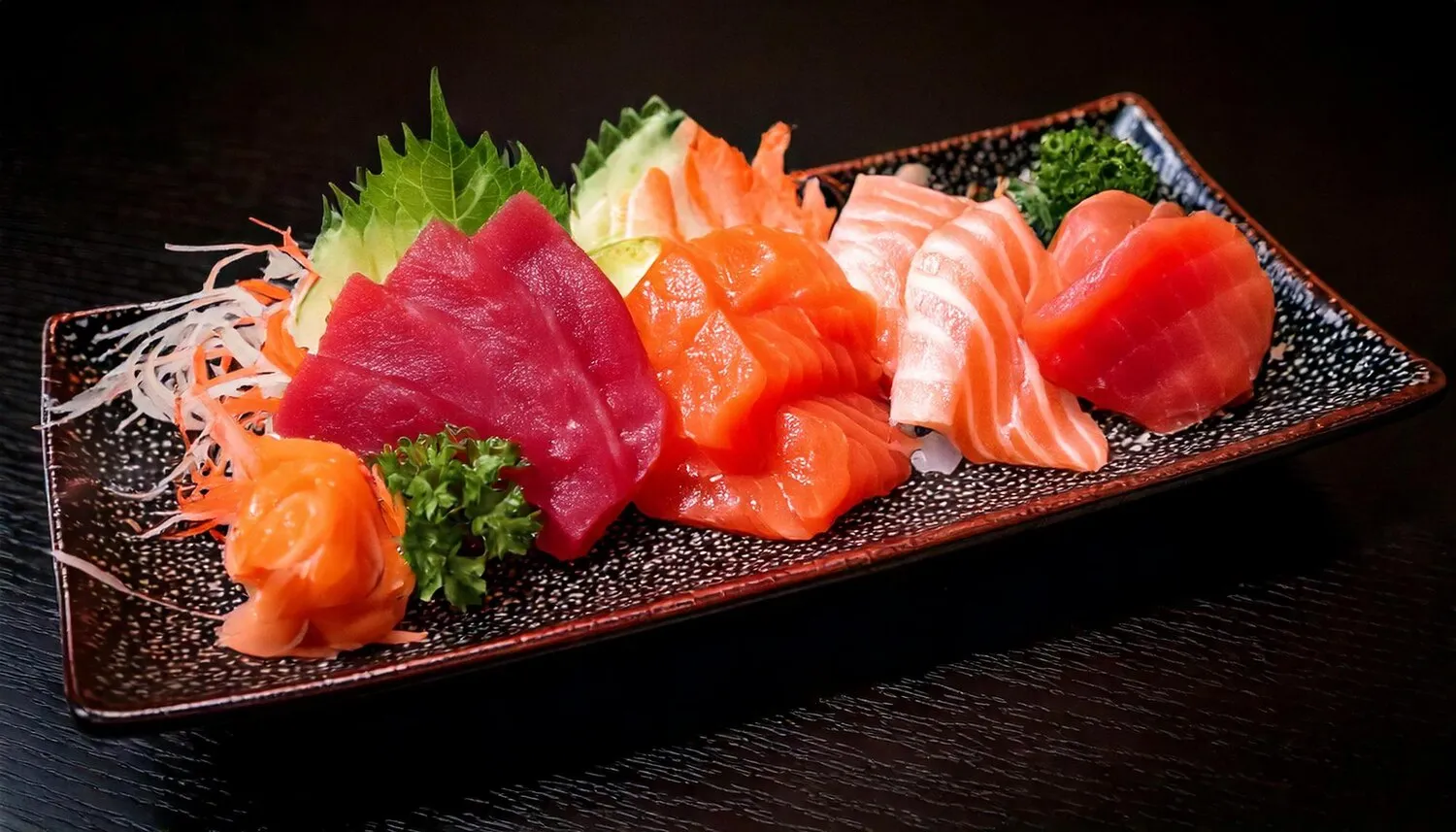

Sashimi
Sashimi consists of very thinly sliced raw meat or fish that is served with a dipping sauce such as soy sauce. A quintessential part of Japanese cuisine.
Información Nutricional
* El % de Valor Diario (VD) indica cuánto aporta un nutriente en una porción de alimento a una dieta diaria. Se utilizan 2,000 calorías al día para consejos generales de nutrición.
Función Premium
Función Premium
Sashimi's origins can be traced back to ancient Japan, evolving from the practice of using specific knives for different fish and the need to preserve and present seafood in the best possible way. As culinary techniques advanced and Buddhism's influence decreased, the dish gained prominence as a standalone culinary art form, emphasizing freshness and skillful slicing.
Función Premium
Sashimi is more than just a dish; it's a reflection of Japanese culture's deep respect for nature, precision, and artistry. It embodies the principles of simplicity, freshness, and the appreciation of natural flavors.
Emphasis on Freshness
The quality of sashimi hinges entirely on the freshness of the ingredients. Only the freshest, highest-quality seafood is suitable, reflecting a dedication to sourcing the best resources.
Knife Skills and Precision
Preparing sashimi is an art form requiring specialized knives and meticulous cutting techniques. The skill of the chef (itamae) in slicing the fish is paramount, affecting both the taste and presentation.
Presentation and Aesthetics
Sashimi is presented with careful attention to detail. The arrangement of the slices, the choice of garnishes, and the selection of serving dishes are all designed to enhance the visual appeal of the dish.
Seasonality
The types of fish used in sashimi often vary depending on the season, reflecting the Japanese appreciation for seasonal ingredients and the peak flavors they offer.
Función Premium
The flavors of sashimi are defined by the pure, unadulterated taste of the seafood itself, complemented by subtle dipping sauces and garnishes.
The primary flavor comes from the inherent taste of the fish or shellfish. This can range from the delicate sweetness of tuna (maguro) and salmon (sake) to the more pronounced, slightly briny flavor of squid (ika) and octopus (tako). The accompanying sauces, such as soy sauce (shoyu) and ponzu (a citrus-based sauce), add salty and acidic notes. Wasabi provides a sharp, pungent kick. Fresh ginger (gari) cleanses the palate between bites, preparing it for the next delicate flavor. Other common garnishes include shredded daikon radish, shiso leaves, and seaweed, which contribute to the overall sensory experience.
Función Premium
Using Wasabi
Instead of mixing wasabi into the soy sauce, place a small amount directly on the fish to avoid diluting the flavors.
Soy Sauce Usage
Dip only the fish into the soy sauce, not the rice if served as part of a larger meal. Over-soaking can mask the delicate flavor of the fish.
Order of Consumption
It's generally recommended to start with the lighter-flavored fish and move towards the richer, fattier varieties. This allows you to appreciate the nuances of each type.
Eating Ginger (Gari)
Eat the pickled ginger (gari) between different types of sashimi to cleanse your palate and prepare it for the next flavor.
Función Premium
Explora platos y restaurantes adicionales de Sashimi
Explorar SashimiDescubre los mejores lugares para comer y experiencias culinarias en Namur.
Explorar NamurAprende más sobre la cultura gastronómica, la escena de restaurantes y el patrimonio culinario de Belgium.
Explorar Belgium