
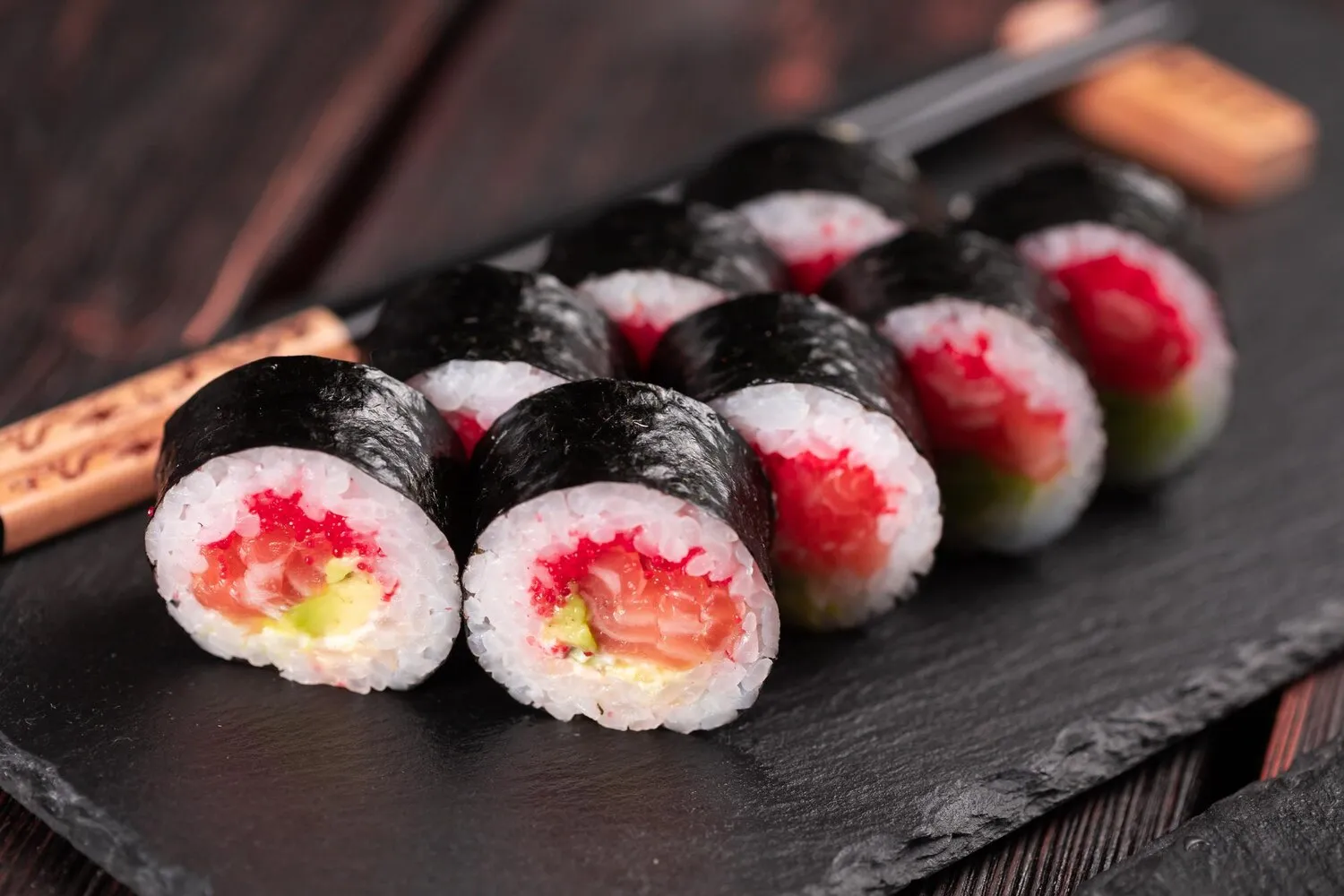

Maki
Maki rolls are available.
Información Nutricional
* El % de Valor Diario (VD) indica cuánto aporta un nutriente en una porción de alimento a una dieta diaria. Se utilizan 2,000 calorías al día para consejos generales de nutrición.
Función Premium
Función Premium
Maki sushi evolved from earlier forms of sushi where fish was preserved in fermented rice. The modern maki roll, where ingredients are rolled in seaweed, became popular in the Edo period (1603-1868) as a convenient and visually appealing way to enjoy sushi.
Función Premium
Maki is deeply ingrained in Japanese culinary culture, representing artistry, precision, and a focus on fresh, high-quality ingredients. It's a popular dish for both casual meals and special occasions.
Presentation
The visual appeal of maki is highly valued. Sushi chefs take pride in creating beautiful rolls with vibrant colors and precise cuts.
Etiquette
When eating maki, it's considered polite to eat each piece in one or two bites. Avoid using your chopsticks to pass food to others. Soy sauce should be used sparingly to avoid overpowering the flavors.
Festivals and Celebrations
Maki is often served during festivals, celebrations, and special gatherings in Japan. It symbolizes good luck and prosperity.
Función Premium
Maki offers a balance of savory, umami, and sometimes sweet flavors, depending on the ingredients used. The nori seaweed provides a distinct ocean flavor that complements the rice and fillings.
The flavor profile depends greatly on the filling. Common ingredients include: Sushi rice (vinegared rice with a subtly sweet and tangy flavor), Nori seaweed (a roasted seaweed sheet imparting a salty, umami taste), Raw fish (such as tuna, salmon, or yellowtail, contributing rich, oily, and savory notes), Vegetables (like cucumber, avocado, or carrots, providing freshness and crunch), Pickled vegetables (such as daikon radish, adding a tangy and sweet element), Wasabi (a pungent green paste offering a spicy kick), Soy sauce (for dipping, adding saltiness and umami), and Sesame seeds (for added texture and nutty flavor).
Función Premium
Rice Preparation
Use short-grain Japanese rice specifically labeled for sushi. Rinse the rice thoroughly until the water runs clear. Cook the rice according to package instructions, then season with a mixture of rice vinegar, sugar, and salt.
Rolling Technique
Use a bamboo rolling mat (makisu) to achieve a tight and even roll. Spread the rice evenly over the nori, leaving a small space at the top edge. Place the fillings in the center and use the mat to gently roll the sushi away from you. Wet the exposed nori edge to seal the roll.
Knife Skills
Use a sharp, non-serrated knife to cut the maki into even pieces. Wet the knife blade with water between each cut to prevent the rice from sticking.
Ingredient Quality
Use only the freshest ingredients. The quality of the fish and vegetables will greatly impact the overall flavor of the maki.
Función Premium
Explora platos y restaurantes adicionales de Maki
Explorar MakiDescubre los mejores lugares para comer y experiencias culinarias en Liège.
Explorar LiègeAprende más sobre la cultura gastronómica, la escena de restaurantes y el patrimonio culinario de Belgium.
Explorar Belgium