
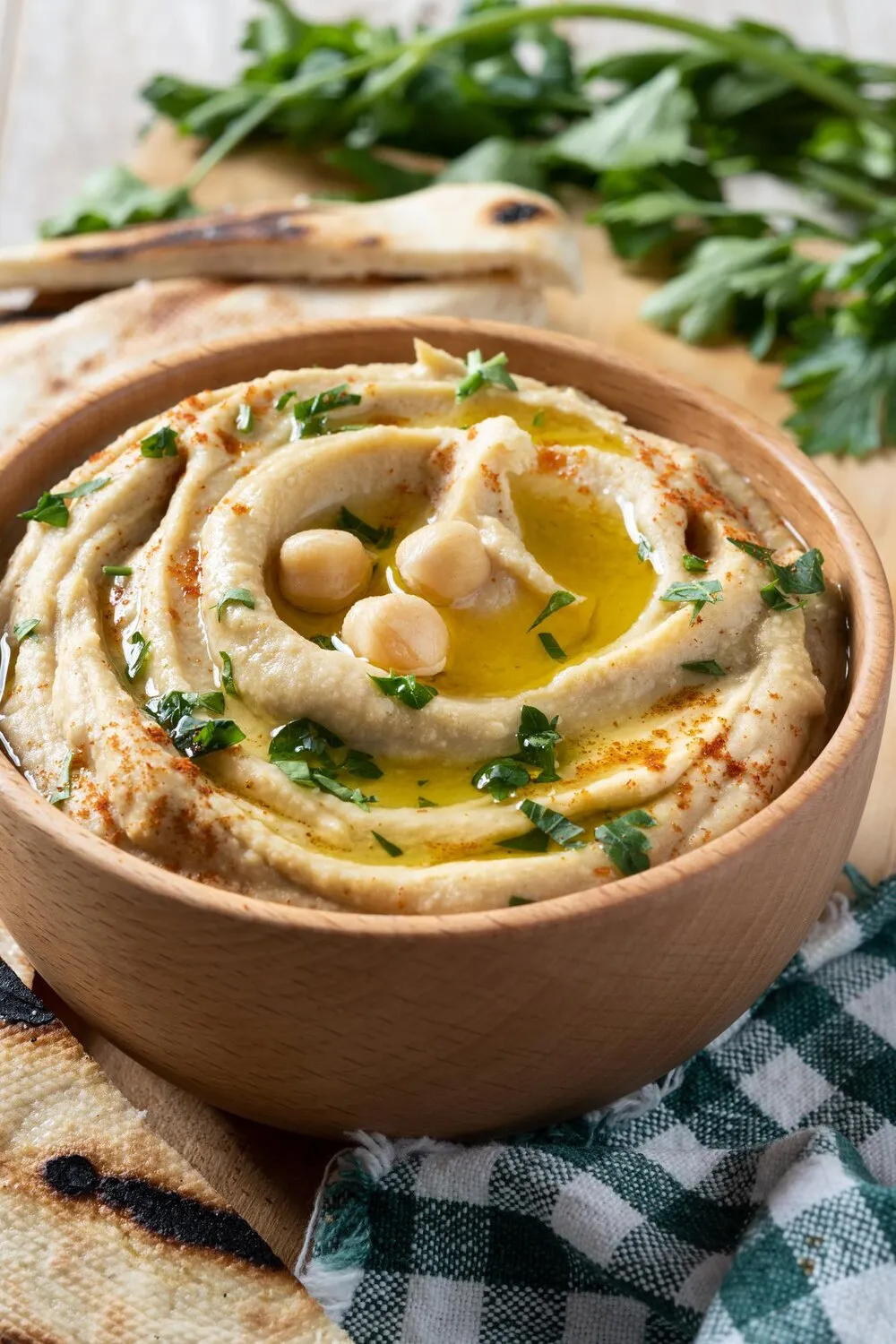

Hummus
A dip or spread made from cooked, mashed chickpeas blended with tahini, lemon juice, and garlic.
Información Nutricional
* El % de Valor Diario (VD) indica cuánto aporta un nutriente en una porción de alimento a una dieta diaria. Se utilizan 2,000 calorías al día para consejos generales de nutrición.
Función Premium
Función Premium
Hummus has a long and complex history, with its origins debated and spanning across various Middle Eastern regions. Chickpeas have been cultivated in the Middle East for millennia, and the combination of chickpeas and tahini likely developed gradually over time, evolving into the dish we know today. The earliest known written recipes resembling modern hummus appear in Arabic cookbooks from the 13th century.
Función Premium
Hummus is a staple in Middle Eastern cuisine and a symbol of hospitality and sharing. It is a common dish served at gatherings, celebrations, and everyday meals, enjoyed by people of all ages and backgrounds. It is also a source of national pride and friendly competition among different countries claiming its origin.
Communal Eating
Hummus is traditionally served in a communal bowl, encouraging sharing and connection among diners. It is often eaten with pita bread, vegetables, or falafel, creating a social and interactive dining experience.
National Identity
Hummus is claimed by several Middle Eastern countries as their own, leading to ongoing debates and friendly rivalries. It represents a shared cultural heritage and culinary tradition in the region.
Religious Significance
While not directly tied to a specific religion, hummus is often served during religious holidays and celebrations in the Middle East, reflecting its importance as a staple food in the region.
Función Premium
Hummus offers a rich, earthy flavor profile with bright, tangy notes. The key components, chickpeas, tahini, lemon juice, and garlic, combine to create a smooth, savory, and slightly nutty taste.
The earthy base comes from the cooked chickpeas, which provide a creamy texture when blended. Tahini, made from ground sesame seeds, lends a nutty, slightly bitter, and creamy richness. Lemon juice adds a bright acidity that balances the richness and enhances the other flavors. Garlic contributes a pungent aroma and savory depth. Olive oil, often drizzled on top, adds a fruity and smooth finish.
Función Premium
Chickpea Preparation
Soaking dried chickpeas overnight and cooking them until very tender is crucial for achieving a smooth and creamy texture. Some cooks even remove the skins of the chickpeas for an extra-smooth result.
Tahini Quality
Use high-quality tahini made from hulled sesame seeds for the best flavor. Look for tahini that is smooth, creamy, and not overly bitter.
Ice Water Trick
Adding a few tablespoons of ice water while blending helps to create a lighter, airier texture and contributes to a smoother consistency.
Blending Time
Blend the hummus for several minutes, stopping to scrape down the sides of the food processor as needed, until it is completely smooth and creamy.
Lemon Juice Adjustment
Adjust the amount of lemon juice to your taste preference. Start with a small amount and add more until you reach the desired level of tanginess.
Función Premium
Explora platos y restaurantes adicionales de Vegetarian, dip
Explorar Vegetarian, dipDescubre los mejores lugares para comer y experiencias culinarias en Gent.
Explorar GentAprende más sobre la cultura gastronómica, la escena de restaurantes y el patrimonio culinario de Belgium.
Explorar Belgium