
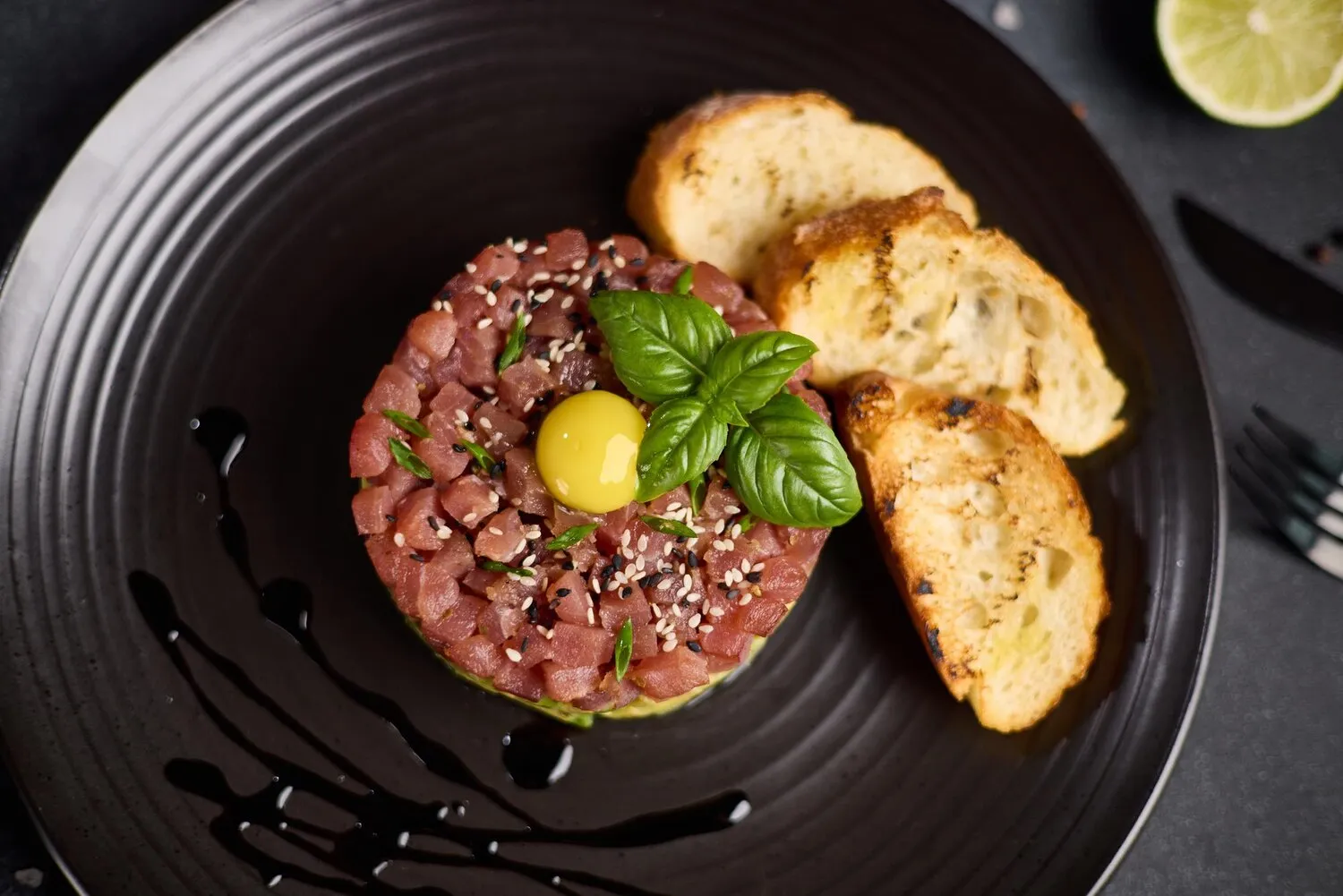

Steak Tartare
Finely chopped raw beef served with classic accompaniments.
Información Nutricional
* El % de Valor Diario (VD) indica cuánto aporta un nutriente en una porción de alimento a una dieta diaria. Se utilizan 2,000 calorías al día para consejos generales de nutrición.
Función Premium
Función Premium
The origins of steak tartare are somewhat debated, with various legends linking it to nomadic horsemen and early meat preservation techniques. While the modern form is distinctly French, the idea of consuming raw meat has historical precedents across various cultures. Its popularity grew in the early 20th century, solidifying its place in French cuisine.
Función Premium
Steak tartare is often seen as a sophisticated and elegant dish, frequently found on the menus of upscale restaurants. It is associated with a certain level of culinary adventurousness and appreciation for high-quality ingredients.
French Bistro Staple
Steak tartare is a classic dish frequently found in French bistros, representing a cornerstone of French culinary tradition and a testament to the appreciation for simple, yet exquisite, flavors.
Symbol of Culinary Confidence
Ordering and enjoying steak tartare can be seen as a statement of culinary confidence and a willingness to explore beyond the ordinary. It's a dish that invites conversation and showcases a discerning palate.
Freshness and Quality are Paramount
Due to the raw nature of the dish, the quality of ingredients, especially the beef, is of utmost importance. This highlights the value placed on sourcing the best possible ingredients for a truly exceptional culinary experience.
Función Premium
Steak tartare boasts a complex flavor profile, balancing the richness of raw beef with sharp, acidic, and spicy components.
The primary flavor is the clean, slightly metallic taste of high-quality raw beef, typically tenderloin or sirloin. This is complemented by the sharpness of capers, onions, and Dijon mustard; the acidity of Worcestershire sauce or lemon juice; the spice of black pepper or hot sauce; and the richness of egg yolk. The final taste depends greatly on the proportion and quality of each ingredient.
Función Premium
Source High-Quality Beef
Only use the freshest, highest-quality beef from a reputable butcher. Ideally, the beef should be tenderloin or sirloin, and the butcher should be informed that it will be eaten raw.
Maintain Cold Temperatures
Keep the beef as cold as possible throughout the preparation process. Chill all ingredients and utensils before starting.
Chop, Don't Grind
Traditionally, the beef is finely chopped by hand rather than ground. This preserves the texture and flavor of the meat. While using a grinder is faster, it can result in a mushier texture.
Serve Immediately
Steak tartare should be served immediately after preparation to ensure optimal freshness and prevent bacterial growth.
Egg Yolk Handling
Use pasteurized egg yolks or ensure the eggs are very fresh. Consider skipping the egg yolk entirely for increased safety if concerned about raw egg consumption.
Función Premium
Explora platos y restaurantes adicionales de Classic bistro
Explorar Classic bistroDescubre los mejores lugares para comer y experiencias culinarias en Antwerpen.
Explorar AntwerpenAprende más sobre la cultura gastronómica, la escena de restaurantes y el patrimonio culinario de Belgium.
Explorar Belgium