
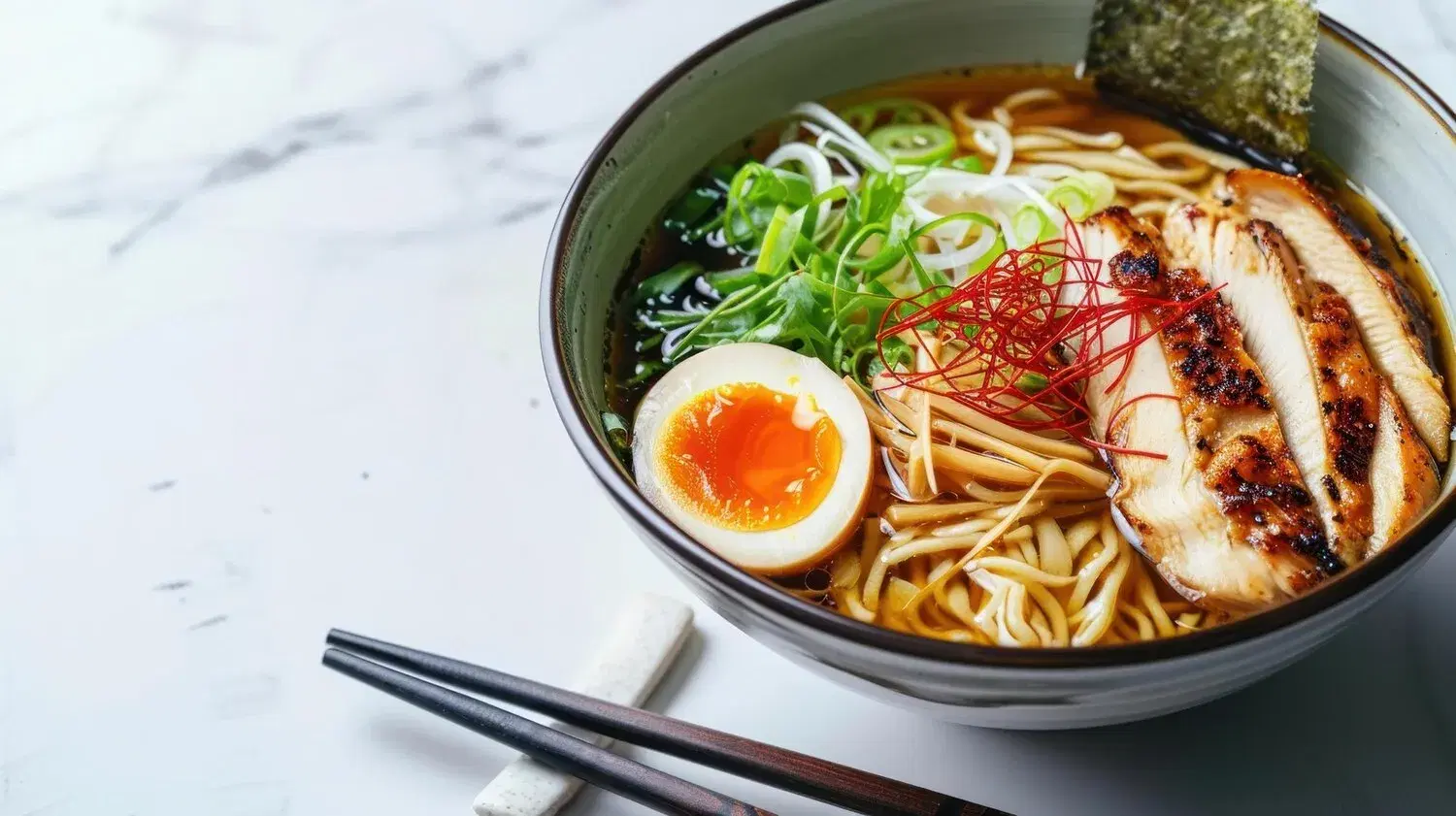

Ramen
They have ramen
Información Nutricional
* El % de Valor Diario (VD) indica cuánto aporta un nutriente en una porción de alimento a una dieta diaria. Se utilizan 2,000 calorías al día para consejos generales de nutrición.
Función Premium
Wakuwaku
Función Premium
Ramen's origins can be traced back to Chinese wheat noodles. It was introduced to Japan in the late 19th or early 20th century, likely through Yokohama Chinatown. Initially, it was called 'Shina soba' (Chinese noodles). Over time, it was adapted to Japanese tastes and ingredients, evolving into the distinct dish we know today as Ramen.
Función Premium
Ramen is deeply ingrained in Japanese culture, representing a fast, affordable, and comforting meal enjoyed by people of all ages and backgrounds. It has evolved into a diverse and regional culinary art form, with countless variations and dedicated ramen shops ('ramen-ya') across the country.
Regional Variations
Different regions of Japan boast unique ramen styles, such as Hakata ramen (tonkotsu broth), Sapporo ramen (miso broth), and Kitakata ramen (curly noodles). These regional variations reflect local ingredients and culinary traditions.
Ramen Culture
Ramen is not just a meal but an experience. Slurping noodles is considered polite and enhances the flavor. Many ramen shops have specific etiquette, such as focusing on the bowl and minimizing conversation.
Ramen as an Art Form
Ramen chefs are often highly skilled artisans, meticulously crafting each bowl to achieve a perfect balance of flavor, texture, and presentation. Ramen competitions and rankings are common, showcasing the creativity and dedication of ramen chefs.
Función Premium
Ramen offers a complex interplay of savory, umami, and salty flavors, often balanced with richness and aroma. The primary flavor components come from the broth, tare (seasoning sauce), noodles, and toppings.
The broth is the soul of ramen, often made from pork bones (tonkotsu), chicken (chintan), seafood, or vegetables. It is simmered for hours to extract maximum flavor. The 'tare' is a concentrated seasoning sauce, typically soy sauce (shoyu), miso, or salt (shio), which provides the dish's core flavor profile. Noodles vary in thickness, shape, and texture depending on the region and ramen style. Toppings such as chashu (braised pork belly), menma (fermented bamboo shoots), nori (seaweed), scallions, and ajitama (soft-boiled marinated egg) add textural and flavor complexities.
Función Premium
Broth Temperature
The broth should be served hot to maintain its flavor and aroma.
Noodle Texture
Noodles are best enjoyed immediately after cooking to prevent them from becoming soggy.
Slurping Technique
Slurping aerates the noodles and broth, enhancing the taste experience.
Customization
Many ramen shops allow customers to customize their orders, such as noodle firmness, broth richness, and topping selection.
Función Premium
Explora platos y restaurantes adicionales de Japanese
Explorar JapaneseDescubre los mejores lugares para comer y experiencias culinarias en Wels.
Explorar WelsAprende más sobre la cultura gastronómica, la escena de restaurantes y el patrimonio culinario de Austria.
Explorar Austria