
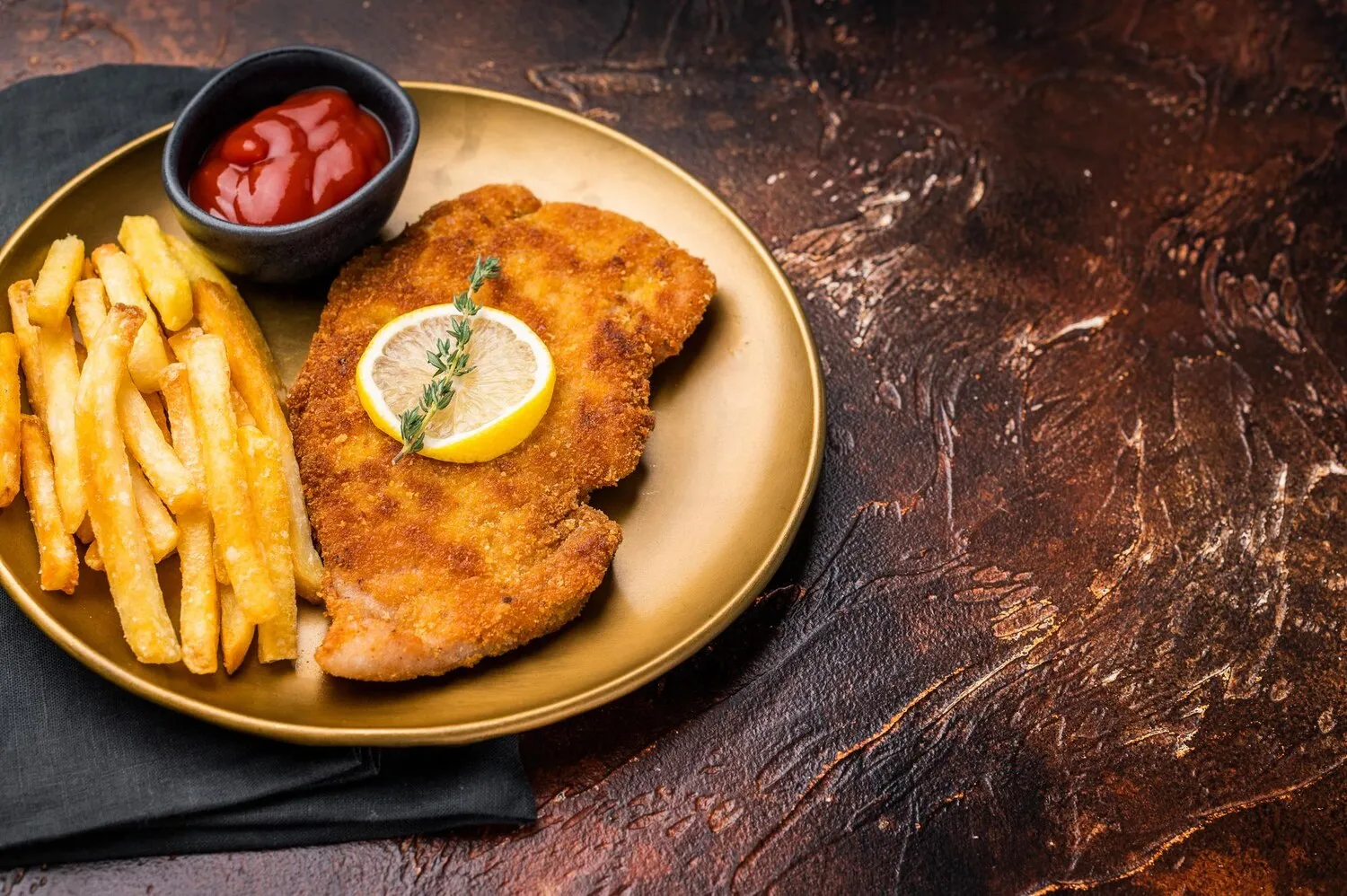

Wiener Schnitzel
Classic Austrian breaded veal cutlet.
Información Nutricional
* El % de Valor Diario (VD) indica cuánto aporta un nutriente en una porción de alimento a una dieta diaria. Se utilizan 2,000 calorías al día para consejos generales de nutrición.
Función Premium
Función Premium
While the exact origins are debated, with some claiming Italian roots in *cotoletta alla milanese*, the Wiener Schnitzel as we know it became a staple of Viennese cuisine in the 19th century. Legend has it that Field Marshal Radetzky brought the recipe from Italy to Austria, though this is largely unsubstantiated. What is certain is that it evolved in Vienna, becoming a refined and iconic dish.
Función Premium
Wiener Schnitzel is more than just a dish; it's a symbol of Austrian culinary heritage and a source of national pride. It is a ubiquitous menu item in restaurants across Austria and is often served at special occasions and family gatherings.
National Dish
Wiener Schnitzel is widely considered one of Austria's national dishes, representing the country's culinary traditions and sophisticated approach to simple ingredients.
Restaurant Staple
It is a standard offering in most Austrian restaurants, from traditional *Beisln* (taverns) to high-end establishments, each often having its own unique take on the classic preparation.
Culinary Tourism
Many tourists visit Austria specifically to experience authentic Wiener Schnitzel, making it a significant part of the country's culinary tourism industry.
Función Premium
Wiener Schnitzel is characterized by its delicate veal flavor, enhanced by the crispy, golden-brown breadcrumb coating. The simple seasonings allow the quality of the veal and the perfect breading to shine.
The main flavors are derived from the high-quality veal, traditionally from the leg (Schale or Fricandeau). The breadcrumbs contribute a satisfying crunch and a slightly nutty, toasted flavor. The butter (or clarified butter - Schmalz) used for frying adds richness and depth. Lemon wedges served alongside provide a crucial element of acidity, cutting through the richness and brightening the overall taste. Simple seasonings of salt and pepper are all that's needed to bring out the inherent flavors.
Función Premium
Veal Quality is Key
Use high-quality veal from the leg (Schale or Fricandeau) for the most tender and flavorful result. The veal should be thinly pounded to about 4mm thickness.
The Three-Step Breading Process
Follow the classic breading process: first dredge in flour (seasoned with salt and pepper), then dip in lightly beaten eggs, and finally coat generously with fresh breadcrumbs (Semmelbrösel).
Swirling in Butter
Fry the Schnitzel in plenty of clarified butter (or a mix of butter and oil) over medium-high heat. Continuously swirl the pan to allow the Schnitzel to 'swim' in the fat, ensuring even cooking and a puffed-up crust.
Don't Overcook
Cook the Schnitzel quickly, about 2-3 minutes per side, until golden brown and cooked through. Overcooking will result in a dry and tough Schnitzel.
Serving Suggestions
Serve immediately with a lemon wedge and traditional sides like parsley potatoes, cranberries (Preiselbeeren), or a simple green salad.
Función Premium
Explora platos y restaurantes adicionales de Austrian
Explorar AustrianDescubre los mejores lugares para comer y experiencias culinarias en Salzburg.
Explorar SalzburgAprende más sobre la cultura gastronómica, la escena de restaurantes y el patrimonio culinario de Austria.
Explorar Austria