
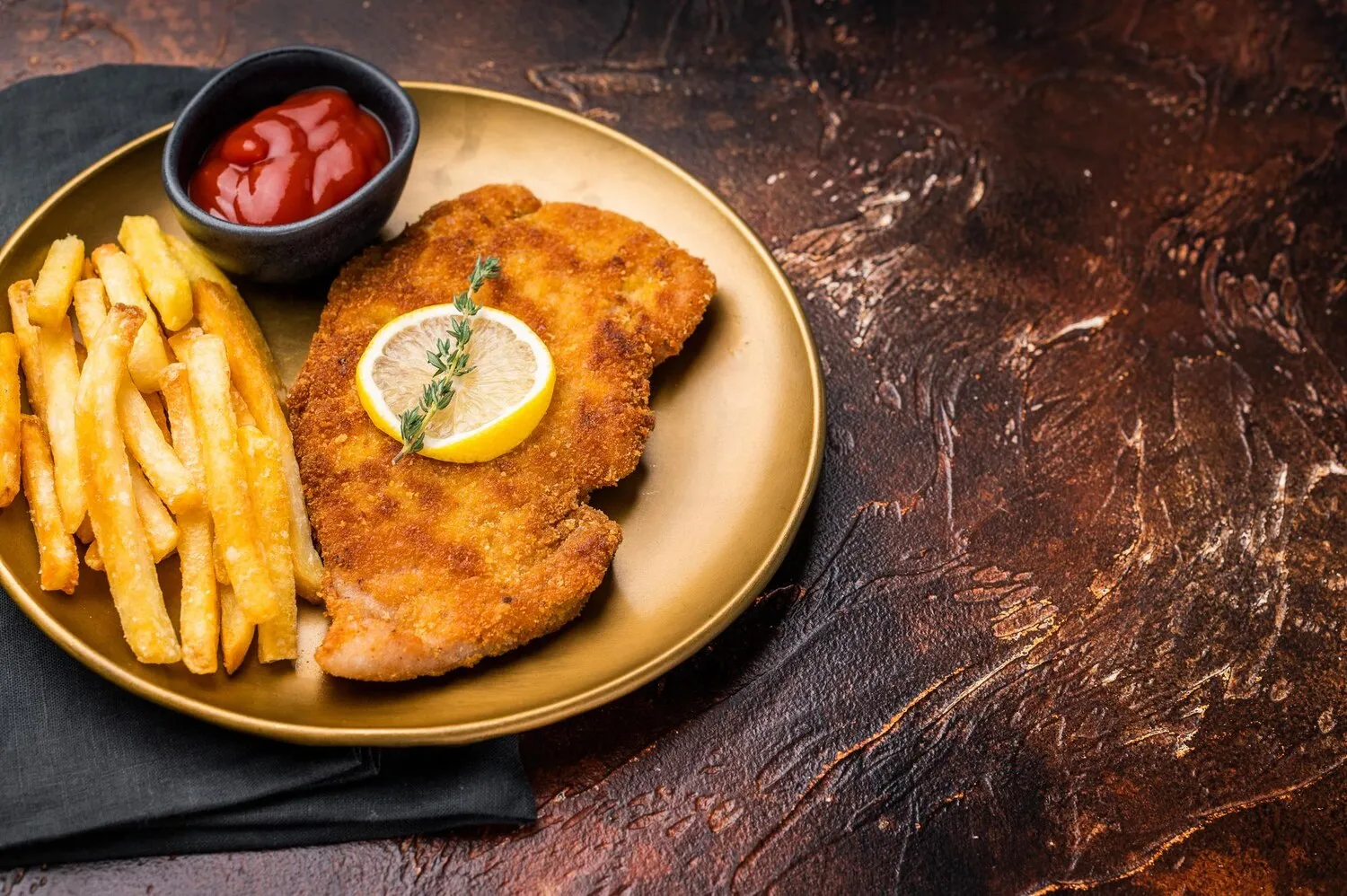

Wiener Schnitzel
Classic breaded veal cutlet, a staple of Austrian cuisine.
Información Nutricional
* El % de Valor Diario (VD) indica cuánto aporta un nutriente en una porción de alimento a una dieta diaria. Se utilizan 2,000 calorías al día para consejos generales de nutrición.
Función Premium
Función Premium
While the exact origin is debated, many believe a breaded veal cutlet, similar to Wiener Schnitzel, was introduced to Austria from Northern Italy (Cotoletta alla Milanese). However, Austrians refined and adapted the dish, making it a national culinary icon.
Función Premium
Wiener Schnitzel holds a prominent place in Austrian culture, considered a national dish and a symbol of Austrian culinary tradition. It's ubiquitous, found everywhere from casual restaurants to upscale establishments.
Family Tradition
Wiener Schnitzel is often a dish prepared at home, passed down through generations. Each family might have their own slight variations in technique or seasoning.
Restaurant Staple
Ordering Wiener Schnitzel in a traditional Austrian restaurant is a must for visitors. It's a benchmark for judging the quality of the establishment.
Accompaniments
Traditionally, Wiener Schnitzel is served with a lemon wedge, parsley, and either boiled potatoes (Petersilkartoffeln), potato salad (Kartoffelsalat), or lingonberry jam (Preiselbeeren). These sides provide contrasting flavors and textures that enhance the overall experience.
Función Premium
The flavor profile of Wiener Schnitzel is defined by its delicate, crispy breading and the tender veal underneath. It's subtly savory, with a buttery richness from the cooking process.
The primary flavor comes from the high-quality veal, typically cut from the leg (Schlüssel). The breading, made from flour, egg, and breadcrumbs (Semmelbrösel), provides a crunchy texture and a light, golden-brown color. Clarified butter (Butterschmalz) used for frying imparts a nutty, rich flavor that complements the veal and breading perfectly. A squeeze of fresh lemon juice at serving adds a refreshing acidity, cutting through the richness.
Función Premium
Use High-Quality Veal
The quality of the veal is crucial. Look for thin cutlets from the leg, about 4mm (1/6 inch) thick. Pound them gently to an even thickness.
Proper Breading Technique
The breading process, often referred to as the 'Viennese Waltz,' is essential. Dredge the veal in flour, then dip in beaten egg, and finally coat thoroughly with breadcrumbs. Ensure the breadcrumbs are finely ground.
Fry in Clarified Butter
Clarified butter (Butterschmalz) has a higher smoke point than regular butter, allowing you to fry the schnitzel at a higher temperature without burning. This results in a crispier crust and richer flavor.
Swim, Don't Submerge
Use enough clarified butter so the Schnitzel 'swims' in the pan during frying, ensuring even cooking and browning. Shake the pan gently to distribute the hot butter over the schnitzel.
Función Premium
Explora platos y restaurantes adicionales de Austrian
Explorar AustrianDescubre los mejores lugares para comer y experiencias culinarias en Linz.
Explorar LinzAprende más sobre la cultura gastronómica, la escena de restaurantes y el patrimonio culinario de Austria.
Explorar Austria