
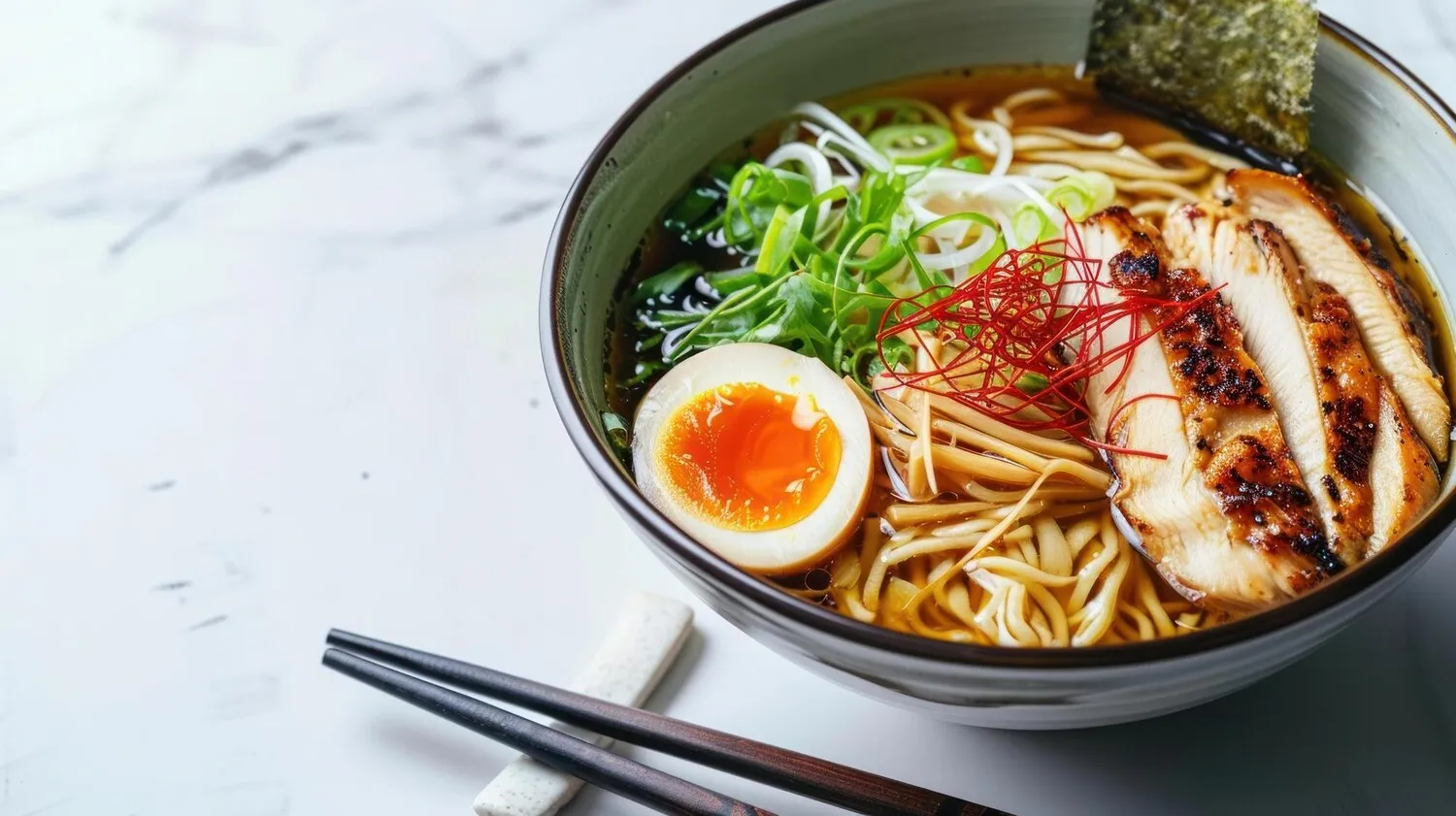

Ramen
Woosabi serves ramen.
Información Nutricional
* El % de Valor Diario (VD) indica cuánto aporta un nutriente en una porción de alimento a una dieta diaria. Se utilizan 2,000 calorías al día para consejos generales de nutrición.
Función Premium
Función Premium
Ramen's origins can be traced back to Chinese wheat noodles. It was introduced to Japan in the late 19th or early 20th century, becoming a popular street food. Over time, regional variations and unique Japanese ingredients transformed it into the dish we know today.
Función Premium
Ramen is deeply ingrained in Japanese food culture, representing comfort food, culinary artistry, and regional identity. Ramen shops are ubiquitous throughout Japan, each offering its unique take on the classic dish.
Ramen Shops as Social Hubs
Ramen shops are often small, bustling spaces where people from all walks of life gather to enjoy a quick and affordable meal. The communal atmosphere fosters a sense of connection.
Regional Variations
Each region of Japan boasts its own distinct ramen style, reflecting local ingredients and culinary traditions. Examples include Hakata ramen (tonkotsu broth), Sapporo ramen (miso broth), and Tokyo ramen (soy sauce broth).
Ramen as Art
Many ramen chefs are highly skilled artisans who meticulously craft their broths, noodles, and toppings. They often experiment with new flavors and techniques, pushing the boundaries of ramen cuisine.
Función Premium
Ramen is characterized by its rich, savory broth, al dente noodles, and diverse toppings. The interplay of umami, saltiness, and texture defines the flavor profile.
The broth is the soul of ramen, typically made from pork, chicken, fish, or vegetables, simmered for hours to extract maximum flavor. Common flavor enhancers include soy sauce, miso, salt, and various aromatic oils. Noodles are made from wheat flour, water, salt, and kansui (alkaline mineral water), giving them a distinct chewiness and yellow color. Toppings vary widely but often include chashu (braised pork belly), menma (fermented bamboo shoots), scallions, nori (dried seaweed), soft-boiled eggs, and narutomaki (fish cake).
Función Premium
Slurping is Encouraged
Slurping noodles is not considered rude in Japan; it is believed to enhance the flavor and enjoyment of the ramen.
Try Different Toppings
Experiment with various toppings to customize your ramen and discover new flavor combinations. Some popular options include chili oil, sesame seeds, and pickled ginger.
Respect the Broth
The broth is a crucial element of ramen. Take your time to savor its flavor and appreciate the chef's efforts.
Función Premium
Explora platos y restaurantes adicionales de Ramen
Explorar RamenDescubre los mejores lugares para comer y experiencias culinarias en Innsbruck.
Explorar InnsbruckAprende más sobre la cultura gastronómica, la escena de restaurantes y el patrimonio culinario de Austria.
Explorar Austria